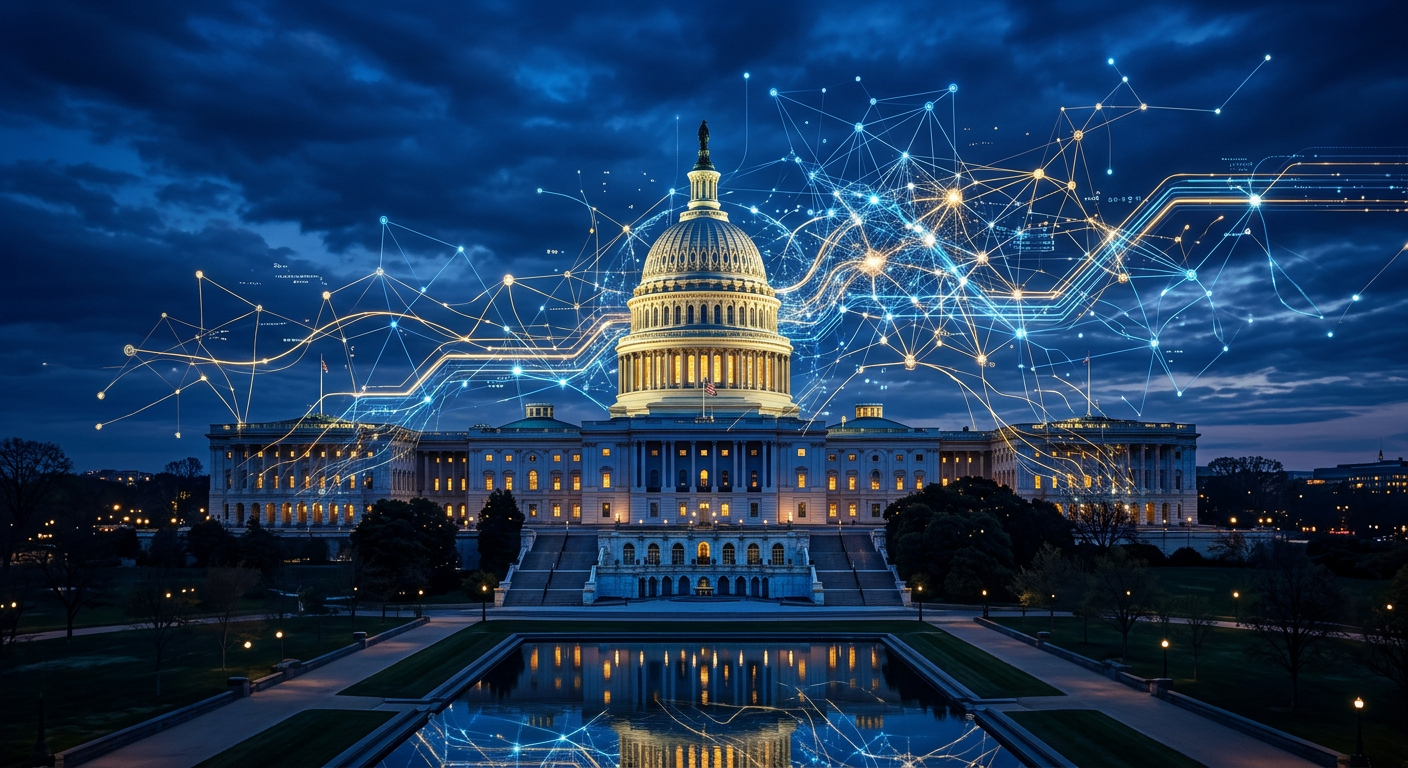
President Donald Trump signed a sweeping executive order on June 3, 2026, directing artificial intelligence companies to voluntarily provide the federal government with early access to their most powerful AI models before public release. Titled “Promoting Advanced Artificial Intelligence Innovation and Security,” the order marks one of the most significant U.S. government actions on AI governance in 2026, establishing a formal framework for coordination between the AI industry and federal cybersecurity agencies. Major AI developers including OpenAI, Google, and Anthropic have all expressed support for the measure.
What Was Announced
The executive order establishes a voluntary program through which AI developers can share early access to frontier models with federal agencies for cybersecurity assessment prior to public release. The stated goals of the order are to strengthen America’s cybersecurity posture, protect critical infrastructure, and ensure the United States maintains global leadership in artificial intelligence development and deployment.
A central mechanism created by the order is the AI cybersecurity clearinghouse, a coordinating body that brings together government cybersecurity experts and AI industry participants to identify and remediate software vulnerabilities at scale. The clearinghouse is designed to operate in voluntary coordination with both the AI industry and critical infrastructure operators across sectors such as energy, finance, and healthcare.
The order also includes provisions aimed at accelerating AI innovation broadly, with the White House framing it as a dual-mandate effort to simultaneously advance American AI capability and improve national security. The fact sheet released alongside the order emphasizes that participation in early model sharing with government agencies remains optional, not compulsory, for companies.
White House officials described the signing as building on earlier Trump administration AI initiatives and positioning the United States to lead in responsible AI development on the international stage. The order is expected to be followed by agency-level implementation guidance in the coming months.
Technical Details
The AI cybersecurity clearinghouse established by the order is intended to function as a centralized coordination point where AI models under development can be evaluated for potential security risks before they reach broad commercial deployment. This type of pre-release assessment could include red-teaming exercises, vulnerability scanning, and capability evaluations performed by qualified government personnel or designated third parties.
The voluntary nature of the program is significant from a technical standpoint, as it avoids imposing mandatory disclosure requirements that could create legal or competitive concerns for AI developers. Instead, companies that opt in gain the benefit of working directly with federal cybersecurity experts, potentially identifying issues that internal safety teams might miss, while the government gains early visibility into the capabilities of frontier systems.
Industry observers note that the infrastructure for such a clearinghouse will need to address sensitive intellectual property concerns, since sharing model weights or detailed architecture information with government bodies carries inherent risks of leakage or misuse. The implementation details released so far do not specify whether access will involve model weights, API access, or structured evaluation sessions, suggesting those specifics will be worked out through subsequent rulemaking or agency guidance.
Industry Impact and Reactions
The three largest U.S.-based frontier AI developers responded favorably to the executive order. Google’s Kent Walker described it as “an important step forward,” framing the voluntary framework as a workable approach that aligns government interests with industry practices. OpenAI CEO Sam Altman said the order “sets the balance right,” indicating the company views the voluntary structure as acceptable and workable for its model release pipeline. Anthropic, which has engaged extensively with government AI safety frameworks throughout 2026, also welcomed the development.
The broadly positive response from major AI companies reflects a shift in the industry’s posture toward government engagement. Throughout 2025 and early 2026, leading AI labs have increasingly participated in voluntary safety commitments and government consultations, and this executive order formalizes a channel for that cooperation. Analysts note that voluntary frameworks tend to set de facto standards that become increasingly difficult for competitors to ignore, even without legal enforcement.
The order arrives at a moment when AI governance is under intense scrutiny globally. The European Union’s AI Act has begun enforcement in phases, China has introduced its own model registration requirements, and the United States has been developing its own regulatory posture. The Trump administration’s approach, prioritizing voluntary coordination over mandates, contrasts with some international frameworks but maintains the flexibility favored by U.S. technology policy traditions.
What Comes Next
Federal agencies are expected to release implementation guidance for the AI cybersecurity clearinghouse over the coming weeks and months. Companies interested in participating will need to work with designated government bodies to establish the protocols and legal frameworks governing early model access, including agreements around confidentiality and the scope of government testing activities.
The longer-term impact of the order will depend significantly on how many and which AI developers choose to participate, and whether early-access evaluations lead to meaningful security improvements that can be demonstrated publicly. If the voluntary program produces visible results in identifying and mitigating AI-related security risks, it could build momentum for broader adoption and potentially influence future mandatory policy proposals.
Conclusion
Trump’s AI executive order represents a notable step in U.S. AI governance, creating a structured but voluntary pathway for federal cybersecurity agencies to engage with frontier AI systems before they reach the public. With support from OpenAI, Google, and Anthropic, the framework has real potential to become a meaningful coordination mechanism between the AI industry and government, even if its long-term effectiveness will depend on implementation details still to be defined. For AI developers, policymakers, and security professionals, the coming months will be critical in determining whether this approach sets a durable standard for responsible AI deployment in the United States.
Stay updated on the latest AI news at Evolve Digital.
Leave a Reply