Tag: AI News

  • Anthropic Publishes Postmortem Tracing Six Weeks of Claude Code Quality Complaints to Three Root Causes

    Anthropic Publishes Postmortem Tracing Six Weeks of Claude Code Quality Complaints to Three Root Causes

    Anthropic has published a postmortem explaining six weeks of quality complaints about Claude Code, its AI coding assistant. The document traces the degradation to three overlapping product-layer changes that compounded each other in ways that were not immediately obvious from monitoring: a reasoning effort downgrade, a caching bug that progressively erased the model own thinking, and a system prompt verbosity limit that caused a measurable quality drop. The postmortem is notable both for its transparency and for what it reveals about the fragility of layered AI systems under production conditions.

    What Happened

    Users began reporting that Claude Code felt less capable over a roughly six-week period, with complaints centering on reduced reasoning quality, less thorough code analysis, and outputs that seemed to reflect less consideration of context than earlier versions of the tool. Anthropic investigated and found three separate issues that were all contributing simultaneously.

    The first was a reasoning effort downgrade, a configuration change that reduced how much compute Claude devoted to reasoning through problems before generating a response. The intention was likely to improve response latency or reduce inference costs, but the side effect was outputs that reflected less careful reasoning. The second was a caching bug in which the model progressive chain of thought was being partially erased during inference due to an error in how cached states were being managed. This meant that even when Claude was nominally thinking through a problem, some of that thinking was being lost mid-process. The third was a system prompt verbosity limit that caused a roughly three percent quality drop by constraining the instructions Claude received about how to approach coding tasks.

    The three issues reinforced each other. A model reasoning with less effort and losing some of that reasoning to a caching bug, while also operating with truncated instructions, produced outputs noticeably worse than the baseline. No single change explained the full extent of the complaints, but all three together did.

    Why It Matters

    Postmortems of this type are rare in the AI industry. Most AI companies do not publicly acknowledge quality regressions in their products, let alone publish detailed technical explanations of what went wrong. Anthropic decision to do so reflects a transparency commitment that is consistent with its stated values but uncommon in practice across the competitive AI landscape.

    The content of the postmortem also highlights a challenge that is not unique to Claude Code: AI systems in production are not monolithic, and quality is the product of many interacting layers, any of which can introduce regressions. Configuration changes, caching infrastructure, and system prompts all affect output quality in ways that can be subtle and difficult to disentangle. For teams building on top of AI APIs, this is a reminder that model versions alone do not determine quality, the entire inference stack matters.

    What Comes Next

    Anthropic has indicated that all three root causes have been identified and addressed. The postmortem does not detail what monitoring or regression testing changes are being made to prevent similar multi-factor quality issues in the future, but that is a natural next question. For Claude Code users who noticed the degradation, the fix is presumably already in place. The bigger significance is the precedent: a major AI company publicly explaining a quality failure in enough technical detail to be genuinely informative rather than just reassuring.

    Stay updated on the latest AI news at Evolve Digital.

  • Apple Is Working to Bring AI Agents to the App Store Ahead of WWDC 2026

    Apple Is Working to Bring AI Agents to the App Store Ahead of WWDC 2026

    Apple is developing a system to incorporate AI agents into the App Store, according to a report from 9to5Mac published on May 13, 2026. The move, which has not been officially confirmed by Apple, would represent a significant expansion of how third-party AI capabilities are surfaced to iPhone and iPad users, and is expected to be previewed at WWDC 2026 on June 8 alongside Apple broader iOS 27 and artificial intelligence announcements.

    What Happened

    According to the report, Apple is working on a new system internally described as Extensions, which would allow users to access generative AI capabilities from installed apps on demand, through existing Apple Intelligence features such as Siri, Writing Tools, Image Playground, and more. Under this system, third-party apps that include AI agents would be able to surface those agents through the App Store and integrate them into the Apple Intelligence layer, rather than operating only within the boundaries of their own apps.

    This would create a new category of App Store listing: not just apps, but AI agents that can be invoked across the operating system. A user might download an agent from a developer that specializes in contract summarization, for example, and invoke it through Siri or Writing Tools whenever they are working with legal documents, regardless of which app they are currently using. Models from Google and Anthropic are reportedly being tested in this context, consistent with earlier reporting that iOS 27 will allow users to choose from multiple AI models as the backend for Siri.

    Why It Matters

    If Apple implements an open AI agent marketplace on the App Store, it would mark one of the most significant changes to the App Store model since its launch. Currently the App Store distributes software. Adding AI agents as a distinct category would make it a marketplace for AI capabilities, and Apple curation and distribution infrastructure would apply to AI in the same way it currently applies to apps.

    For AI developers, an App Store channel would provide access to Apple installed base of over two billion active devices, with the trust and discoverability that Apple platform provides. For users, it would mean AI agents are as easy to find and install as apps, rather than requiring separate accounts, subscriptions, or technical setup. The competitive implications for standalone AI companies and for Apple own Siri are significant, as the system would simultaneously empower third-party AI and place Apple at the center of how users discover and manage it.

    What Comes Next

    WWDC 2026, beginning June 8, is the expected venue for Apple to formally announce its AI agent strategy for iOS 27. The event will also include the major Siri overhaul that has been in development, and the two announcements, a restructured Siri and an AI agent marketplace, are likely to be presented as complementary parts of a broader Apple Intelligence vision for the year ahead.

    Stay updated on the latest AI news at Evolve Digital.

  • Anthropic and PwC Expand Partnership to Train 30,000 Professionals on Claude

    Anthropic and PwC Expand Partnership to Train 30,000 Professionals on Claude

    Anthropic and PwC announced an expansion of their strategic partnership on May 14, 2026, deepening a relationship that now extends to certifying 30,000 PwC professionals on Claude across the firm global workforce. The expanded agreement includes a joint Center of Excellence, a rollout of Claude Code and Claude Cowork to U.S. teams with a global expansion planned, and a structured program to build Claude expertise across PwC workforce at a scale that few enterprise AI deployments have attempted.

    What Happened

    The announcement covers three primary elements. First, PwC will roll out Claude Code and Cowork beginning with U.S. teams and extending globally, integrating Anthropic tools directly into how PwC teams build technology, execute deals, and restructure enterprise functions for clients. Second, the two organizations are establishing a joint Center of Excellence that will serve as a hub for developing and standardizing Claude-powered workflows across PwC service lines. Third, a certification program will train and certify 30,000 PwC professionals on Claude, creating a large pool of accredited Claude practitioners within the firm.

    The scale of the certification target stands out. Training 30,000 professionals is not a pilot program or a departmental rollout, it is a commitment to making Claude literacy a core competency across a significant portion of PwC workforce. For Anthropic, this creates a large group of professionals who will be positioning Claude to PwC clients, effectively building a distribution channel that extends Anthropic reach into enterprises that PwC serves globally.

    Why It Matters

    Large consulting firms have become one of the most important distribution channels for enterprise AI. PwC, Deloitte, McKinsey, and Accenture all advise organizations on how to adopt and deploy AI, and those recommendations carry significant weight with the C-suite. When PwC certifies tens of thousands of its professionals on a specific AI tool and builds a Center of Excellence around it, that tool gains a structural advantage in PwC client engagements.

    This is part of a broader pattern of Anthropic deepening enterprise distribution partnerships. The recent launch of Claude for Small Business addresses the lower end of the market through software integrations, while partnerships with PwC and others address the enterprise segment through the professional services firms that guide large organizations technology decisions. Together they represent a multi-channel distribution strategy designed to put Claude in front of more users and more buying decisions.

    What Comes Next

    The global rollout timeline for Claude Code and Cowork beyond U.S. PwC teams has not been specified. The Center of Excellence will begin developing Claude-powered workflows and standards that can be replicated across PwC engagements, and the certification program will presumably run on an ongoing cadence to keep up with new hires and capability updates. Whether the PwC partnership becomes a model that Anthropic replicates with other major consulting firms will be worth watching in the months ahead.

    Stay updated on the latest AI news at Evolve Digital.
  • Mira Murati Thinking Machines Unveils Interaction Models for Real-Time Human-AI Collaboration

    Mira Murati Thinking Machines Unveils Interaction Models for Real-Time Human-AI Collaboration

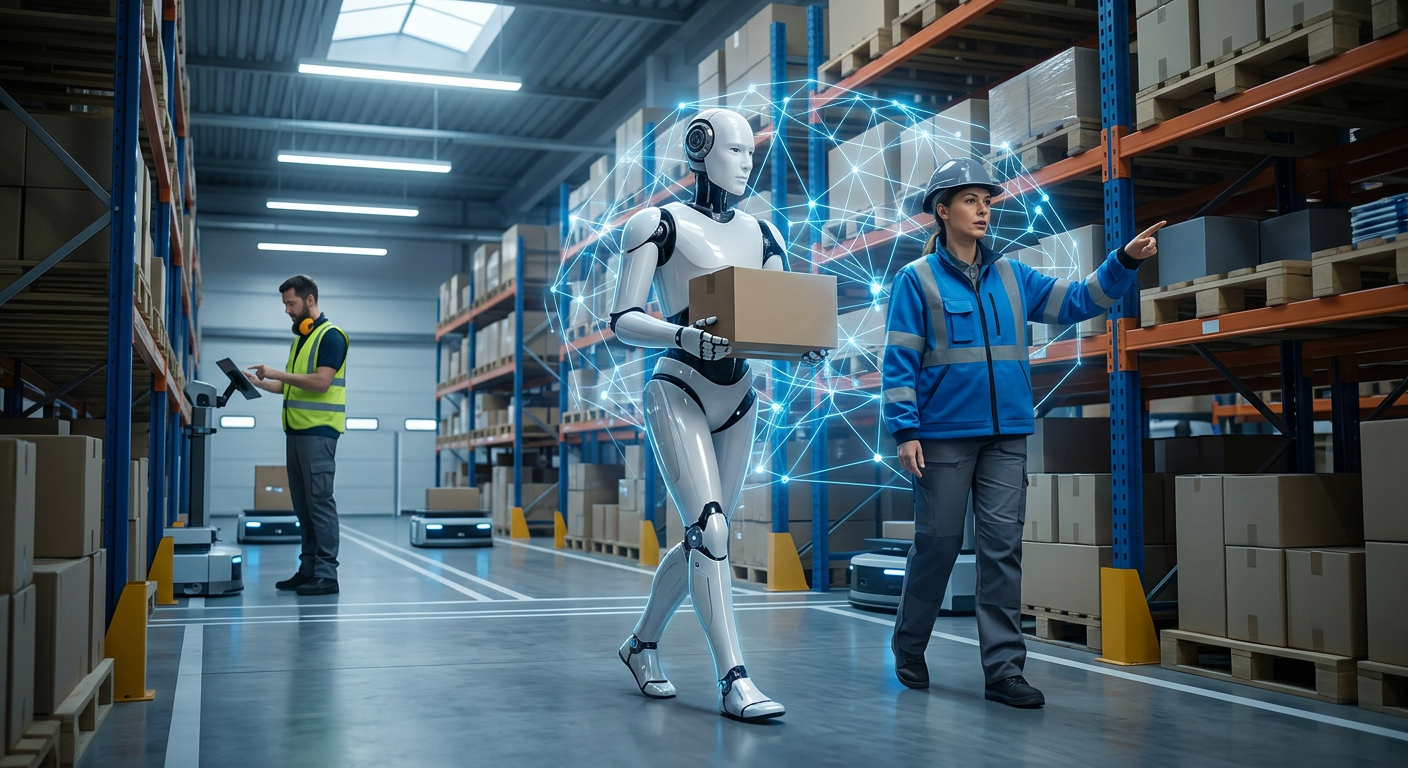
    Mira Murati, the former chief technology officer of OpenAI, has announced that her new AI startup Thinking Machines is developing what it calls interaction models, a new category of AI system designed for simultaneous, real-time processing of audio, video, and text rather than the sequential chat-based exchanges that define most current AI interfaces. The announcement marks one of the most significant public updates from Thinking Machines since its founding and positions the company as a direct challenger to the conversational AI paradigm that has defined the industry since the launch of ChatGPT.

    What Happened

    Thinking Machines has been working on AI systems that process audio, video, and text simultaneously rather than waiting for a user to complete their input before generating a response. Unlike traditional large language models that receive a prompt and generate a response in sequence, the interaction models demonstrated by Thinking Machines interpret all three modalities in real time, meaning the system is continuously aware of what the user is saying, showing, and typing at the same moment.

    Demonstrations of the technology included live translation between speakers in different languages with near-zero perceptible lag, contextual awareness that allowed the system to respond to gestures and environmental cues visible on camera, posture monitoring that triggered context-sensitive responses based on the user physical state, and a dynamic conversation style that adapted in real time rather than waiting for turn-based exchanges. These capabilities suggest a system architecture significantly different from transformer-based chat models, though Thinking Machines has not disclosed technical details of the underlying approach.

    Murati described the goal as enabling more natural collaboration between humans and AI systems, arguing that the turn-taking format of current AI interfaces imposes an unnatural constraint on how people can work with AI. Interaction models are designed to remove that constraint and allow the AI to be a continuous, responsive presence rather than a tool you query.

    Why It Matters

    The interaction model approach, if it scales, would represent a meaningful departure from how frontier AI systems currently work. The dominant paradigm in AI interfaces is still fundamentally chat-based, even when wrapped in voice or video interfaces, because the underlying model processes inputs sequentially. Building a system that is genuinely multimodal and real-time at the model level, rather than as a surface-level interface on top of a text model, is a significantly harder technical challenge.

    Thinking Machines has not announced a release timeline, product availability, or pricing. The announcement appears designed to establish the company research direction and competitive positioning ahead of a product launch. Given Murati track record at OpenAI, where she oversaw the development and release of GPT-4, DALL-E 3, and Sora, the announcement carries credibility that a typical startup claim would not. The AI industry will be watching closely to see whether the interaction model demonstrations represent a genuinely novel capability or a well-staged preview of technology that still has significant engineering work ahead of it.

    What Comes Next

    Thinking Machines has not disclosed its funding status, team size, or compute infrastructure. The company is one of several high-profile AI startups founded by senior alumni of major AI labs, a cohort that includes companies from former Google, Meta, and OpenAI researchers. Interaction models represent a compelling differentiation thesis in a market that is increasingly crowded at the chat-model layer, and the coming months will reveal whether Thinking Machines can translate that thesis into a working product.

    Stay updated on the latest AI news at Evolve Digital.

  • xAI Launches Grok Build: A Coding Agent That Runs Eight AI Workers in Parallel

    xAI Launches Grok Build: A Coding Agent That Runs Eight AI Workers in Parallel

    xAI has launched Grok Build, its entry into the competitive coding agent market, entering a field that already includes tools from Anthropic, Google, and several startups. Grok Build is initially available exclusively to SuperGrok Heavy subscribers paying 300 dollars per month for the service and is built around a novel multi-agent architecture that runs up to eight parallel AI agents simultaneously. The launch positions xAI as a serious competitor in the fast-growing category of autonomous software development tools.

    What Was Announced

    Grok Build is an agentic coding system designed to handle software development tasks from planning through implementation. Unlike single-agent coding tools that work sequentially, Grok Build runs multiple agents in parallel, each pursuing a different approach to the same problem. The system then uses an internal evaluation layer called Arena Mode to score and rank the competing outputs before a developer reviews the results. The developer never has to see all of the parallel work, only the ranked best candidates.

    The three-stage workflow underlying Grok Build, plan, search, and build, structures each task around a consistent pipeline. In the planning stage, agents break down a request into component tasks and identify the files, dependencies, and context they will need. The search stage gathers that context from the codebase and any relevant documentation. The build stage executes the implementation, with agents working in parallel to produce multiple candidate solutions. Arena Mode then evaluates those candidates before surfacing them to the user.

    The initial release is limited to SuperGrok Heavy, the top tier of xAI subscription at 300 dollars per month. xAI has indicated that access will expand over time, but the current exclusivity is consistent with the company pattern of rolling out its most capable features to its highest-paying subscribers first. The pricing places Grok Build in premium territory relative to the broader market for AI coding tools.

    Technical Details

    The multi-agent parallel execution model is the most technically distinctive aspect of Grok Build. Running eight agents simultaneously requires a system that can efficiently allocate compute across concurrent tasks, maintain separate context windows for each agent, and evaluate outputs using a consistent scoring framework. Arena Mode is the piece that makes this practical for developers: without automated evaluation, reviewing eight parallel implementations would impose more cognitive overhead than working through a single agent solution.

    The Arena Mode evaluation layer scores candidate outputs on multiple dimensions without the specifics of the scoring rubric being publicly disclosed. In a competitive benchmark context, automated evaluation systems of this type typically assess code correctness, adherence to the specified requirements, code quality and readability, and potential security issues. The system is designed to surface the best candidates rather than present an exhaustive ranking, meaning developers interact with a curated shortlist rather than a raw set of eight outputs.

    Grok Build operates as an agentic command-line interface, meaning it integrates into developer workflows at the terminal level rather than requiring a separate IDE or interface. This positions it similarly to Anthropic Claude Code and other CLI-based coding agents, making adoption relatively low-friction for developers who already work in a terminal environment.

    Industry Impact and Reactions

    The coding agent market has become one of the most competitive segments in applied AI, with Anthropic Claude Code, Google Gemini for developers, and several startups all competing for the workflow of software engineers. xAI entry with Grok Build raises the number of serious competitors in the space and introduces a differentiated architectural approach. The parallel multi-agent execution model is not unique in concept, but Grok Build appears to be the first widely available coding agent to build Arena Mode evaluation directly into the core workflow rather than treating it as an optional add-on.

    The timing of the launch is notable given the broader context of xAI strategic position. SpaceX acquired xAI in April 2026, and the company is moving with urgency to boost revenue ahead of a SpaceX IPO expected later this year. Grok Build directly addresses that need by offering a high-value product at a premium price point to the audience most likely to pay for AI coding assistance, software developers. The SuperGrok Heavy subscription at 300 dollars per month is significantly higher than competing products, suggesting xAI is prioritizing revenue per user over subscriber volume in the early stages.

    Developer reaction to the Arena Mode concept has been broadly positive in early discussions. The ability to get multiple approaches to a problem evaluated automatically before review is a compelling workflow improvement, particularly for complex refactoring tasks or greenfield implementations where there is genuine uncertainty about the best approach.

    What Comes Next

    xAI has indicated that Grok Build will expand to additional subscription tiers over time, though no specific timeline has been provided. The company is also continuing to develop its enterprise offerings, recently recruiting Morgan Stanley and Apollo Global Management as early enterprise Grok users. Grok Build could be a significant component of those enterprise pitches, as software engineering productivity is a high-priority use case for large organizations.

    The recently released Grok 4.1 model, described as a significant refinement of Grok 4 with better reasoning consistency and reduced hallucinations, will likely power future versions of Grok Build as the base model improves. Coding agents are highly sensitive to model capability, meaning improvements to the underlying Grok model translate directly into better Grok Build outputs.

    Conclusion

    Grok Build is a technically credible entry into the coding agent market that introduces a genuinely novel workflow through parallel execution and automated Arena Mode evaluation. Its current limitations, specifically the premium price point and narrow initial availability, are consistent with an early launch aimed at the most capable and highest-paying users. Whether xAI can expand Grok Build into a significant revenue driver and establish a lasting position in the developer tools market will depend on how the Arena Mode evaluation model holds up on real engineering tasks and how quickly the company can bring the product to a broader audience.

    Stay updated on the latest AI news at Evolve Digital.

  • OpenAI Creates the OpenAI Deployment Company with $4 Billion to Accelerate Enterprise AI Adoption

    OpenAI Creates the OpenAI Deployment Company with $4 Billion to Accelerate Enterprise AI Adoption

    OpenAI has launched a new entity called the OpenAI Deployment Company, backed by more than four billion dollars in initial investment, with a mission to help businesses integrate AI into their operations through embedded engineering teams and hands-on consulting services. The announcement represents a significant strategic expansion beyond model development and API access, moving OpenAI directly into the professional services and implementation business that has historically been dominated by major consulting firms and systems integrators.

    What Was Announced

    The OpenAI Deployment Company is a standalone entity under the OpenAI umbrella, structured to operate with the speed and client focus of a consulting firm while drawing on OpenAI model and infrastructure capabilities. Its primary offering is embedded engineering teams, groups of AI engineers who work within client organizations to build, deploy, and maintain AI systems using OpenAI technology. This is a departure from the typical AI vendor relationship, where the vendor provides models and documentation and the client figures out implementation on its own.

    As part of the launch, OpenAI is acquiring Tomoro, an AI consultancy with approximately 150 engineers and deployment specialists. The acquisition gives the Deployment Company immediate capacity and a team of professionals who have spent their careers helping organizations implement AI in production environments. The terms of the acquisition were not disclosed.

    The four billion dollar initial investment signals that OpenAI views enterprise deployment as a long-term, capital-intensive business. Building and maintaining embedded engineering teams at scale requires ongoing headcount, operational infrastructure, and the ability to work across diverse industries and technology stacks. The investment is structured to fund that buildout rather than representing a single transaction.

    Technical Details

    The Deployment Company model addresses a well-documented gap in enterprise AI adoption: the difference between an organization having access to a capable AI model and that organization successfully integrating it into production workflows. Most enterprise AI projects face challenges around data access, security and compliance requirements, integration with existing systems, and change management, none of which are solved by API access alone.

    Embedded engineering teams from the Deployment Company would handle the technical layer of those integrations, working within client IT environments to build pipelines, fine-tune models for specific use cases, and create the interfaces through which employees interact with AI systems. This is closer to how major consulting firms approach technology transformation than how AI API vendors have historically operated.

    The Tomoro acquisition is particularly relevant here. Consultancies that specialize in AI implementation have accumulated hard-won knowledge about what works across different industries, compliance environments, and organizational contexts. Bringing that knowledge in-house gives the Deployment Company a head start rather than building institutional knowledge from scratch.

    Industry Impact and Reactions

    The move puts OpenAI in a more direct competitive position with the major consulting firms that have built large AI practices, including Accenture, Deloitte, McKinsey, and PwC. Those firms have historically acted as integrators of OpenAI technology rather than competitors. The Deployment Company model suggests OpenAI wants to capture more of the value created when organizations transform using its models, rather than leaving that value to implementation partners.

    For the consulting firms, the entry of OpenAI into professional services is a meaningful shift. They have benefited significantly from the boom in AI consulting demand, but their advantage has been implementation expertise rather than model ownership. If OpenAI can pair model access with comparable implementation capability, the competitive calculus changes. Anthropic recently deepened its own partnership with PwC, certifying tens of thousands of PwC professionals on Claude, suggesting a different but parallel approach to enterprise deployment.

    Smaller AI consultancies and systems integrators face a starker challenge. The Tomoro acquisition demonstrates that OpenAI is willing to bring implementation talent in-house rather than routing clients through partner networks. For firms whose value proposition is implementing OpenAI technology specifically, the Deployment Company could be a significant competitive threat.

    What Comes Next

    The Deployment Company is expected to target large enterprises and government clients initially, where deal sizes justify the cost of embedded engineering teams. OpenAI has not specified how the service will be priced, but engagements of this type from major consulting firms typically run into the millions of dollars per year for sustained implementation support.

    The integration of the Tomoro team is also worth watching as a signal of how OpenAI plans to scale the Deployment Company. If the Tomoro acquisition goes smoothly and the embedded team model proves effective, further acquisitions of AI consultancies are plausible. The industry has many smaller firms with specialized expertise in particular verticals, compliance environments, or deployment contexts.

    Conclusion

    The OpenAI Deployment Company marks a significant evolution in how OpenAI thinks about its role in the AI ecosystem. Moving from model provider to implementation partner changes the company competitive surface, its talent needs, and its relationship with the consulting industry that has been one of its largest customer segments. Whether the model succeeds will depend on whether OpenAI can build the operational capabilities, client relationships, and institutional trust that enterprise consulting requires, while maintaining the model development velocity that makes it worth working with in the first place.

    Stay updated on the latest AI news at Evolve Digital.

  • Anthropic Launches Claude for Small Business with QuickBooks, PayPal, and HubSpot Integrations

    Anthropic Launches Claude for Small Business with QuickBooks, PayPal, and HubSpot Integrations

    Anthropic has launched Claude for Small Business, a new product tier that packages its AI assistant with prebuilt agentic workflows and deep integrations into the tools that small and medium-sized businesses use every day. The launch, which includes partnerships with PayPal, QuickBooks, HubSpot, Canva, DocuSign, Google Workspace, and Microsoft 365, marks Anthropic most direct push yet into the small business market, a segment that has historically been underserved by frontier AI products designed primarily for enterprise or individual consumers.

    What Was Announced

    Claude for Small Business centers on prebuilt agentic workflows, sequences of actions that Claude can execute across connected tools without requiring users to manually orchestrate each step. A business owner could ask Claude to pull invoice data from QuickBooks, draft a follow-up email in Google Workspace, and log the interaction in HubSpot, all through a single request. The integrations are native rather than built on generic API access, meaning they are optimized for the specific data models and workflows of each platform.

    The partner lineup covers the core software stack of a typical small business operation. QuickBooks and PayPal cover accounting and payments. HubSpot addresses customer relationship management and sales. Canva provides design and marketing capabilities. DocuSign handles contracts and signatures. Google Workspace and Microsoft 365 round out the productivity and communication layer. The breadth of the integrations positions Claude for Small Business as a cross-platform orchestration layer rather than another standalone app.

    Alongside the software launch, Anthropic and PayPal are jointly offering a free nine-lesson AI fluency course aimed at helping small business owners understand how to use AI tools effectively. Anthropic is also launching the Claude SMB Tour, a physical road show hitting ten U.S. cities this spring beginning with Chicago. The in-person events are a departure from the company typical go-to-market strategy, which has focused heavily on developer audiences and enterprise sales teams.

    Technical Details

    The underlying model powering Claude for Small Business is the same Claude that powers standard subscription tiers, optimized for task completion within the structured context of business workflows. The agentic workflows are built on Anthropic agent infrastructure, with Claude operating as the planning and execution layer that coordinates actions across connected applications.

    Each integration maintains platform-specific authentication, meaning Claude accesses QuickBooks or HubSpot through an authorized connection rather than asking users to hand over credentials. This is consistent with how major productivity AI platforms handle third-party integrations and is an important design choice for small business users who may be unfamiliar with OAuth flows but still have legitimate concerns about data access and security.

    The workflows are prebuilt to lower the barrier to entry, but users can customize and extend them through natural language instructions. This hybrid approach, starting with curated templates but allowing freeform customization, mirrors what has worked for no-code automation platforms, adapted to the more capable action space that a large language model enables.

    Industry Impact and Reactions

    The launch puts Anthropic in more direct competition with Microsoft Copilot for Microsoft 365, Google Workspace AI features, and a growing category of AI-first small business tools. What distinguishes Claude for Small Business is the cross-platform reach: rather than being native to a single productivity suite, it aims to operate across whichever combination of tools a given business already uses.

    For the small business market, access to this class of AI capability has historically been limited by cost, technical complexity, or both. Enterprise AI deployments typically require IT teams, custom integrations, and contracts that are out of reach for most businesses with fewer than 100 employees. By packaging prebuilt workflows with widely used platforms, Anthropic is attempting to collapse the deployment complexity into something a non-technical business owner can activate.

    The in-person SMB Tour is also notable as a distribution strategy. Most AI companies have relied on digital marketing, developer communities, and word-of-mouth referrals to grow. Meeting small business owners directly in cities across the country signals that Anthropic believes this segment requires different outreach, built on trust and education rather than product-led growth alone.

    What Comes Next

    Anthropic has not specified a pricing tier for Claude for Small Business separate from its existing subscription offerings. The SMB Tour running through spring 2026 is likely to serve as both a launch campaign and a feedback mechanism, helping Anthropic understand how small business owners use the product in practice before refining the feature set.

    The partnership with PayPal on the AI fluency course also suggests a longer-term relationship that could extend into financial product integrations, potentially including payment processing workflows, cash flow analysis, or invoice automation that draws on PayPal transaction data in addition to QuickBooks records.

    Conclusion

    Claude for Small Business represents Anthropic clearest statement yet that its AI ambitions extend beyond the enterprise and developer markets. By meeting small businesses where they already operate, in QuickBooks, HubSpot, and Google Workspace, and wrapping it in prebuilt workflows and in-person education, Anthropic is betting that practical utility will matter more than technical sophistication for this audience. Whether Claude can establish a lasting presence in the small business market will depend on how well those workflows hold up under the varied, unpredictable demands of real business operations.

    Stay updated on the latest AI news at Evolve Digital.

  • Google Announces Gemini Intelligence for Android: AI That Works Across All Your Apps and Devices

    Google Announces Gemini Intelligence for Android: AI That Works Across All Your Apps and Devices

    Google unveiled Gemini Intelligence on May 12, 2026, its most comprehensive AI push for Android yet — a suite of deeply integrated, cross-app AI capabilities that goes far beyond a chatbot. Unlike earlier iterations of Google AI on Android, Gemini Intelligence is designed to understand what is happening on-screen across any application and take action on a user’s behalf. The announcement positions Google’s Gemini as the connective tissue of the entire Android ecosystem, capable of completing complex tasks that previously required jumping between multiple apps.

    What Was Announced

    Gemini Intelligence is Google’s new overarching brand for its AI feature set on Android. The defining characteristic of the new platform is ambient, cross-app awareness: rather than operating within a single context or chat window, Gemini Intelligence can follow a task from start to finish across multiple applications. A user could, for example, ask it to find a restaurant near a location mentioned in a message, check availability, and add the reservation to their calendar — all without manually switching between apps.

    Two standout features debuted with the announcement. The first is Rambler, a Gboard integration that uses Gemini to polish spoken messages into clean, readable text. Users can speak naturally, and Rambler handles the editing — converting rough voice input into polished prose before it is sent. The second is generative widget creation: users can describe the kind of widget they want in natural language, and Gemini Intelligence will build it for them dynamically, without requiring a developer or an app update.

    Google is rolling out Gemini Intelligence in waves. The first devices to receive the features are the latest Samsung Galaxy and Google Pixel phones. From there, the rollout is expected to expand to Android watches, Android Auto in cars, the forthcoming Android XR glasses, and Google-powered laptops from Acer, ASUS, and Lenovo. This device-spanning approach reflects Google’s ambition to make Gemini a consistent AI layer across every screen a person uses throughout their day.

    Technical Details

    The core technical enabler behind Gemini Intelligence is on-screen context understanding. Gemini Intelligence does not just respond to typed queries — it reads what is visible on the display and uses that information to inform its actions. This requires a model with strong vision and language capabilities running with low enough latency to feel responsive in real time, integrated tightly with Android’s accessibility and activity management systems.

    Generative widget creation represents a particularly interesting capability. Traditional Android widgets are static code artifacts created by app developers. Gemini Intelligence generates widget layouts dynamically based on user intent expressed in natural language, meaning users can request a custom at-a-glance view for tracking a sports team’s schedule, a reminder widget tuned to a specific workflow, or a summary card for a category of notifications. The infrastructure to support this is a combination of on-device inference and cloud API calls, routed to minimize latency and preserve privacy where possible.

    The cross-app task completion capability depends heavily on Android’s permission and intents model. Gemini Intelligence interacts with applications through system-level APIs rather than simulated user input, which means it can take reliable action inside apps rather than just mimicking taps. Google has indicated enterprise administrators will be able to configure exactly which actions the AI layer is permitted to take, addressing workplace security concerns about autonomous AI operating on corporate devices.

    Industry Impact and Reactions

    The timing of the Gemini Intelligence announcement is significant. Google is in direct competition with Apple for AI mindshare on mobile, and Apple is expected to unveil a sweeping overhaul of Siri at WWDC 2026 in June, alongside expanded Apple Intelligence features for iOS 27. The Google announcement effectively raises the bar one month before Apple’s own showcase, giving Gemini Intelligence a brief window of attention before the industry’s focus shifts to Cupertino.

    For Samsung, which ships the largest volume of premium Android devices globally, the deep integration of Gemini Intelligence represents a major bet on Google’s AI roadmap. Samsung has historically maintained its own AI product, Galaxy AI, and the deeper Gemini integration suggests a growing alignment — or at minimum a pragmatic recognition that Google’s AI investment exceeds what Samsung can replicate independently.

    On the developer side, the generative widget system raises questions about how traditional widget developers will adapt. If users can generate widgets on demand through natural language, there is less incentive to seek out and install purpose-built widget apps. This could represent a meaningful disruption to a segment of the Android app ecosystem that has historically been insulated from AI-driven change.

    What Comes Next

    Google I/O 2026 is expected to bring additional Gemini Intelligence announcements, including the launch of a new Gemini model that Google is positioning as competitive with the current frontier — described in reporting as landing roughly in the class of OpenAI’s recent flagship model rather than pushing beyond it. Additional Android XR integrations are also expected, as Google prepares to launch its wearable glasses hardware later this year.

    The broader rollout across watches, cars, and laptops is expected throughout summer and fall 2026. Google has not committed to a firm timeline for when Gemini Intelligence will reach mid-range Android devices, which represent the majority of global Android shipments. That expansion will be a key test of whether the features can scale beyond premium flagship hardware.

    Conclusion

    Gemini Intelligence represents Google’s most ambitious attempt yet to make AI a fundamental layer of the Android operating system rather than an add-on feature. By enabling cross-app task completion, dynamic widget generation, and voice input refinement, Google is betting that users want an AI that does things — not just one that answers questions. As mobile AI competition intensifies ahead of Apple’s WWDC, the Gemini Intelligence launch stakes out an aggressive position that will define the AI smartphone narrative through the rest of 2026.

    Stay updated on the latest AI news at Evolve Digital.

  • Nvidia CEO Jensen Huang Unveils Ising: The World First Family of Open-Source Quantum AI Models

    Nvidia CEO Jensen Huang Unveils Ising: The World First Family of Open-Source Quantum AI Models

    Nvidia CEO Jensen Huang announced the creation of Nvidia Ising, described as the world first family of open-source quantum AI models, on May 9, 2026. The announcement positions Nvidia at the intersection of two of the most consequential technology bets of the decade: large-scale AI and quantum computing. While commercially viable quantum computing remains years away, the Ising model family represents Nvidia opening move in defining what AI-optimized quantum software might look like when that hardware becomes available.

    What Was Announced

    Jensen Huang announced at an investor event that Nvidia had developed the Ising model family, a set of open-source AI models designed to interface with and accelerate optimization problems that quantum computing architectures are particularly suited to solve. The name references the Ising model from statistical mechanics, a mathematical framework used to model spin interactions in physical systems that has become a foundational benchmark problem for quantum computers.

    The models are being released as open source, consistent with Nvidia strategy across several of its AI research initiatives. Making the models publicly available allows the broader quantum computing and AI research communities to build on them, accelerating development of the tools and workflows needed to make quantum-classical hybrid computing practical for real workloads. Nvidia has positioned itself not as a quantum hardware company but as a software and systems integrator that can bridge quantum hardware from companies like IonQ, IBM, and others with the AI frameworks that developers already know.

    Nvidia described Ising as part of its broader push to integrate quantum computing into its simulation and optimization workflows. The company has existing quantum computing partnerships and has incorporated quantum circuit simulation into its cuQuantum software library. Ising extends that foundation toward AI-native interfaces for quantum problem-solving.

    Technical Details

    The Ising model family is designed around optimization problems — a class of computations that quantum hardware handles particularly well compared to classical systems. Optimization problems appear throughout AI and industrial applications: scheduling, logistics, financial portfolio construction, drug molecule discovery, and materials science simulations are all domains where quantum-optimized solutions could offer significant advantages when hardware matures.

    The models are designed as open-source artifacts that developers can adapt to specific problem domains. Nvidia approach of releasing them under an open license means the research community can extend them to new problem types and hardware backends without waiting for proprietary tools. This positions Nvidia standards and frameworks as the natural foundation for quantum AI development even before quantum hardware achieves commercial viability.

    Nvidia already operates one of the most widely adopted AI software stacks through CUDA, cuDNN, and its associated ecosystem. Extending that stack into the quantum domain through open-source models follows the same playbook: establish the software foundation early and let hardware adoption follow. When commercial quantum hardware eventually arrives at meaningful scale, developers trained on Nvidia quantum tools will likely continue using them.

    Industry Impact and Reactions

    The announcement has drawn attention from both the AI and quantum computing communities. For quantum computing researchers, Nvidia entry as an open-source model provider lends significant institutional weight to efforts to define quantum AI standards. For AI developers, the announcement signals that the GPU giant is thinking seriously about what comes after classical accelerators, even if the timeline remains uncertain.

    Nvidia is not the first major technology company to invest in quantum AI research. Google, IBM, and Microsoft have all built significant quantum computing programs, and all have explored the intersection of quantum hardware with AI workloads. But Nvidia unique position as the dominant supplier of AI training and inference infrastructure gives its quantum AI efforts a distinctive reach: when Nvidia defines what quantum AI software looks like, developers who depend on CUDA have strong incentives to align with that vision.

    Financial analysts covering Nvidia noted that the Ising announcement does not affect the company near-term revenue outlook, which remains overwhelmingly dependent on classical GPU sales. But for investors with a multi-decade horizon, the move is consistent with a pattern of early positioning in transformative technology categories that Nvidia has executed successfully across GPU computing, deep learning, and autonomous vehicles.

    What Comes Next

    Nvidia has not disclosed a specific timeline for when Ising models will be available for download or what quantum hardware backends will be supported at launch. The company is expected to share additional technical details at a forthcoming developer event. In the meantime, the announcement is likely to drive collaboration between Nvidia and quantum hardware providers eager to align their roadmaps with Nvidia open-source software infrastructure.

    Broader commercial quantum advantage in optimization problems is generally expected to emerge in the early-to-mid 2030s based on current hardware trajectories. The Ising model release positions Nvidia to be the software ecosystem of choice when that transition happens.

    Conclusion

    Nvidia release of the Ising open-source quantum AI model family is an early but strategically significant move in what may become one of the most important technology transitions of the coming decade. By establishing an open-source software foundation at the intersection of AI and quantum computing now, Nvidia is following the same playbook that made it the dominant force in classical AI infrastructure — planting a flag early, building developer alignment, and waiting for hardware to mature around its software ecosystem.

    Stay updated on the latest AI news at Evolve Digital.

  • Perplexity Launches All-New Native Mac App Bringing Always-On Personal Computer AI Agent

    Perplexity Launches All-New Native Mac App Bringing Always-On Personal Computer AI Agent

    Perplexity released a rebuilt version of its macOS application on May 7, 2026, replacing its previous Mac software with what the company describes as an all-new native Mac experience. The redesigned app serves as the primary interface for Perplexity Personal Computer, the company always-on agentic feature that runs on a dedicated Mac mini and works continuously in the background to manage tasks, monitor triggers, and carry work forward between user sessions.

    What Happened

    The new Mac app is available to all Pro and Max subscribers and is built to take full advantage of macOS system capabilities rather than relying on a web wrapper. It integrates directly with Perplexity Computer, a service that pairs local file and app access with Perplexity cloud-connected search and reasoning capabilities. The updated Computer feature now supports Microsoft Teams integration alongside its existing app connections, and the company has upgraded the underlying AI models that power it for improved speed and reliability.

    Perplexity also announced that the Computer feature itself has been updated with more powerful models and improved multi-step task execution. Pro and Max subscribers gain access to agentic capabilities that allow the assistant to proactively work through ongoing tasks, monitor external triggers like emails or calendar events, and surface results without requiring the user to initiate each action.

    Why It Matters

    The native Mac app marks Perplexity expansion beyond its core identity as an AI-powered search engine. Personal Computer represents a direct bid for a share of the productivity-focused AI assistant market that Microsoft Copilot, Anthropic Claude, and Apple Intelligence are all competing to dominate. By positioning its product as an always-on background agent rather than a chatbot users summon on demand, Perplexity is pursuing a different UX paradigm — one that bets heavily on proactive AI value delivery.

    Perplexity is growing rapidly, with over 45 million monthly active users as of early 2026 and annualized revenue that crossed 50 million in March. The native Mac app and updated Computer features are designed to deepen engagement among the highest-value segment of that user base and support continued subscription growth.

    Stay updated on the latest AI news at Evolve Digital.