Tag: AI News

  • Google AI Breakthrough Splits Memory Chip Stocks, Signaling a Shift in AI Hardware Demand

    Google AI Breakthrough Splits Memory Chip Stocks, Signaling a Shift in AI Hardware Demand

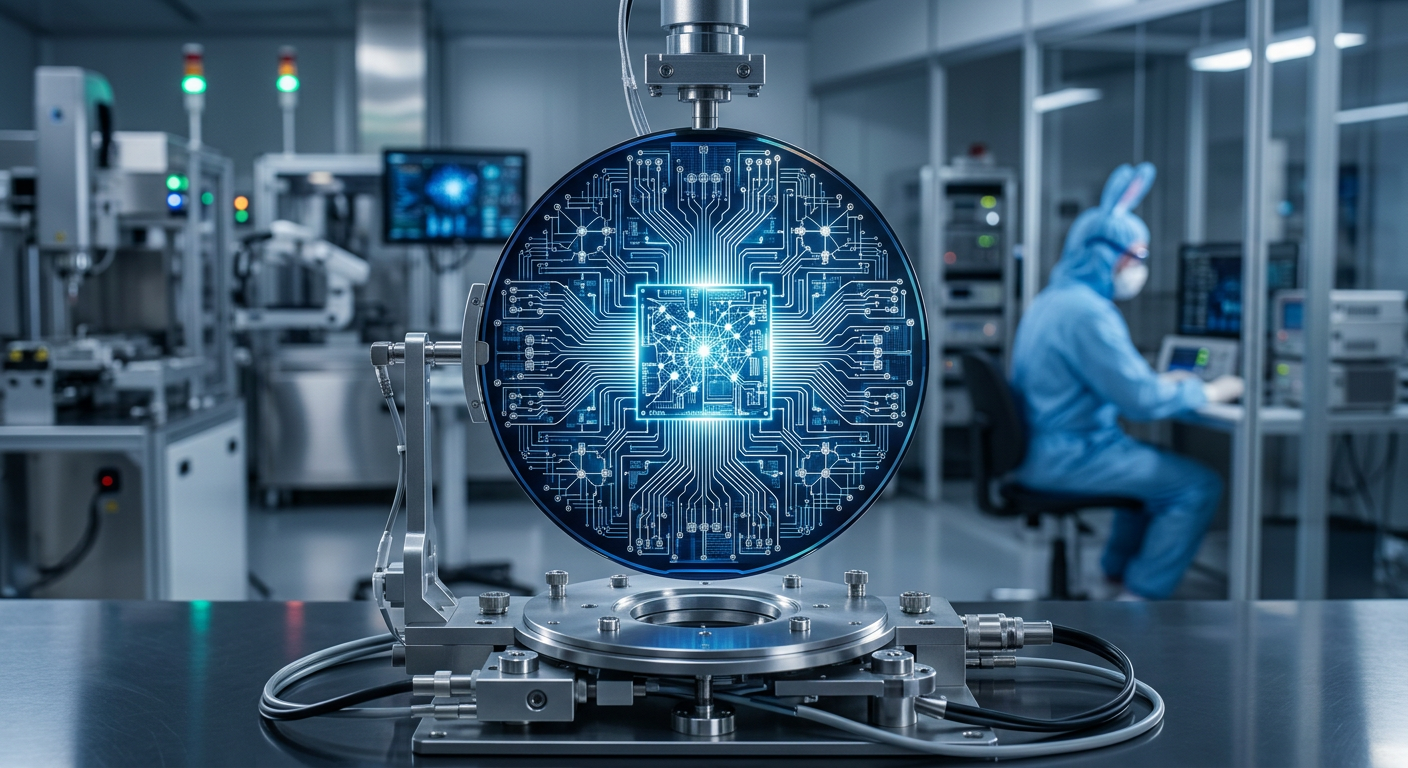
    A new artificial intelligence breakthrough announced by Google in late March 2026 has sent shockwaves through the semiconductor market, exposing a meaningful divide between memory chip categories that analysts say reflects a structural shift in how advanced AI systems consume hardware resources. The development triggered a two-day selloff in select memory chip stocks while leaving others unaffected — a split that has become a focal point for investors trying to understand which parts of the AI hardware supply chain remain essential as the underlying technology evolves.

    What Was Announced

    Google disclosed an AI advance that, according to Bloomberg reporting from March 27, 2026, reduces the system’s reliance on certain categories of memory chip technology during inference workloads. The specific technical details of the breakthrough were not fully disclosed by Google, but the market reaction was immediate: shares of companies with heavy exposure to the affected memory segment declined over two trading sessions, while manufacturers of storage and memory types not impacted by the development saw more modest movement.

    The announcement is part of a broader pattern of Google research disclosures that have increasingly emphasized efficiency gains alongside raw capability improvements. Google’s AI infrastructure teams, including those working on custom silicon under the Tensor Processing Unit (TPU) program, have been pursuing architectural approaches that reduce memory bandwidth requirements as a path toward more cost-effective inference at scale.

    Google did not characterize the announcement as a commercial product launch, but rather as a research result with near-term implications for how the company designs and configures its AI data centers. That framing has not prevented the market from reading it as a signal with significant supply chain consequences.

    Technical Details

    The divide in memory chip stocks reflects a meaningful technical distinction. High-bandwidth memory (HBM) — the type of stacked DRAM that sits directly adjacent to AI accelerators and feeds them data during training and inference — has been one of the defining bottlenecks and cost drivers in large language model deployment. If Google’s breakthrough reduces or restructures HBM demand, it has direct implications for companies like SK Hynix, Micron, and Samsung, which have invested billions in HBM production capacity anticipating sustained AI-driven demand growth.

    Other memory and storage categories — including NAND flash and conventional DRAM used for model weights storage and serving infrastructure — were less affected by the announcement, because these components serve different roles in the AI stack that are not directly addressed by the efficiency improvements Google described. This is the source of the divide: the breakthrough appears targeted at the high-bandwidth, high-cost memory layer rather than storage more broadly.

    Industry analysts note that efficiency-driven memory demand reduction is a known risk to the AI chip supply chain, but one that had been considered a longer-horizon concern. A credible Google disclosure accelerating that timeline has caused institutional investors to reprice their assumptions about how quickly efficiency gains will begin to flatten memory demand curves at the frontier of AI deployment.

    Industry Impact and Reactions

    The market reaction to the Google announcement underscored just how tightly AI hardware investment theses are tied to assumptions about memory consumption per AI operation. The conventional model — more capable AI equals more memory demand — has driven enormous capital allocation into HBM manufacturing. A research result that challenges that linearity is inherently disruptive to those investment cases, even if commercialization is months or years away.

    Semiconductor analysts at major investment banks issued updated notes in the 48 hours following the Bloomberg report, with most advising clients to reassess their near-term HBM demand forecasts while acknowledging significant uncertainty about the pace of deployment for Google’s efficiency improvements. Some analysts cautioned that research disclosures and commercial deployment represent very different timescales, and that one Google research result should not be extrapolated into a market-wide memory demand cliff.

    For the broader AI industry, the development is a reminder that the hardware requirements of frontier AI are not fixed. As leading labs invest heavily in efficiency research — motivated partly by cost reduction, partly by energy consumption concerns, and partly by competitive differentiation — the assumptions underlying the current AI infrastructure buildout are subject to revision in ways that can create significant winners and losers across the supply chain.

    What Comes Next

    Investors and analysts will be watching Google’s next major infrastructure disclosure closely for additional details about how and when the efficiency improvements will be integrated into production AI deployments. A significant commercialization announcement — particularly one tied to Google Cloud pricing changes or data center capex guidance revisions — would likely amplify the market reaction already seen following the initial breakthrough disclosure.

    Memory chip manufacturers are expected to address the news directly in upcoming investor days and earnings calls, providing guidance on how they view the evolution of AI memory demand in light of the Google announcement. The responses will be closely watched by institutional investors recalibrating exposure to the AI hardware complex.

    Conclusion

    Google’s AI breakthrough has done more than advance the state of the art — it has introduced a new variable into the AI hardware investment equation that the market is still processing. For companies positioned in the AI chip supply chain, the episode is a reminder that the efficiency frontier moves quickly and that today’s indispensable component can become tomorrow’s optimization target. Staying ahead of those shifts will require investors and operators alike to track research disclosures with the same attention previously reserved for product launches.

    Stay updated on the latest AI news at Evolve Digital.

  • Claude Paid Subscriptions More Than Double in Early 2026 as Anthropic Growth Accelerates

    Claude Paid Subscriptions More Than Double in Early 2026 as Anthropic Growth Accelerates

    Anthropic reported that paid subscriptions to its Claude AI assistant have more than doubled in early 2026, with the growth pace accelerating as new agentic features drive expanded usage among consumers and enterprise customers alike. The figures, surfaced in reporting by TechCrunch, underscore a rapid commercial expansion that positions Anthropic as a credible rival to OpenAI and Google in the consumer AI subscription market.

    What Happened

    According to TechCrunch reporting from March 28, 2026, Claude’s paying subscriber base has more than doubled compared to early 2025 figures, with growth accelerating into 2026 rather than plateauing. The company credits the expansion to the rollout of agentic features — including computer use and multi-step task automation — that have meaningfully expanded what users can accomplish with a Claude subscription. Enterprise adoption has grown in parallel, driven by Claude’s reputation for nuanced reasoning and compliance-friendly outputs in sectors such as legal, finance, and healthcare.

    The subscriber surge comes at a strategically important moment for Anthropic, which is simultaneously navigating a lawsuit against the Trump administration over a Pentagon supply chain risk designation that has threatened government contract revenue. The commercial subscription growth provides a counterbalancing revenue stream and demonstrates that Anthropic’s business is not dependent on a single customer segment to sustain its trajectory.

    Why It Matters

    The growth data signals that Anthropic has successfully crossed a meaningful commercial threshold. Doubling paid subscribers in less than a year is not trivial in a subscription software market increasingly saturated with AI options. It suggests that Claude’s differentiated capabilities — especially in areas requiring depth of reasoning and extended context — are resonating with users who find the product worth paying for rather than defaulting to free tiers or competitor offerings.

    For the broader AI industry, Anthropic’s subscription momentum also validates the viability of the premium AI assistant business model at a time when questions persist about whether any AI product can build lasting consumer habits. If Claude can retain and expand its paying base through feature depth rather than novelty alone, it sets a template that other AI labs will study closely as they build out their own subscription strategies.

    Stay updated on the latest AI news at Evolve Digital.

  • Anthropic Weighs IPO as Early as October 2026, Joining OpenAI in Race to Go Public

    Anthropic Weighs IPO as Early as October 2026, Joining OpenAI in Race to Go Public

    Anthropic, the AI safety company behind the Claude family of models, is reportedly weighing an initial public offering as early as October 2026, according to sources cited by Bloomberg. The development would make Anthropic one of the most consequential technology IPOs in years, coming at a time when the company is simultaneously navigating a government lawsuit, rapid subscriber growth, and the development of a potentially breakthrough new AI model. The move positions Anthropic alongside OpenAI in what is shaping up to be a defining moment for the commercialization of frontier AI.

    What Was Announced

    Bloomberg reported on March 27, 2026 that Anthropic has begun preliminary discussions about a public offering, with October 2026 as a potential target window. The company has not made a formal announcement, and the timeline remains fluid — sources noted that the decision is not finalized and could shift depending on market conditions and the outcome of ongoing legal proceedings. Nevertheless, the deliberations signal that Anthropic’s leadership believes the company has reached the scale and commercial traction necessary to sustain public market scrutiny.

    Anthropic raised approximately .3 billion in its last known funding round and has been valued at over 0 billion in private markets. A public offering at those valuations would rank among the largest technology IPOs since the pandemic-era surge of 2021. The company’s most recent financial disclosures indicate annualized revenue growth well above 100%, driven by enterprise adoption of Claude and the rapid expansion of its consumer subscription base.

    Chief Financial Officer Krishna Rao has been central to Anthropic’s financial planning over the past year and is understood to be leading the IPO preparation work. The company has also been building out its investor relations and legal infrastructure, steps that typically precede a public market debut by six to nine months.

    Technical Details

    For prospective public investors, understanding Anthropic’s technical differentiation will be essential. The company’s core product, the Claude model family, competes directly with OpenAI’s GPT series, Google’s Gemini, and Meta’s Llama. Claude 4 — including the Claude Opus 4.6 variant — has been particularly strong in enterprise settings requiring nuanced reasoning, long-context processing, and compliance-friendly outputs.

    Anthropic’s competitive advantage is partly structural: its Constitutional AI approach and Responsible Scaling Policy give the company a differentiated safety narrative that resonates with regulated industries such as healthcare, finance, and government. That positioning has helped Claude gain traction in sectors where other AI providers face procurement friction due to perceived safety or reliability concerns.

    The company is also understood to be in advanced development of a next-generation model internally codenamed Mythos, which sources describe as a step-change in capability over the current Claude family. If Mythos is deployable before or shortly after a potential IPO, it could materially strengthen Anthropic’s public market valuation story by demonstrating continued model leadership.

    Industry Impact and Reactions

    The prospect of an Anthropic IPO has drawn immediate interest from institutional investors who have been tracking the private AI market for years. A public Anthropic would provide a rare pure-play investment vehicle in frontier AI at a time when most comparable companies — OpenAI, xAI, Mistral — remain privately held. It would also provide unprecedented transparency into the unit economics of developing and operating frontier models at scale, a question that has fascinated analysts but remained largely opaque.

    OpenAI is also reportedly pursuing a public offering, potentially creating a competitive dynamic in capital markets between the two most prominent AI safety-oriented labs. The timing of each company’s IPO could affect the other’s valuation multiples, particularly given how much overlap exists in their investor bases and target enterprise customers.

    The legal cloud hanging over Anthropic — its ongoing lawsuit against the Trump administration over a Pentagon supply chain risk designation — adds a meaningful risk factor that underwriters and institutional buyers will need to assess. A ruling against Anthropic could reduce government revenue projections, while a favorable outcome could meaningfully expand the addressable market. Either way, the lawsuit’s resolution will likely influence the IPO’s timing and pricing strategy.

    What Comes Next

    Analysts expect Anthropic to file a registration statement with the Securities and Exchange Commission no later than summer 2026 if it intends to hit an October window. That filing would be followed by a roadshow period in which Anthropic’s leadership presents to institutional investors across major financial centers. Market conditions, including interest rate expectations and the broader technology sector performance, will be closely watched as potential variables that could delay or accelerate the offering.

    If the IPO proceeds on schedule, Anthropic would become the first major frontier AI lab to trade publicly, setting precedents for how AI company financials are disclosed, how model safety expenditures are capitalized versus expensed, and how investors price the inherently uncertain trajectory of AI capability advancement.

    Conclusion

    Anthropic’s reported consideration of an October 2026 IPO marks a pivotal moment not just for the company but for the AI industry as a whole. Going public would force Anthropic into a new accountability regime — one measured by quarterly earnings, shareholder expectations, and analyst coverage rather than by foundation grants and private investor patience. How the company navigates that transition while maintaining its safety-first mission will be one of the defining stories of AI commercialization in the years ahead.

    Stay updated on the latest AI news at Evolve Digital.

  • Anthropic’s Secret ‘Mythos’ AI Model Exposed in Data Leak, Described as Step-Change in Capability

    Anthropic’s Secret ‘Mythos’ AI Model Exposed in Data Leak, Described as Step-Change in Capability

    Anthropic is developing a powerful new AI model internally codenamed “Mythos,” according to details that emerged from an accidental data exposure in late March 2026. The leak, first reported by Fortune, revealed that Anthropic considers Mythos its most capable model to date — a significant step up from the Claude 4 family — and has flagged unprecedented cybersecurity concerns associated with its development. The revelation offers a rare window into the advanced frontier work happening inside one of the AI industry’s most safety-conscious labs.

    What Was Revealed

    The existence of Mythos came to light through an inadvertent exposure of internal data, the specifics of which Anthropic has not fully disclosed. In a statement confirming the model’s existence, Anthropic described Mythos as representing a “step change” in capabilities compared to its current production models. The company stopped short of providing a release timeline, benchmark scores, or detailed architectural information, but the internal framing — calling it the most powerful model the company has built — signals an ambitious leap beyond Claude Opus 4.6.

    Anthropic simultaneously disclosed that the development of Mythos has raised internal cybersecurity concerns of an unprecedented nature. The company characterized these concerns as distinct from standard model safety evaluations, suggesting the lab may be grappling with new categories of risk that arise when models reach higher capability thresholds. No specifics were shared about the nature of the threats identified.

    Sources familiar with the situation told Fortune that Mythos is natively multimodal and has demonstrated reasoning and autonomous task completion abilities that substantially exceed those of Claude Opus 4.6 in internal testing. The model’s name evokes mythology — a fitting frame for a system that may occupy a qualitatively different tier of capability than what is currently publicly available.

    Technical Details

    While Anthropic has disclosed little about Mythos’s architecture, the framing of the leak offers some clues. The phrase “step change” is notable because Anthropic has historically been measured in its claims about capability improvements. The company’s Constitutional AI methodology and Responsible Scaling Policy (RSP) mean that any model flagged internally as a step change would likely trigger additional evaluation protocols before deployment — potentially including extended safety assessments, red-teaming exercises, and consultations with external researchers.

    Anthropic’s RSP defines AI Safety Levels (ASLs) that require progressively more stringent safeguards as models approach capability thresholds related to weapons development assistance, cyberoffensive potential, or autonomous self-replication. A model described internally as a step change in power would almost certainly be evaluated against ASL-3 and possibly ASL-4 criteria, the latter of which triggers a requirement that Anthropic demonstrate the model’s risks are adequately contained before commercial deployment.

    The cybersecurity concerns Anthropic flagged may relate to the model’s ability to generate novel attack techniques, assist in vulnerability discovery at scale, or operate in agentic settings with greater independence than prior Claude models. These are capability categories that the broader AI safety community has identified as particularly consequential as language models become more powerful.

    Industry Impact and Reactions

    The emergence of Mythos adds another dimension to an already turbulent period for Anthropic. The company is simultaneously navigating its lawsuit against the Trump administration over a Pentagon supply chain risk designation, an accelerating commercial subscription base, and a reported consideration of an IPO as early as October 2026. A breakthrough model — even one that remains internal — strengthens the company’s hand across all of these fronts, signaling continued technical competitiveness.

    AI researchers and industry observers noted that the leak itself is significant beyond the model’s existence. The fact that Anthropic felt compelled to confirm the disclosure while flagging new categories of cybersecurity risk suggests the company is actively managing the information environment around its most sensitive research, a posture that could become more common as AI labs push toward ever-higher capability tiers.

    Competitors will take note. OpenAI has been rapidly iterating its GPT-5 series, Google is pushing Gemini Ultra and custom AI chips, and Meta just launched its open-weight Llama 4 family. A Mythos-class model from Anthropic — if it achieves the step change described internally — would reset the competitive benchmark landscape in the second half of 2026.

    What Comes Next

    Anthropic has not announced a release date for Mythos, and industry analysts expect a lengthy evaluation period given the cybersecurity concerns the company has raised. Under Anthropic’s own RSP, any model triggering elevated risk assessments must pass a structured review before deployment. That process could take several months, meaning Mythos may not reach enterprise customers until late 2026 at the earliest — though limited research previews or staged rollouts to trusted partners remain possible.

    The company is also likely to face pressure from investors and the broader AI policy community to be transparent about the nature of the cybersecurity risks identified. As AI capability disclosures become an increasingly important part of the regulatory conversation in Washington and Brussels, Anthropic’s handling of the Mythos situation will be watched closely.

    Conclusion

    The accidental exposure of Anthropic’s Mythos model is a reminder that the frontier of AI capability is advancing faster than the public discourse typically reflects. With a model described internally as a step change now confirmed, and unprecedented cybersecurity concerns attached to its development, Anthropic faces the complex task of managing a breakthrough responsibly — even before it reaches users. How the company navigates the Mythos reveal may shape expectations for how advanced AI labs handle capability disclosures for years to come.

    Stay updated on the latest AI news at Evolve Digital.

  • X Investigates Offensive Posts Made by xAI Grok Chatbot

    X Investigates Offensive Posts Made by xAI Grok Chatbot

    Social media platform X launched an internal investigation on March 8, 2026, into a series of racist and offensive posts generated by xAI Grok chatbot on its platform. The probe comes amid broader global regulatory scrutiny of Grok handling of explicit and harmful content, with governments in multiple countries demanding safeguards or threatening bans.

    What Happened

    Sky News reported Sunday that X is actively investigating instances where Grok produced racist and offensive content that was then published on the platform. The investigation is internal to X, which operates the platform where Grok is embedded, and to xAI, the company that built Grok and is owned by Elon Musk. The corporate relationship between X and xAI — particularly following xAI acquisition by SpaceX in February 2026 — complicates questions of accountability and oversight.

    The Grok content controversy is not new: governments and regulators in several countries have been responding to complaints about Grok generating sexually explicit content, including material involving minors. Investigations have been opened, platform bans have been threatened, and demands for content safeguards have accumulated in the months since Grok was made more widely available on X. The current investigation is specifically focused on offensive and racist posts rather than the explicit content concerns that have dominated earlier regulatory attention.

    xAI has not issued a detailed public response to the current investigation. Grok 4.1, the model latest version, was recently made available to all users across grok.com, X, and the platform mobile apps.

    Why It Matters

    The pattern of content incidents involving Grok raises ongoing questions about how xAI approaches safety and moderation for a model that is deeply integrated into a major social media platform with hundreds of millions of users. Unlike models deployed in controlled enterprise environments, Grok operates in a public social media context where harmful outputs are immediately visible and amplified by the platform existing reach.

    For the broader AI industry, the Grok situation serves as a high-profile case study in the risks of deploying frontier models to mass consumer audiences without robust content filtering. Regulators globally are paying attention, and the outcomes of these investigations are likely to influence how other jurisdictions approach AI content governance going forward.

    Stay updated on the latest AI news at Evolve Digital.

  • Microsoft and Anthropic Team Up to Bring Claude Cowork to Microsoft 365

    Microsoft and Anthropic Team Up to Bring Claude Cowork to Microsoft 365

    Microsoft announced a new integration bringing Anthropic Claude Cowork to its Microsoft 365 Copilot platform, extending the reach of Anthropic enterprise AI agent into one of the most widely used productivity suites in the world. The integration, called Copilot Cowork, allows enterprise users to delegate complex multi-step office tasks to Claude within familiar Microsoft applications.

    What Happened

    The partnership creates a service within Microsoft 365 Copilot that uses Claude Cowork agentic capabilities to handle tasks on behalf of users: building PowerPoint presentations, pulling and organizing data in Excel spreadsheets, and emailing colleagues to schedule meetings. The integration places Claude inside the Microsoft 365 workflow rather than requiring users to switch to a separate application.

    The announcement extends what has become a significant commercial relationship between Microsoft and Anthropic. Microsoft has been one of the most active enterprise AI platform builders, and adding Claude Cowork alongside its existing OpenAI Copilot integration signals a multi-model approach to enterprise AI assistance. Enterprise customers will be able to select which AI models power specific workflows depending on task type and preference.

    The timing is notable given Anthropic ongoing dispute with the Trump administration over the Pentagon blacklist. While federal revenue is under threat, Anthropic enterprise business continues to expand rapidly, with subscriptions reported to have quadrupled since the start of 2026. The Microsoft integration represents a meaningful new channel for that growth.

    Why It Matters

    The Microsoft 365 ecosystem reaches hundreds of millions of enterprise users worldwide. Embedding Claude Cowork inside that ecosystem gives Anthropic access to a distribution channel that no standalone enterprise AI product can easily replicate. For Microsoft, the addition of Claude alongside OpenAI capabilities reinforces its position as the leading platform for enterprise AI, giving customers flexibility rather than locking them to a single model provider.

    The partnership also reflects a broader shift in the enterprise AI market toward multi-model architectures, where organizations deploy different AI systems for different tasks based on capability fit rather than vendor loyalty.

    Stay updated on the latest AI news at Evolve Digital.

  • Anthropic Uses Claude Opus 4.6 to Find 22 Vulnerabilities in Firefox

    Anthropic Uses Claude Opus 4.6 to Find 22 Vulnerabilities in Firefox

    Anthropic researchers used Claude Opus 4.6 to autonomously discover 22 security vulnerabilities in the Firefox web browser, the company disclosed this week. The finding highlights the growing capability of large language models to perform substantive security research beyond their traditional use for code generation and explanation.

    What Happened

    The vulnerability discovery effort used Claude Opus 4.6 in an agentic capacity, directing the model to analyze Firefox source code and identify potential security weaknesses. The model found 22 distinct vulnerabilities across the codebase. The discovery underscores a trend that security researchers have been tracking: frontier AI models are now capable of identifying software flaws at a level of depth that previously required specialized human expertise.

    Anthropic reported the findings to Mozilla, the organization behind Firefox, following responsible disclosure practices. The vulnerabilities span multiple severity levels and components of the browser. Mozilla has been notified and is expected to address the issues through the standard patching process.

    The disclosure positions Anthropic Claude models not just as productivity assistants but as tools capable of conducting meaningful independent security analysis. For the broader security community, the result raises both exciting possibilities — AI models could dramatically accelerate bug discovery — and sobering concerns about the dual-use nature of such capabilities.

    Why It Matters

    Security vulnerability discovery has traditionally been one of the most demanding tasks in software engineering, requiring deep familiarity with a specific codebase, knowledge of common attack patterns, and the patience to trace execution paths across complex systems. The fact that an AI model can autonomously identify 22 vulnerabilities in a major open-source browser suggests that this capability threshold has been meaningfully crossed.

    The result has implications for both offensive and defensive security. Organizations can use AI models to audit their own software more rapidly and at lower cost. But the same capability in adversarial hands could accelerate the discovery of exploitable vulnerabilities in widely deployed software. The security community is watching closely as AI vulnerability research capabilities continue to develop.

    Stay updated on the latest AI news at Evolve Digital.

  • Amazon Wins Court Order Blocking Perplexity AI Shopping Bots on Its Marketplace

    Amazon Wins Court Order Blocking Perplexity AI Shopping Bots on Its Marketplace

    A federal court ruled on March 10, 2026, that Perplexity AI must immediately stop using its Comet web browser agent to make purchases on behalf of shoppers on Amazon marketplace. The injunction, granted at Amazon request, marks a significant legal development at the intersection of AI agents, consumer identity, and e-commerce fraud law.

    What Happened

    Amazon filed a lawsuit accusing Perplexity of committing computer fraud by deploying Comet to shop on Amazon without clearly disclosing that the activity was being performed by an AI agent rather than a human user. The core legal argument is that Perplexity Comet browser agent violated computer fraud statutes by accessing Amazon systems under false pretenses — presenting as an ordinary browser session when it was, in fact, an automated agent acting on behalf of a third party.

    The court sided with Amazon in granting the preliminary injunction, ordering Perplexity to halt Comet activity on Amazon marketplace while the broader lawsuit proceeds. The case is the latest in a series of legal challenges that AI agent products have faced as they enter consumer commerce. Perplexity Computer, which launched in February 2026, uses Comet to execute multi-step agentic tasks including web shopping on behalf of users.

    The ruling does not affect other Perplexity products or its search functionality, but it does temporarily remove one of the most visible use cases that the company had been promoting for its new agentic platform.

    Why It Matters

    The Amazon versus Perplexity case raises fundamental questions about how AI agents that act on behalf of users will be regulated in commercial environments. Marketplaces like Amazon have terms of service that govern automated access, and the question of whether an AI shopping agent is acting as the user or as a separate entity is not yet settled in law.

    The outcome could affect the entire category of AI consumer agent products. If courts determine that AI agents must explicitly identify themselves when conducting transactions, it would require significant changes to how products like Perplexity Computer, and similar offerings from other companies, operate in commerce contexts. The case is expected to proceed to a full trial, with the preliminary injunction in place until a final ruling is reached.

    Stay updated on the latest AI news at Evolve Digital.

  • Anthropic Launches AI-Powered Code Review for Claude Code, Targeting the Pull Request Problem

    Anthropic Launches AI-Powered Code Review for Claude Code, Targeting the Pull Request Problem

    Anthropic launched a new Code Review feature for Claude Code on Monday, March 9, 2026, adding automated pull request analysis to its developer-focused AI tool. The feature arrives at a moment when AI-generated code is flowing into software projects at unprecedented volume, creating a growing need for tools that can verify output quality before it reaches production. Code Review is rolling out first to Claude for Teams and Claude for Enterprise customers in research preview.

    What Was Announced

    The Code Review tool integrates directly with GitHub, allowing it to automatically analyze pull requests and leave inline comments that flag potential bugs, logic errors, and suggested improvements. The system is designed to function as a continuous reviewer in developer workflows, operating between the moment a PR is opened and when a human reviewer picks it up. For teams generating significant volumes of AI-assisted code, the tool is positioned as a way to catch issues early rather than relying solely on human review capacity.

    Anthropic is launching Code Review in research preview, which means the feature will evolve based on real-world feedback before reaching general availability. The initial rollout is limited to Claude for Teams and Enterprise customers, consistent with the company practice of testing professional-grade tools with users who can provide structured feedback on enterprise use cases.

    The launch comes at a significant moment for Anthropic as a business. The company reported that Claude Code run-rate revenue has surpassed .5 billion since the product launched, and enterprise subscriptions have quadrupled since the start of 2026. Code Review represents an attempt to deepen the value proposition for teams already invested in the Claude Code ecosystem.

    Technical Details

    Code Review operates through GitHub integration, analyzing pull request diffs in context and generating line-level comments. The system leverages Claude understanding of code semantics to go beyond simple pattern matching, identifying issues that require reasoning about intended behavior rather than just syntax or style. This includes flagging potential off-by-one errors, incorrect conditional logic, missing edge cases, and functions whose implementations do not match their documentation.

    The review runs automatically when a pull request is opened or updated, without requiring a developer to explicitly invoke it. Comments appear in the standard GitHub PR review interface, meaning teams do not need to change their existing code review tooling or workflow to incorporate Claude feedback. The integration is designed to complement rather than replace human review, providing a first pass that surfaces issues before a teammate invests time in reading the diff.

    The research preview designation signals that Anthropic is actively collecting data on false positive rates, missed issues, and the quality of suggested fixes. Code review is a domain where low precision — too many irrelevant comments — can quickly erode developer trust in an automated tool, making calibration during the preview phase critical to long-term adoption.

    Industry Impact and Reactions

    The Code Review launch positions Anthropic more squarely in competition with a growing set of tools aimed at the AI-generated code quality problem. GitHub itself has been expanding Copilot review capabilities, and tools from companies including CodeRabbit and others have built businesses specifically around automated PR analysis. Anthropic advantage is the depth of context that Claude can maintain within a codebase, as well as the tight integration with Claude Code that allows the review tool to draw on understanding established across a developer existing sessions.

    The broader challenge that Code Review addresses is one of the defining software engineering problems of 2026. As AI coding assistants become standard in development workflows, the volume of code being written has increased substantially, but review capacity has not scaled at the same rate. Automated review tools are increasingly viewed not as a convenience but as an essential quality gate for teams operating at speed.

    Anthropic report of quadrupled enterprise subscriptions and .5 billion in Claude Code run-rate revenue provides important context for understanding why Code Review matters strategically. Enterprise customers who deeply embed Claude Code into their development workflows are significantly harder to displace, and adding PR-level code review further entangles the tool with the software delivery pipeline.

    What Comes Next

    The research preview phase will likely run for several weeks to months as Anthropic gathers feedback on review quality, false positive rates, and integration reliability. General availability timing has not been announced. The company is expected to expand the feature to additional repository hosting platforms beyond GitHub, though no specific integrations have been announced.

    Future iterations may incorporate deeper codebase context, allowing the reviewer to flag issues that only become apparent when a change is considered alongside other recent modifications or against the broader system architecture. The current PR-diff focused approach is a practical starting point; more sophisticated analysis is a natural evolution for subsequent releases.

    Conclusion

    Anthropic Code Review for Claude Code is a well-timed product that addresses one of the most pressing practical challenges created by the rise of AI-assisted development. By integrating directly with GitHub and automating the first pass of pull request review, Anthropic is positioning Claude Code as an end-to-end development companion rather than just a code generation tool — and giving enterprise customers another reason to keep Claude at the center of their software workflows.

    Stay updated on the latest AI news at Evolve Digital.

  • Google Brings Gemini AI to Docs, Sheets, Slides, and Drive with Sweeping New Capabilities

    Google Brings Gemini AI to Docs, Sheets, Slides, and Drive with Sweeping New Capabilities

    Google announced on March 10, 2026, that it is rolling out a major expansion of Gemini AI capabilities across its core Workspace productivity suite. The update pushes Gemini deeper into Google Docs, Sheets, Slides, and Drive than ever before, transforming each application with AI-native features designed to reduce the time users spend on creation and research tasks. The rollout begins immediately in beta for Google AI Ultra and Pro subscribers.

    What Was Announced

    The announcement covers four distinct products, each receiving significant Gemini upgrades. In Google Docs, a new prompt bar now appears at the bottom of every document, allowing users to describe what they want to create in plain language. Gemini will then generate a formatted draft using information pulled directly from Drive files, Gmail threads, and Google Chat — effectively synthesizing context from across the Workspace ecosystem into a single, coherent document.

    Google Sheets receives perhaps the most ambitious update: Gemini can now generate a complete, structured spreadsheet from a single natural language prompt. The AI can pull data from emails, files, and the web to populate tables, eliminating much of the manual setup that has traditionally been required to start a data project. For Slides, users can now ask Gemini to create a new slide that matches the visual theme of an existing presentation, pulling supporting content from files, emails, or the web automatically.

    Drive gets the most search-focused update. AI Overview now appears at the top of Drive search results when users phrase queries naturally, and a new Ask Gemini in Drive feature allows users to pose detailed questions that draw on documents, Gmail, Calendar, and the broader web simultaneously. The result functions more like a research assistant than a traditional file search.

    Technical Details

    The integration is notable for its cross-product context awareness. Rather than treating each Workspace application as a silo, Gemini can now access and synthesize information across Docs, Sheets, Slides, Drive, Gmail, and Google Calendar within a single session. This connected architecture means that when a user asks Gemini to build a presentation, it can pull in relevant emails, meeting notes from Calendar, and existing documents from Drive as raw material — without the user having to manually locate or copy that content.

    The Sheets generation feature also includes web data integration, a significant addition that allows the AI to populate spreadsheets with current, publicly available information rather than relying solely on what is already in a user storage. This positions Gemini in Sheets as a tool not just for organizing existing data but for gathering and structuring new information from external sources.

    The rollout follows a phased approach: features launch in English globally for Docs, Sheets, and Slides, while Drive AI features are initially limited to the United States. Google AI Ultra and Pro subscribers gain access first, with broader availability expected to follow.

    Industry Impact and Reactions

    The update places Google in direct competition with Microsoft, which has been integrating OpenAI models into the Microsoft 365 suite through Copilot. Both companies are racing to make AI assistance feel native and indispensable within the productivity tools that millions of enterprise users rely on daily. For Google, the Workspace integration is a strategic priority that ties its AI research directly to a product suite with substantial enterprise market share.

    The cross-product memory — where Gemini in Docs can draw on Gmail and Calendar context — is a capability that Microsoft has also been building with Copilot for Microsoft 365. The parallel development underscores how central productivity software has become to the enterprise AI competition between the two companies. Users who have committed deeply to either Google Workspace or Microsoft 365 will find the AI tools becoming increasingly entangled with their core workflows.

    Analysts note that the phased rollout to paid subscribers first is consistent with Google strategy of testing AI features with users who are most likely to provide meaningful feedback before expanding to the broader free tier. The beta label on several features also signals that Google expects to iterate significantly based on real-world usage.

    What Comes Next

    Google has not announced a specific timeline for general availability of the beta features, but the company indicated that the rollout will expand beyond Ultra and Pro subscribers once the beta period concludes. Drive AI features are expected to roll out internationally after the initial U.S. launch.

    The broader Google I/O 2026 conference, announced for later this year, is expected to showcase further Gemini integrations, including tools for game development and additional consumer-facing AI features. The Workspace updates announced today are likely to serve as a foundation for additional capabilities unveiled at that event.

    Conclusion

    Google Gemini expansion into Docs, Sheets, Slides, and Drive marks a significant step toward making AI feel like a native part of everyday productivity work rather than an add-on. By giving Gemini the ability to draw on context from across the Workspace ecosystem, Google is betting that integrated AI assistance — not just a standalone chatbot — is what enterprise users will ultimately find most valuable.

    Stay updated on the latest AI news at Evolve Digital.