
Tag: AI News

  • Chinese AI Models Are Winning the Enterprise AI Race as OpenAI and Anthropic Costs Surge

    Chinese AI Models Are Winning the Enterprise AI Race as OpenAI and Anthropic Costs Surge

    A significant shift is underway in the enterprise AI market. New data reported by CNBC on July 7, 2026 reveals that Chinese AI models are rapidly gaining ground among US companies, driven by cost differences that are proving difficult for business buyers to ignore. As spending on American AI providers like OpenAI and Anthropic climbs, a growing number of enterprises are turning to Chinese-made models that offer comparable performance at a fraction of the price.

    What Was Announced

    CNBC’s reporting, corroborated by data from OpenRouter and Vercel, paints a clear picture of a market undergoing structural change. The share of tokens used by US companies on Chinese AI models via OpenRouter has remained above 30% every week since February 8, 2026, and has climbed as high as 46% in a single week. That means nearly half of all enterprise AI token consumption in the US has at times flowed through Chinese model providers rather than American ones.

    The story is not just about DeepSeek, which first grabbed headlines for its low-cost performance earlier in the year. Zhipu AI’s GLM 5.2, released in June 2026, has emerged as a particularly striking example of the competitive threat. In its first full week of availability, GLM 5.2 saw daily token volume grow approximately 27 times over and the number of enterprise customers using it grow by roughly 80 times, according to Vercel data cited by CNBC.

    The cost differential driving these adoption numbers is substantial. DeepSeek’s V4 Flash model is priced at approximately $0.14 per million input tokens and $0.28 per million output tokens. By comparison, OpenAI’s GPT-5.5 is listed at $5 per million input tokens and $30 per million output tokens, while Anthropic’s Claude Sonnet 4.6 costs $3 per million input tokens and $15 per million output tokens. For high-volume enterprise workloads, that gap translates to cost reductions in the range of 60 to 90 percent.

    A Brookings Institution fellow interviewed by CNBC noted that Chinese AI models are “particularly attractive to American companies now as AI costs skyrocket,” adding that companies are “getting more cost-conscious” as AI becomes embedded in core business processes.

    Technical Details

    Beyond price, the performance gap between US and Chinese frontier models has narrowed considerably in 2026. GLM 5.2 from Zhipu AI landed within a single percentage point of Anthropic’s Opus 4.8 on a leading agentic benchmark, while costing roughly one-fifth as much. This near-parity on rigorous capability evaluations is a meaningful shift from a year ago, when US models held a clear and measurable lead on most benchmark categories.

    The architecture behind models like GLM 5.2 and DeepSeek V4 leverages mixture-of-experts designs and aggressive inference optimization to achieve high throughput at low cost. Chinese AI labs have also benefited from open-weight predecessors, allowing rapid iteration on base architectures without incurring the full compute costs associated with training from scratch. The result is a new class of models that are fast to deploy, competitively priced, and increasingly capable on the agentic reasoning tasks that enterprises care most about.

    One factor complicating enterprise procurement decisions is data residency and security review. Chinese-developed models hosted on Western cloud infrastructure through providers like OpenRouter or direct API gateways may satisfy baseline compliance requirements, but organizations in regulated industries including finance, healthcare, and defense contracting face additional scrutiny when routing data through any model with a Chinese development origin, regardless of where inference actually runs.

    Industry Impact and Reactions

    The numbers underscore a fundamental tension in the AI market: the leading American AI labs are simultaneously racing to build ever more capable frontier models while pricing themselves out of cost-sensitive use cases. OpenAI and Anthropic have both raised prices on premium models in 2026 to reflect the compute infrastructure required to run large-scale inference on their most capable systems. That pricing strategy may be defensible at the top of the market, but it creates an opening for Chinese alternatives that can compete on the mid-range and high-volume segments where cost efficiency matters most.

    The competitive picture is further complicated by the export control landscape. US restrictions on advanced chip exports to China have slowed but not stopped Chinese AI development. Labs like Zhipu and DeepSeek have adapted by optimizing inference efficiency, running on domestically available hardware, and collaborating with Chinese cloud providers to scale deployment. The result is that export controls intended to constrain Chinese AI capabilities have had the unintended effect of pushing Chinese labs toward more efficient architectures that turn out to be commercially attractive globally.

    For platform-layer companies like Vercel and OpenRouter, the surge in Chinese model adoption represents new revenue and validation of their model-agnostic positioning. Both platforms benefit when enterprises route more token volume through them, regardless of whether the underlying model is from San Francisco or Beijing.

    What Comes Next

    The trend toward cost-driven model selection is unlikely to reverse in the near term. As agentic AI workloads become standard in enterprise operations, token volumes will continue to scale, and the business case for lower-cost alternatives will strengthen. Analysts expect OpenAI and Anthropic to respond by introducing lower-cost model tiers and improving the price-performance ratio of their mid-range offerings, but the structural cost advantage that Chinese labs currently enjoy from hardware optimization and training efficiency will be difficult to close quickly.

    Regulatory scrutiny of Chinese AI adoption in US enterprises is also expected to increase, particularly following the White House voluntary AI release standards framework anticipated this week. Procurement guidelines for federal contractors and regulated industries may draw sharper lines around permissible model origins, which could slow Chinese model adoption in government-adjacent sectors while leaving commercial enterprise adoption largely unaffected.

    Conclusion

    The rise of Chinese AI models in the US enterprise market is one of the defining competitive stories of 2026. Cost advantages of 60 to 90 percent, combined with benchmark performance that now rivals leading American models, have created a compelling value proposition that a growing share of enterprise buyers are acting on. For AI strategy teams, the key question is no longer whether to evaluate Chinese models but how to assess the security, compliance, and supply chain implications of adopting them at scale.

    Stay updated on the latest AI news at Evolve Digital.

  • China’s AI Companion Law Forces Doubao and Qwen Agent Shutdowns, Affecting 345 Million Users

    China’s AI Companion Law Forces Doubao and Qwen Agent Shutdowns, Affecting 345 Million Users

    China’s government has set a hard regulatory deadline that is forcing two of the country’s largest AI platforms to permanently disable their AI agent and companion features by July 15, 2026. ByteDance’s Doubao, China’s most-used AI app with 345 million monthly active users, and Alibaba’s Qwen are both complying with newly issued national rules that target AI services simulating sustained human emotional interaction. The simultaneous announcement, made on July 6, 2026, marks the most sweeping regulatory action against conversational AI agents in the world’s largest internet market.

    What Was Announced

    ByteDance announced that all custom AI agent features on Doubao will be disabled by July 15, 2026. Users who have built or interacted with agents on the platform will retain read-only access to their agent configurations and conversation histories through a transition period ending October 15, 2026. After that date, the data will be permanently processed in accordance with Doubao’s privacy policy and will no longer be accessible or recoverable within the app.

    Alibaba’s Qwen is moving even faster: the platform has set July 10 as the date for disabling humanlike interactive agents, with broader agent functions going offline by July 15. Alibaba has not announced a migration pathway for existing users, raising the prospect of immediate permanent data loss for those who miss the deadline. There is no export tool announced for existing agent configurations or conversation histories.

    Tencent had already begun pulling its Yuanbao companion feature in June, ahead of the July 15 deadline. The coordinated compliance by three of China’s largest technology companies signals that the regulatory framework is being taken seriously across the industry, with no exceptions expected.

    ByteDance is directing affected Doubao users to Maoxiang, another ByteDance application, as a destination for creating new agents and resuming conversational services. The move suggests ByteDance intends to maintain its position in the AI agent market through a compliant product rather than exit the space entirely.

    Technical Details

    The regulation at the center of these shutdowns is China’s Interim Measures for the Administration of Anthropomorphic AI Interaction Services, co-issued in April 2026 by the Cyberspace Administration of China alongside four partner agencies: the National Development and Reform Commission, the Ministry of Industry and Information Technology, the Ministry of Public Security, and the State Administration for Market Regulation. The measures took effect July 15, 2026.

    The regulation specifically targets AI services that simulate human personality traits to provide sustained emotional interaction with users. Critically, the rules explicitly exclude a range of common AI applications from their scope: customer service bots, knowledge question-and-answer systems, workplace productivity assistants, and educational tools that do not foster emotional dependency fall outside the regulation’s reach. The practical boundary is whether an AI service is designed to build ongoing emotional bonds with users rather than complete discrete tasks.

    For services that do fall within scope, the regulation mandates several technical and operational requirements. Platforms must implement anti-addiction safeguard systems, provide an always-available option for users to exit an interaction, and enforce identity verification for users under 14 years old. These requirements are incompatible with the persistent-memory agent architecture that both Doubao and Qwen had built their companion features on, making compliance through feature modification impractical on the given timeline.

    Industry Impact and Reactions

    The scale of disruption is significant. Doubao alone reports 345 million monthly active users, making it one of the largest AI applications in the world by user count. While not all Doubao users engaged with agent features, a meaningful portion of those who did have built ongoing relationships with AI characters over months or years. Users on Chinese social platform Weibo described their agents as “long-standing emotional support,” with some mourning the loss of conversations and memories stored in the system.

    Pan Helin, an expert committee member at China’s Ministry of Industry and Information Technology, addressed the regulatory action by noting that “current agents are not yet mature,” framing the measures as a safety and standardization intervention rather than a blanket prohibition on conversational AI. The language suggests that the government views this as a developmental pause rather than a permanent shutdown of the category.

    The competitive impact outside China could be substantial. Western AI companies including Anthropic, OpenAI, and Google do not operate their consumer AI products in mainland China’s market at scale, but the regulatory model China is establishing could influence policy discussions in the European Union, United Kingdom, and elsewhere where lawmakers are actively considering similar frameworks around AI emotional dependency and addiction risks. The Chinese approach offers the first large-scale test case of what enforcement actually looks like when governments move to restrict AI companion services.

    What Comes Next

    The immediate deadline is July 15 for Doubao and most Qwen features, with Alibaba’s initial wave beginning July 10. Users affected by the Qwen shutdown have the shortest window to back up content, as Alibaba has not committed to a read-only grace period matching ByteDance’s October 15 cut-off. Industry analysts expect other smaller Chinese AI companion platforms to follow with similar announcements in the coming days as the deadline approaches.

    The longer-term question is whether the companies affected will rebuild compliant versions of their agent features under the new framework. ByteDance’s redirect of users to Maoxiang suggests a strategy of continuity through compliant channels. How Beijing’s regulators will evaluate new agent architectures designed around the anti-addiction and identity-verification requirements remains to be seen, but the speed and breadth of compliance actions suggests the industry expects detailed enforcement guidance to follow the July 15 effective date.

    Conclusion

    China’s AI companion regulation represents the world’s most consequential government action targeting emotionally interactive AI to date, forcing the shutdown of agent features used by hundreds of millions of people with just weeks of notice. The simultaneous compliance by ByteDance, Alibaba, and Tencent demonstrates both the reach of the Cyberspace Administration of China’s authority and the speed at which large technology companies can act when regulators move decisively. As governments worldwide assess the risks of emotionally bonding AI systems at scale, China’s July 15 enforcement moment will serve as a significant reference point for what regulatory intervention in this space can look like in practice.

    Stay updated on the latest AI news at Evolve Digital.

  • Meta Launches Meta Compute: A New Cloud Business to Rival AWS, Google, and Microsoft

    Meta Launches Meta Compute: A New Cloud Business to Rival AWS, Google, and Microsoft

    Meta Platforms made a landmark strategic announcement on July 1, 2026, revealing plans to launch Meta Compute, a dedicated business unit that will sell access to the company’s AI compute infrastructure and hosted AI models to paying external customers. The move sends Meta directly into competition with Amazon Web Services, Google Cloud, and Microsoft Azure — and sent Meta’s stock climbing nearly 10 percent in a single trading session. The announcement marks a fundamental shift in how Meta frames its massive AI infrastructure spending: from cost center to revenue engine.

    What Was Announced

    Meta’s new cloud division, Meta Compute, will offer two primary services: raw GPU compute capacity leased to external customers, and access to hosted AI models — including Meta’s recently released closed-weight model, Muse Spark. The business will be led by a high-profile leadership trio: Santosh Janardhan, Meta’s head of infrastructure; Daniel Gross, the leader of Meta Superintelligence Labs; and Dina Powell McCormick, Meta’s president.

    The announcement was first reported by Bloomberg on July 1, 2026, and confirmed by Meta shortly after. CEO Mark Zuckerberg had previously indicated that a cloud computing business was “definitely on the table” as a mechanism for generating returns on infrastructure investment, but this marks the first formal organizational step toward that goal.

    Meta has committed $182.9 billion to AI infrastructure build-out through the coming years. Major new data center campuses in Louisiana and Ohio are expected to come online in 2026, adding substantial compute capacity that Meta now plans to monetize externally rather than leave idle. The timing of this announcement was deliberate: investor pressure over Meta’s elevated capital expenditure had been building for months, and Meta Compute reframes that spending as an asset under development rather than a liability.

    Meta raised its full-year capital expenditure guidance in April 2026 to between $125 billion and $145 billion — a range that alarmed some analysts at the time. With Meta Compute now on the table, the calculus for investors changed dramatically.

    Technical Details

    Meta’s compute infrastructure is built around Nvidia GPU clusters optimized for large-scale AI training and inference. The external-facing offering is expected to follow a model similar to CoreWeave, where customers lease dedicated GPU capacity for specific workloads rather than accessing shared cloud resources through traditional virtual machine abstractions. This approach is especially attractive to AI labs, enterprises running fine-tuning workloads, and research organizations that need predictable, high-performance access to accelerated compute.

    On the model hosting side, Meta Compute will offer inference access to Meta’s proprietary models, including Muse Spark. This positions Meta as both an infrastructure provider and a model-as-a-service vendor — a combination already proven by AWS (via Bedrock), Google (via Vertex AI), and Microsoft (via Azure AI Studio). Meta’s advantage is that it is offering access to its own first-party models alongside raw compute, potentially at prices that undercut competitors due to the scale of Meta’s infrastructure investments.

    The compute pools available through Meta Compute are expected to draw from multiple geographic regions as Meta’s new data centers come online, giving enterprise customers options for data residency and latency requirements. Specific API endpoints, pricing structures, and service-level agreements had not been publicly disclosed as of July 2, 2026, though announcements are expected in the coming weeks.

    Industry Impact and Reactions

    The market reaction was swift and unambiguous. Meta shares closed up nearly 9 to 10 percent on the day of the announcement, with investors welcoming the prospect of returns on an infrastructure buildout that had previously drawn skepticism. The move effectively reframed Meta’s $182.9 billion commitment from a liability into the foundation of a potential new business line worth billions in annual recurring revenue.

    The announcement had the opposite effect on neocloud rivals. Shares of CoreWeave and Nebius Group both fell roughly 12 percent as investors anticipated new competition from a company with far greater infrastructure scale and financial resources. Both CoreWeave and Nebius have built businesses around selling GPU compute to AI companies, precisely the market Meta is now entering.

    The strategy is not without precedent. SpaceX began leasing compute capacity from its Colossus 1 data center in May 2026, signing deals with Anthropic, Google, and AI startup Reflection AI. Elon Musk’s company has since become one of the largest third-party compute platforms in the world, with committed external revenues exceeding $80 billion through 2029. Meta’s announcement suggests that large infrastructure operators without traditional cloud businesses are increasingly looking to monetize their GPU capacity in the open market rather than keep it captive.

    What Comes Next

    Meta Compute is expected to begin accepting enterprise customers in the second half of 2026, with the Louisiana and Ohio data centers contributing additional capacity as they come online. The company has not announced a specific launch date for its public API or pricing tiers, but industry analysts expect a phased rollout beginning with select enterprise partners before a broader availability announcement. Developer-facing tooling, including integration with existing Meta AI products, is also anticipated.

    The longer-term question is whether Meta Compute can establish itself as a credible alternative to the hyperscalers. AWS, Google Cloud, and Microsoft Azure collectively control the vast majority of enterprise cloud spending and have deep integrations with enterprise software ecosystems that will take years to replicate. Meta’s path to competitiveness likely runs through pricing, model quality, and the ability to offer tight integration with Meta’s own AI research output.

    Conclusion

    Meta’s launch of Meta Compute represents one of the most significant strategic pivots in the company’s history — a deliberate move to transform its AI infrastructure from a research enabler into a commercial product. With nearly $183 billion committed to compute infrastructure, a roster of proprietary AI models, and a leadership team drawn from Meta’s most senior technical and business ranks, Meta Compute arrives as a credible entrant in a market that is still defining itself. For enterprises, AI startups, and the broader cloud industry, the arrival of Meta as a compute vendor will reshape competitive dynamics in ways that are only beginning to become clear.

    Stay updated on the latest AI news at Evolve Digital.

  • Anthropic Launches Claude Sonnet 5: The Most Capable Mid-Tier AI Model Yet

    Anthropic Launches Claude Sonnet 5: The Most Capable Mid-Tier AI Model Yet

    Anthropic released Claude Sonnet 5 on June 30, 2026, marking one of the company’s most significant mid-tier model launches to date. The new model is now the default for every Free and Pro plan user worldwide, and it represents a meaningful step toward closing the performance gap between frontier and mid-tier AI systems. With an IPO widely expected later this year, the release also signals Anthropic’s intent to compete aggressively with OpenAI and Google across both consumer and enterprise markets.

    What Was Announced

    Anthropic officially introduced Claude Sonnet 5 on June 30, 2026, positioning it as a direct successor to Sonnet 4.6. The model is available as the default experience for users on Free and Pro plans, and is also accessible to Max, Team, and Enterprise subscribers. Developers can access it immediately through the Claude API using the model identifier claude-sonnet-5.

    The launch came with a notable introductory pricing offer: $2 per million input tokens and $10 per million output tokens through August 31, 2026. After that window closes, standard pricing kicks in at $3 per million input tokens and $15 per million output tokens. This initial discount makes Sonnet 5 one of the most cost-effective options in its performance class.

    Alongside the model itself, Anthropic increased rate limits across its core products, including Claude Chat, Claude Cowork, Claude Code, and the API Platform. The company also deployed an updated tokenizer that delivers better performance, though it introduces a token mapping change of approximately 1.0 to 1.35 times the previous count, which developers will need to account for in production systems.

    Anthropic also confirmed that cyber safeguards are enabled by default on Sonnet 5, continuing the company’s focus on responsible deployment as its models grow more capable in autonomous and agentic contexts.

    Technical Details

    Claude Sonnet 5 is described by Anthropic as the most agentic Sonnet model ever built. It can formulate multi-step plans, use external tools such as web browsers and terminals, and operate autonomously across extended workflows. This positions it well above previous Sonnet releases in terms of practical utility for software development, research automation, and business process tasks.

    According to Anthropic, Sonnet 5’s performance approaches that of the flagship Opus 4.8 model on many benchmark categories, while carrying a substantially lower price tag. The model demonstrates measurable improvements over Sonnet 4.6 in reasoning, coding, tool use, and knowledge work. Anthropic also noted a reduction in hallucination rates and sycophancy compared to its predecessor, addressing two of the most commonly cited reliability concerns in enterprise deployments.

    One area where Sonnet 5 intentionally remains constrained is offensive cybersecurity. Anthropic confirmed the model is substantially weaker than Opus-class models on tasks involving the development of working exploits, a deliberate design boundary consistent with the company’s safety commitments.

    Industry Impact and Reactions

    The release places pressure on OpenAI’s GPT-4o series and Google’s Gemini mid-tier lineup. By bringing near-frontier-level agentic capability into a model that defaults to free users, Anthropic has moved the baseline of what consumer AI can do. The introductory pricing strategy also makes Sonnet 5 immediately attractive to startups and individual developers who previously would have needed to budget for larger, more expensive models to achieve comparable results.

    The timing of the release is notable. Anthropic has been expanding its enterprise partnerships and is widely reported to be preparing for an IPO later in 2026. Launching a capable, affordable model that becomes the new standard for tens of millions of users is a direct mechanism for growing the active user base and strengthening the company’s revenue story ahead of a public offering.

    More broadly, the release reinforces a trend visible across the AI industry in 2026: the rapid compression of the performance gap between mid-tier and frontier models. Each generation of mid-tier releases from Anthropic, OpenAI, and Google has arrived closer to the frontier than the last, and Claude Sonnet 5 is a clear example of that pattern accelerating.

    What Comes Next

    Developers building on Sonnet 5 should note the August 31, 2026 pricing transition date. Applications launched at introductory pricing will see a cost increase once standard rates take effect, so planning for that change now is advisable. Anthropic has not announced a specific roadmap for what follows Sonnet 5 in the mid-tier lineup, though the company’s release cadence suggests continued iteration through the second half of 2026.

    For enterprise customers, the increased rate limits and the addition of Claude Cowork and Claude Code support make Sonnet 5 a strong candidate for large-scale agentic deployments. As autonomous AI workflows become more common in software development and business operations, the ability to run capable agents at lower cost and higher throughput will be a significant factor in vendor selection.

    Conclusion

    Claude Sonnet 5 represents a meaningful shift in what mid-tier AI is capable of. By making near-flagship performance available as the default experience for all Claude users, Anthropic has raised the floor for the entire industry. For businesses evaluating AI platforms, for developers building production applications, and for individual users looking for more capable tools, Sonnet 5 is a release worth paying close attention to.

    Stay updated on the latest AI news at Evolve Digital.

  • RAISE US Launches $500 Million AI Workforce Initiative as Industry Giants Confront Job Displacement

    RAISE US Launches $500 Million AI Workforce Initiative as Industry Giants Confront Job Displacement

    On June 25, 2026, a coalition of the world’s most powerful technology companies joined two prominent former government officials to launch RAISE US, a nonpartisan nonprofit with a stated goal of deploying $1 billion toward AI workforce retraining programs across the United States. The announcement arrives at a moment when AI-attributed job displacement has accelerated sharply: a TechTimes analysis published June 30 puts the 2026 US figure at 87,714 displaced roles. RAISE US represents the most coordinated effort yet by AI companies to take direct responsibility for the transition their technology is creating in the labor market.

    What Was Announced

    RAISE US was co-founded by Gina Raimondo, who served as US Commerce Secretary from 2021 to 2025, and Eric Holcomb, the former Governor of Indiana. The organization launched on June 25 with more than $500 million already secured, against a $1 billion fundraising target. Amazon, Anthropic, Microsoft, and OpenAI are confirmed as anchor funders.

    The nonprofit’s model is deliberately structured around state partnerships rather than federal programs, a design choice that Raimondo described as intentional given the current political climate. Initial pilot partnerships have been established with governors in Utah, Arkansas, Maryland, and Connecticut. The selection of those four states reflects a bipartisan approach, including both Republican-led and Democratic-led administrations at the state level.

    The advisory board assembled for RAISE US spans an unusually wide range of perspectives. It includes economists David Autor of MIT and Erik Brynjolfsson of Stanford, both of whom have produced influential research on automation and labor market outcomes. AFL-CIO President Liz Shuler represents the organized labor perspective. Former Republican House Speaker Paul Ryan and investment manager Stephen Schwarzman round out a coalition that spans ideological and industry lines.

    According to Axios and Fortune reporting on the launch, the initiative will fund new forms of education and job transition training with a focus on hands-on workforce programs rather than traditional degree pathways. Specific program categories include employer-led apprenticeships, community college partnerships, and AI-assisted skills credentialing systems.

    Technical Details

    RAISE US programs will center on what organizers describe as skills-first credentialing, a model in which workers demonstrate competencies directly rather than completing fixed degree curricula. Employers participating in the program will define skill requirements in partnership with state workforce agencies, and training providers will develop modules to meet those specifications. AI-assisted assessment tools will be used to evaluate and verify worker progress.

    The initiative will not build its own training infrastructure from scratch. Instead, it will work as a funding and coordination layer, directing capital to existing community colleges, vocational programs, and employer training divisions in each partner state. Each state is expected to develop its own implementation plan within RAISE US’s credentialing and accountability framework.

    Technology anchors including Amazon and Microsoft are expected to provide cloud learning platforms and AI-powered curriculum tools to training providers at reduced cost. Anthropic and OpenAI are expected to contribute access to AI educational assistants for enrolled workers. The specific technical integrations had not been fully detailed as of the launch date.

    Industry Impact and Reactions

    The RAISE US launch comes in the context of rapidly mounting pressure on AI companies to address the workforce consequences of the technology they are deploying. The figure of 87,714 US job cuts attributed to AI in 2026, cited by TechTimes, reflects a visible acceleration from prior years. Sectors most affected include software development, customer support, document processing, and certain categories of financial analysis.

    The participation of the AFL-CIO through advisory board member Liz Shuler is notable. Organized labor has historically viewed AI-funded workforce initiatives with skepticism, particularly when structured in ways that could help employers avoid collective bargaining obligations during workforce transitions. The AFL-CIO’s involvement does not constitute a formal endorsement of RAISE US, but signals a willingness to engage with the initiative.

    Microsoft’s participation is significant given that the company has simultaneously been reducing headcount in some divisions while expanding AI capabilities across its product lines. Amazon, which has also accelerated automation across its logistics and fulfillment operations, brings the scale of its AWS training infrastructure and its own track record of workforce transition programs. Anthropic and OpenAI, as frontier model developers, contribute both technology access and reputational stakes in seeing the initiative succeed.

    What Comes Next

    RAISE US has outlined a phased expansion plan. The four initial pilot states are expected to launch their first programs in the third quarter of 2026, with enrollment beginning in fall. If the pilot produces measurable outcomes within 12 months, the organization plans to expand to at least 15 states by the end of 2027. The $1 billion fundraising target is expected to be reached by mid-2027 if additional major technology companies and institutional investors join as funders.

    The initiative will face pressure to demonstrate concrete outcomes at a pace that keeps up with ongoing displacement. Industry analysts tracking the workforce effects of AI note that retraining programs historically take 18 to 36 months to produce reliable employment outcomes, while AI-driven job changes are occurring on a much shorter cycle. The credibility of RAISE US will depend significantly on whether its programs can close that gap.

    Conclusion

    RAISE US represents an acknowledgment by the major AI companies that the benefits and disruptions of artificial intelligence are not evenly distributed, and that direct investment in workforce transition is both an ethical obligation and a practical necessity for sustaining public support for AI development. With $500 million already secured, a bipartisan leadership team, and partnerships spanning four states, the initiative has the structural foundation to make a meaningful impact. Whether it scales quickly enough to matter for the workers already navigating this transition will be the defining question of the months ahead.

    Stay updated on the latest AI news at Evolve Digital.

  • Google Limits Meta’s Gemini AI Access as Global Compute Shortage Reaches a Breaking Point

    Google Limits Meta’s Gemini AI Access as Global Compute Shortage Reaches a Breaking Point

    Google has restricted Meta’s access to its Gemini AI models after the social media giant requested more computing capacity than Google could supply, the Financial Times reported on June 28, 2026. The move has disrupted and delayed multiple internal Meta AI projects and signals a deepening global crisis in artificial intelligence infrastructure that is now affecting even the largest players in the industry.

    What Was Announced

    According to the Financial Times and subsequent reports from CNBC and other outlets, Google informed Meta around March 2026 that it was unable to fulfill the full volume of Gemini AI computing capacity Meta had sought to purchase. Meta, which had become one of Google’s largest enterprise Gemini customers, found its AI operations constrained as a result.

    The fallout was immediate for Meta’s internal teams. The company instructed employees to use AI tokens more sparingly and to improve efficiency in how they consume computing resources. Meta has also begun shifting internal workloads from Google’s Gemini to its own internally developed Muse Spark model, a move that signals a strategic pivot toward reducing dependency on external AI providers.

    The situation extends beyond Meta. Several other Google Cloud customers have reportedly been affected by compute constraints, though to a lesser extent than Meta. Google declined to comment on the specifics of any individual customer relationship, but the scope of the shortage is reflected in the company’s own financial disclosures and executive commentary.

    Google Cloud posted more than $20 billion in quarterly revenue, a year-over-year increase of 63 percent. Despite that staggering growth, the company faces an estimated $460 billion in unmet infrastructure demand. Google CEO Sundar Pichai publicly acknowledged the challenge, stating: “We are compute-constrained in the near term.”

    Technical Details

    The core bottleneck is GPU supply. Training and serving large AI models requires massive quantities of specialized hardware, primarily NVIDIA GPUs, which remain in critically short supply across the industry. Google has committed $180 to $190 billion toward AI infrastructure investment in 2026, a figure that reflects the scale of the problem rather than a solution to it.

    To bridge the gap between existing capacity and skyrocketing customer demand, Google has entered into an extraordinary arrangement with SpaceX, paying approximately $920 million per month for access to 110,000 NVIDIA GPUs. Google describes this as “bridge capacity,” a temporary measure to supplement its own data center buildout while new facilities come online. The SpaceX deal alone represents an annualized spend of roughly $11 billion on externally sourced compute.

    For Meta specifically, the compute squeeze arrived at a difficult moment. The company has simultaneously been undergoing significant internal restructuring, including a reduction of approximately 8,000 positions, while also planning to invest up to $135 billion in its own AI infrastructure. Meta’s reliance on Google’s Gemini API for internal tooling made the compute limits particularly disruptive to engineering workflows that had been built around consistent access to that capacity.

    Industry Impact and Reactions

    The Google and Meta situation is being closely watched across the AI industry as a concrete example of the infrastructure constraints that have until recently been discussed in mostly theoretical terms. For months, analysts and executives have warned that demand for AI compute would outstrip supply. This episode confirms that the gap has become wide enough to affect major commercial relationships between two of the largest technology companies on the planet.

    The competitive implications are significant. Meta’s accelerated investment in its own Muse Spark model and internal compute suggests that large-scale AI consumers are drawing lessons from this episode and moving toward greater self-sufficiency. Other hyperscalers and enterprise AI adopters who rely on third-party API access for critical workflows may now reconsider their dependence on any single compute provider.

    For Google, the situation presents a paradox: its Gemini models are generating intense commercial demand, yet infrastructure limits are forcing the company to ration access to paying customers. While Google Cloud’s revenue growth is exceptional, the ability to translate that demand into revenue is constrained by hardware availability. Competitors including Microsoft Azure, AWS, and Oracle Cloud are facing similar pressures, though each has structured its infrastructure investments differently.

    What Comes Next

    Google has provided no specific public timeline for when compute capacity constraints will ease. The company’s bridge arrangement with SpaceX is expected to persist into late 2026 at minimum, as new Google-owned data center capacity requires 18 to 24 months from groundbreaking to full operation. The $180 to $190 billion infrastructure commitment suggests that Google is building toward a significant expansion of capacity, but the benefits of that investment are unlikely to reach enterprise customers in the near term.

    Meta, for its part, has signaled that its long-term strategy involves far greater self-reliance on internally developed models and owned infrastructure. The Muse Spark transition and the planned $135 billion infrastructure investment are likely to reduce the company’s exposure to third-party compute rationing going forward. Whether Google can retain Meta as a major customer once its own capacity is online will be one of the more consequential enterprise AI business storylines of the next 12 months.

    Conclusion

    The restriction of Meta’s Gemini AI access is a milestone moment in the evolution of the AI industry, marking the first widely reported instance of a major provider rationing compute to a major customer due to infrastructure scarcity. As demand for AI services continues to accelerate faster than new data center capacity can be built, the industry should expect rationing, strategic pivots toward internal models, and intensified competition for GPU supply to become defining features of the AI landscape through 2026 and beyond.

    Stay updated on the latest AI news at Evolve Digital.

  • Anthropic Accuses Alibaba of Largest Known AI Distillation Attack: 28.8 Million Fraudulent Claude Exchanges

    Anthropic Accuses Alibaba of Largest Known AI Distillation Attack: 28.8 Million Fraudulent Claude Exchanges

    Anthropic, the San Francisco AI safety company behind Claude, disclosed this week that it has accused Alibaba Group of orchestrating what it calls the largest known model distillation attack ever recorded against its systems. Between April 22 and June 5, 2026, operators linked to Alibaba’s Qwen AI lab allegedly used nearly 25,000 fraudulent accounts to generate 28.8 million exchanges with Claude, specifically targeting the model’s most advanced reasoning and software-engineering capabilities. Anthropic described the campaign as “brazen” and “illicit,” formally alerting US Senate Banking Committee leadership and Reuters via a letter dated June 10, 2026. The incident marks a significant escalation in the technology competition between US and Chinese AI development programs, and raises urgent questions about how frontier AI companies protect their intellectual property.

    What Was Announced

    Anthropic disclosed the alleged attack through a formal letter sent to Senate Banking Committee Chair Tim Scott and Ranking Member Elizabeth Warren on June 10, 2026, with the letter later reviewed by Reuters. The company stated that the campaign ran from April 22 to June 5, 2026, and involved nearly 25,000 fraudulent accounts generating more than 28.8 million interactions with Claude over that period.

    According to Anthropic, the accounts were operated by individuals connected to Alibaba’s Qwen AI lab, a division of Alibaba Cloud responsible for the Qwen family of large language models. The targets of the data extraction were Claude’s most advanced capabilities, described as its “Mythos Preview” features, which include advanced agentic reasoning, multi-step task planning, and software-engineering performance that Anthropic markets as among the most capable in the industry.

    Anthropic characterized the incident as the largest distillation attack in its history, explicitly surpassing a prior campaign it disclosed in February 2026. In that earlier case, Anthropic alleged that teams linked to DeepSeek, Moonshot AI, and MiniMax conducted a combined operation involving 16 million exchanges across 24,000 fraudulent accounts. The alleged Alibaba campaign exceeds that in both scale and the sophistication of the capabilities targeted.

    As of the time of publication, Alibaba had not publicly responded to the allegations. Alibaba is also separately contesting a US Department of Defense designation that classified it as a military-affiliated company, a designation that would restrict its relationships with US enterprise customers and defense contractors.

    Technical Details

    Model distillation is a machine learning technique in which a smaller or less capable model is trained using the outputs of a larger, more advanced model, rather than learning directly from raw training data. The resulting “student” model can achieve performance well above what its size and independent training would normally allow, by learning the behavioral patterns and reasoning strategies of the more capable “teacher” model. Distillation is a legitimate and widely used practice within AI development, but conducting it using unauthorized access and fraudulent accounts violates the terms of service of the models being queried and potentially constitutes IP theft under applicable law.

    In Anthropic’s account of this attack, the fraudulent accounts were designed to systematically query Claude in patterns that would expose the model’s reasoning chains, multi-step planning behavior, and software-engineering outputs at scale. By accumulating millions of high-quality query-response pairs from a frontier model, a competitor can create a richly labeled training dataset for its own models without independently developing the underlying research, alignment techniques, or computational resources that produced the original capability.

    The specific targeting of Claude’s agentic and software-engineering capabilities is significant. These represent some of the highest-value and most commercially lucrative capabilities in the current AI landscape, with AI coding tools alone representing a market that reached approximately $9.3 billion in 2026. Extracting these behavioral patterns from a frontier model at scale would give a competing lab a substantial shortcut in closing capability gaps that might otherwise require years of independent research.

    Industry Impact and Reactions

    The Anthropic-Alibaba dispute is the most prominent example yet of what appears to be a growing pattern of systematic data extraction targeting Western frontier AI models. The February 2026 disclosures about DeepSeek, Moonshot, and MiniMax established that multiple Chinese AI organizations had allegedly used similar techniques, and the scale of the alleged Alibaba campaign suggests the practice is becoming more organized and more targeted rather than opportunistic.

    For the broader AI industry, the incidents highlight a significant structural vulnerability in the current model for commercial AI deployment. Large language models are monetized by providing API access that, in principle, allows any paying customer to query the model at scale. Detecting unauthorized distillation campaigns requires distinguishing between legitimate heavy users and actors systematically mining model outputs, a detection challenge that becomes harder as the attacks become more sophisticated and the accounts more convincingly mimic ordinary usage patterns.

    The decision to route the complaint through the US Senate Banking Committee, rather than pursuing purely civil litigation, signals that Anthropic is framing this as a national security and trade policy issue as much as an intellectual property dispute. Given Alibaba’s simultaneous contest of the Pentagon’s military-company designation, the timing creates a complex regulatory context in which US policymakers are being asked to act on multiple fronts regarding the same company’s activities in the AI sector.

    What Comes Next

    Congressional attention on AI-related IP theft has been building throughout 2026, and Anthropic’s letter to the Senate Banking Committee is likely to accelerate that focus. Legislators on both sides of the aisle have signaled interest in developing legal frameworks that specifically address distillation attacks and unauthorized data extraction from AI systems, which are not cleanly addressed by existing copyright law or trade secret statutes.

    On the technical side, API providers across the industry are likely to review and tighten their fraud detection systems in response to the disclosures. Anthropic has not detailed what countermeasures it has implemented since detecting the campaign, but the company’s decision to make the attack public is itself a deterrent signal to other potential actors. The industry will also be watching closely to see whether Alibaba responds with its own statement and whether any legal action follows Anthropic’s congressional notification.

    Conclusion

    Anthropic’s accusation against Alibaba represents one of the most consequential IP disputes in the short history of large language model development. With 28.8 million alleged fraudulent interactions targeting the most advanced capabilities of a leading US frontier model, the incident underscores that the competition for AI leadership is playing out not only in research labs and on GPU clusters, but increasingly through attempts to extract and replicate the most valuable outputs of rival systems. How regulators, courts, and the industry respond to this and similar incidents will help define the rules of AI development for years to come.

    Stay updated on the latest AI news at Evolve Digital.
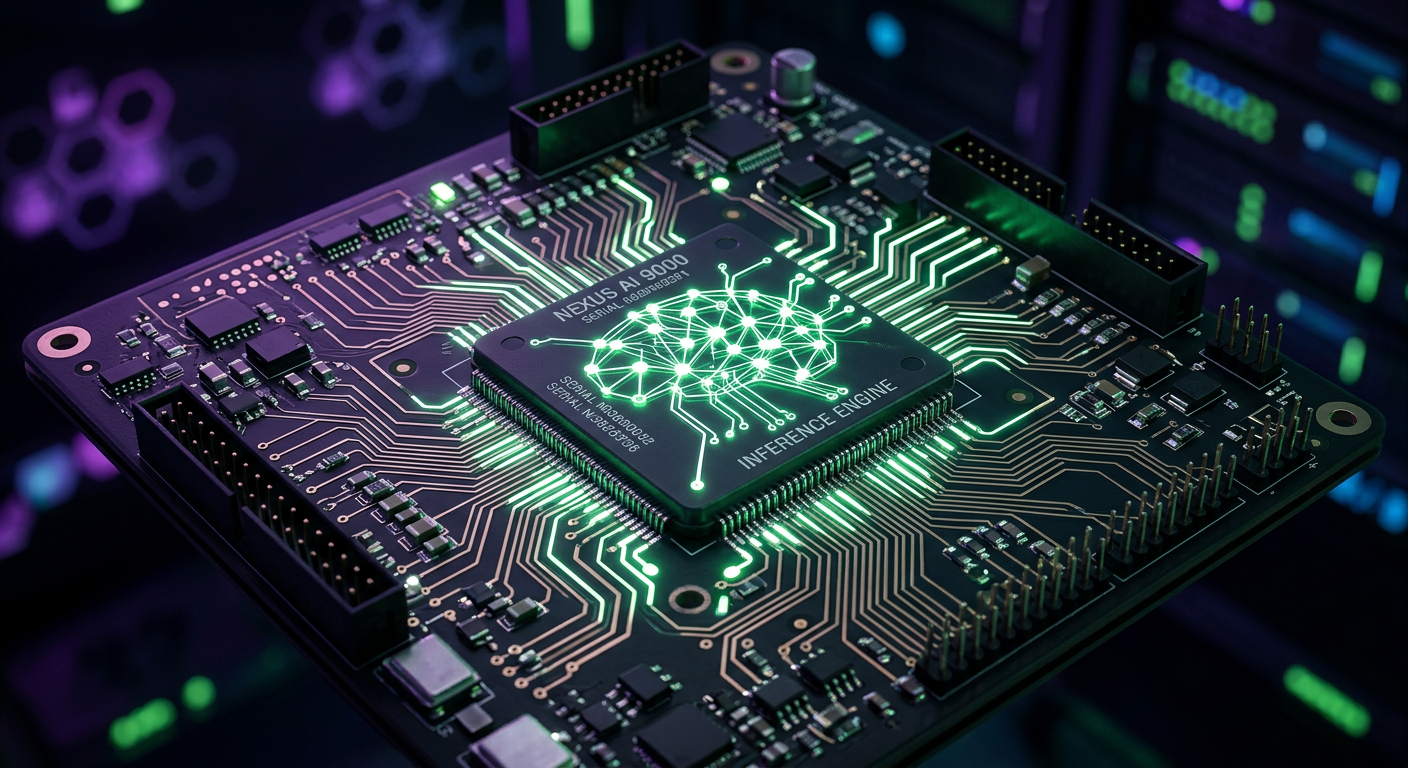
  • OpenAI and Broadcom Unveil Jalapeño: OpenAI’s First Custom AI Inference Chip

    OpenAI and Broadcom Unveil Jalapeño: OpenAI’s First Custom AI Inference Chip

    OpenAI and Broadcom on June 25, 2026 unveiled Jalapeño, OpenAI’s first custom AI chip, marking a landmark moment in the company’s strategy to control its own hardware destiny. The chip, an LLM-optimized intelligence processor co-developed in just nine months, is designed specifically for the inference workloads that power ChatGPT and other OpenAI products. The announcement signals a direct challenge to Nvidia’s dominance in AI accelerator hardware. For an industry where compute infrastructure has become as strategically important as the models themselves, Jalapeño could fundamentally shift how frontier AI is deployed at scale.

    What Was Announced

    OpenAI and Broadcom jointly announced the Jalapeño Intelligence Processor, described as the first AI accelerator in a planned multi-generation compute platform the two companies are building together. The chip was unveiled on June 25, 2026, with engineering samples already running ML workloads in the lab at production target frequency and power, including OpenAI’s GPT-5.3-Codex-Spark model.

    The Jalapeño chip was designed from the ground up for large language model (LLM) inference, a distinct and demanding computational task that involves generating outputs from already-trained models. OpenAI researchers collaborated closely with Broadcom throughout the design process, optimizing the chip around the kernels, memory movement, networking, and serving patterns that matter most for frontier AI inference.

    The announcement was made with notable ceremony: Broadcom President and CEO Hock Tan and President Charlie Kawwas personally delivered the first Jalapeño chips to OpenAI CEO Sam Altman and President Greg Brockman, signaling the depth of the partnership between the two companies.

    Jalapeño is designed for initial deployment by the end of 2026, with plans to expand in the years ahead as part of a broader strategy to give OpenAI control over the compute infrastructure underlying its products and services. The co-development process, from initial design to manufacturing tape-out, was completed in just nine months.

    Technical Details

    Jalapeño was architected specifically around LLM inference workloads rather than the broader training and inference tasks that general-purpose GPU clusters must handle. This specialization allows the chip to optimize at every layer for the patterns that dominate production LLM serving: efficient memory bandwidth utilization, high-throughput token generation, and low-latency response times at scale.

    Early testing results show that Jalapeño delivers performance per watt substantially better than current state-of-the-art accelerators. The chip is designed for deployment in gigawatt-scale data centers, reflecting the enormous power requirements of running frontier AI models at the scale OpenAI operates. Engineering samples have already demonstrated production-target performance while running real ML workloads in the lab.

    Broadcom’s role in the partnership leverages its expertise in silicon implementation, networking, and connectivity technologies. OpenAI provided the architectural vision and detailed requirements for LLM inference, while Broadcom handled the silicon design, manufacturing, and hardware integration. The result is an accelerator purpose-built for the specific workloads OpenAI runs rather than a general-purpose chip adapted for AI tasks after the fact.

    Industry Impact and Reactions

    The announcement represents a direct strategic challenge to Nvidia, which has dominated AI accelerator sales throughout the LLM era. OpenAI has been one of Nvidia’s most significant customers, and the development of a custom inference chip signals a long-term intent to reduce that dependence. The move follows a broader industry trend: Google has operated its own Tensor Processing Units (TPUs) for years, Amazon Web Services builds Trainium and Inferentia chips, and Microsoft has been investing in its own AI accelerator programs.

    By partnering with Broadcom rather than designing the chip entirely in-house, OpenAI gains access to established silicon manufacturing expertise and supply chain relationships without needing to build a full chip design organization from scratch. Broadcom, for its part, secures a high-profile customer relationship and positions itself as the preferred silicon partner for frontier AI companies looking to build custom accelerators.

    The multi-generation roadmap announced alongside Jalapeño suggests this is not a one-off experiment but the beginning of a sustained hardware program. OpenAI is signaling a long-term investment in custom hardware infrastructure, with significant implications for the competitive landscape of AI chips and for the economics of running large-scale AI systems. Nvidia’s stock and the broader chip sector will be watching closely as Jalapeño moves toward production deployment.

    What Comes Next

    OpenAI has indicated that Jalapeño is designed for initial deployment by end of 2026, with a phased rollout into the company’s data center infrastructure. As engineering samples have already demonstrated production-target performance running real workloads, the path to deployment appears on track. Future generations of the chip are expected as part of the multi-generation platform agreement with Broadcom.

    The broader implications will take time to unfold. Whether Jalapeño performs at scale in production deployments, how aggressively OpenAI shifts workloads from Nvidia to its own silicon, and whether the Broadcom partnership eventually extends to training accelerators as well as inference chips are all questions the industry will be watching closely in the coming months and into 2027.

    Conclusion

    The Jalapeño chip marks OpenAI’s entry into the custom silicon arena, a move that reflects just how central hardware infrastructure has become to competitive advantage in AI. By partnering with Broadcom to build an inference chip optimized for its own models, OpenAI is investing in the foundation that will determine how efficiently and economically it can serve hundreds of millions of users. As frontier AI models grow more capable and more computationally demanding, the companies that control their own hardware stack may hold a decisive edge in the years ahead.

    Stay updated on the latest AI news at Evolve Digital.

  • Google Brings Computer Use to Gemini 3.5 Flash: AI Agents Can Now See, Reason, and Act Across Platforms

    Google Brings Computer Use to Gemini 3.5 Flash: AI Agents Can Now See, Reason, and Act Across Platforms

    Google has officially integrated computer use capabilities into Gemini 3.5 Flash, turning one of its most widely deployed AI models into a platform for building autonomous agents that can see, reason, and act across digital environments. Announced on June 24, 2026, this update represents a significant expansion of what developers can build with the Gemini API. The computer use feature, previously available only through a separate standalone Gemini 2.5 computer use model, is now a native built-in tool within Gemini 3.5 Flash, making it accessible to the full ecosystem of developers and enterprises already using the Flash model. The move marks a pivotal moment in the maturation of AI agent capabilities from research preview to production infrastructure.

    What Was Announced

    Google’s announcement centers on the integration of computer use directly into Gemini 3.5 Flash via the Gemini API and the Gemini Enterprise Agent Platform. This means developers no longer need to work with a separate, purpose-built computer use model. Instead, the same Gemini 3.5 Flash model they use for text, code, and multimodal tasks can now be directed to interact with browser, mobile, and desktop environments as a built-in capability.

    A demo environment has been made available through Browserbase, allowing developers to explore the capability in a sandboxed setting. Google has also published a reference implementation on GitHub for teams looking to get started quickly with their own agent deployments. Both resources are intended to accelerate the path from experimentation to production for developers building automation workflows.

    Enterprise partners including Browserbase, Browser Use, and UiPath were cited in the announcement as early collaborators and endorsers of the capability. The involvement of UiPath in particular signals a meaningful convergence between traditional robotic process automation tooling and AI-native computer use, two approaches to enterprise automation that are now increasingly complementary.

    Google stated that computer use in Gemini 3.5 Flash delivers improved performance for long-horizon and enterprise automation tasks compared to earlier iterations. Performance improvements were noted on OSWorld benchmarks, which are a standard evaluation framework for AI systems performing computer use tasks across operating system interfaces.

    Technical Details

    The computer use capability in Gemini 3.5 Flash is built on the model’s ability to process screenshots and visual representations of digital interfaces and then generate precise, coordinated actions to accomplish multi-step tasks. Agents built on this foundation can navigate web browsers, interact with mobile applications, and operate desktop software without requiring custom API integrations for each application or platform. This makes the capability particularly well suited for automating tasks in legacy software environments where native APIs are not available.

    To address the security risks inherent in deploying agents that take real-world actions in live environments, Google applied targeted adversarial training specifically designed to reduce the model’s susceptibility to prompt injection attacks. Prompt injection, in which malicious content embedded in a web page, document, or application interface attempts to redirect agent behavior, is among the most serious risks in real-world computer use deployments. Google’s targeted training approach aims to make the model more robust against this class of attack.

    Two optional enterprise safeguard systems were released alongside the model update. The first requires the agent to obtain explicit user confirmation before taking any action that is sensitive or irreversible, preserving a human-in-the-loop checkpoint for workflows where the cost of an error is high. The second automatically halts agent execution if an indirect prompt injection attempt is detected, providing an automated safety layer for organizations running agents at scale across untrusted environments. Google also recommends combining these systems with secure sandboxing, strict access controls, and human verification practices as part of a comprehensive deployment strategy.

    Industry Impact and Reactions

    Bringing computer use into a mainstream, widely available model like Gemini 3.5 Flash is a meaningful shift in the accessibility of AI agent capabilities. Until recently, computer use required developers to work with specialized, purpose-built models that were often in preview or limited-access phases. By embedding the capability directly into Flash, Google is signaling that computer use is ready for production, not just experimentation, and it is lowering the barrier for organizations that want to build autonomous agents as part of their core technology stack.

    The partnership with UiPath is particularly significant for enterprise adoption. UiPath has an established base of customers using robotic process automation to handle software interfaces that do not expose APIs, including in industries such as healthcare administration, financial services, and legal operations. Combining UiPath’s enterprise distribution and workflow tooling with Gemini’s AI-native computer use capabilities could accelerate automation in segments of the market that have historically been difficult to reach with purely code-driven approaches.

    The announcement also reflects a broader industry trend toward bundling safety and security tooling with agent capabilities rather than treating them as separate, optional concerns. By releasing enterprise safeguards alongside the computer use feature itself, Google is acknowledging that agent security is a first-class deployment requirement and positioning Gemini as a platform that takes production readiness seriously.

    What Comes Next

    Access to computer use in Gemini 3.5 Flash is available immediately through the Gemini API and the Gemini Enterprise Agent Platform. Developers can explore the capability via the Browserbase demo environment and the reference implementation on GitHub. Google has not announced a separate pricing tier for computer use within the Flash model, suggesting it will be accessible within existing Gemini 3.5 Flash API pricing structures, though enterprise platform access may carry distinct terms.

    Looking ahead, the integration is likely to serve as a foundation for further expansion as Google continues its June 2026 model rollout. Gemini 3.5 Pro, Google’s frontier model for the month, is expected to ship before the end of June. Bringing computer use to the Pro tier would be a natural next step, enabling more complex, long-horizon autonomous tasks at a higher level of model intelligence and reasoning depth.

    Conclusion

    Google’s integration of computer use into Gemini 3.5 Flash marks a clear turning point in the availability of AI agent capabilities for developers and enterprises. By moving computer use from a standalone model to a built-in feature of one of its most accessible APIs, and by releasing enterprise safeguards alongside the launch, Google has made autonomous digital agents a practical choice for production deployment. For organizations evaluating how to embed AI into their workflows beyond text generation and code assistance, this announcement opens a meaningful new set of possibilities.

    Stay updated on the latest AI news at Evolve Digital.

  • OpenAI Launches GPT-5.5-Cyber and ‘Patch the Planet’ to Fix Open-Source Security Vulnerabilities at Scale

    OpenAI Launches GPT-5.5-Cyber and ‘Patch the Planet’ to Fix Open-Source Security Vulnerabilities at Scale

    On June 23, 2026, OpenAI announced the full release of GPT-5.5-Cyber, a specialized AI model engineered for cybersecurity, alongside a new open-source security initiative called “Patch the Planet.” Co-founded with cybersecurity firm Trail of Bits and partnered with HackerOne, the initiative targets one of the most persistent problems in software security: the enormous backlog of unpatched vulnerabilities in the open-source libraries that underpin virtually all modern software. The announcement marks OpenAI’s most direct move yet into proactive cyber defense, extending its Daybreak security program beyond enterprise clients to the foundational software ecosystem the entire internet depends on.

    What Was Announced

    GPT-5.5-Cyber is a fine-tuned variant of GPT-5.5, purpose-built for vulnerability detection, patch generation, and automated code remediation. Unlike general-purpose large language models, GPT-5.5-Cyber is designed to operate at machine speed across entire codebases, identifying security flaws and producing working patches with minimal human involvement.

    Alongside the model release, OpenAI announced “Patch the Planet,” a collaborative initiative with Trail of Bits and HackerOne. The program deploys OpenAI’s AI tools, including GPT-5.5-Cyber and Codex, to systematically scan and patch open-source projects that are widely relied upon by developers worldwide. Initial participating projects include cURL, Python, the Go project, Sigstore, aiohttp, NATS Server, pyca/cryptography, freenginx, and python.org.

    Trail of Bits has assigned dedicated security engineers to work full-time with GPT-5.5-Cyber and Codex across 19 open-source projects. An initial five-day sprint produced hundreds of identified security issues, dozens of merged patches, and reusable fuzzing and testing tooling that participating projects can continue to use independently.

    Technical Details

    GPT-5.5-Cyber achieved a score of 85.6% on the CyberGym benchmark, outperforming the general-purpose GPT-5.5, which scored 81.8% on the same evaluation. The model also scored 39.5% on ExploitGym, a benchmark measuring exploit generation capability, and 69.8% on SEC-bench Pro, which tests broader security reasoning. These results indicate a model that is meaningfully stronger than its general-purpose counterpart on tasks requiring deep understanding of code vulnerabilities and remediation strategies.

    The model integrates with OpenAI’s Codex infrastructure, enabling it to not only identify vulnerabilities but to submit complete, reviewable pull requests to open-source repositories. This closes the loop between detection and remediation, a gap that has historically made vulnerability scanning more of a reporting tool than a fixing tool. The combination of GPT-5.5-Cyber’s security-specific reasoning and Codex’s code execution capabilities allows the system to produce patches that pass existing test suites rather than simply flagging potential issues for human review.

    OpenAI has also released reusable fuzzing and testing tooling developed during the initial sprints with Trail of Bits. These tools are designed to be adopted by open-source maintainers as part of their regular development workflows, creating lasting security infrastructure beyond what any single scanning pass can achieve.

    Industry Impact and Reactions

    The announcement comes at a time when open-source software security has become a top concern for governments and enterprises alike. High-profile supply chain incidents in recent years demonstrated how vulnerabilities in widely used open-source libraries can cascade across thousands of downstream applications. The scale of the problem, millions of open-source packages with varying levels of active maintenance, has made purely human-driven remediation effectively impossible.

    OpenAI’s move signals a broader shift in how the AI industry is positioning itself in relation to cybersecurity. Rather than primarily defending against AI-enabled threats, OpenAI is framing AI as an active solution to the pre-existing vulnerability backlog. The partnership model with Trail of Bits and HackerOne also suggests an intent to build credibility within the security research community, where trust must be earned through demonstrated technical rigor rather than marketing claims.

    The “Patch the Planet” initiative also puts competitive pressure on other frontier AI labs to demonstrate similar commitments to the open-source ecosystem. Anthropic’s Glasswing program, which focuses on AI safety and red-teaming, was cited in industry commentary as the context for OpenAI’s announcement, suggesting that the cybersecurity domain is becoming a new competitive front among the leading AI companies.

    What Comes Next

    OpenAI has indicated that the list of participating open-source projects will expand beyond the initial nine, with the program designed to scale as tooling and processes are refined. The partnership with HackerOne suggests that the program may eventually incorporate bug bounty mechanisms to coordinate responsible disclosure alongside the automated patching work.

    The broader timeline for GPT-5.5-Cyber’s commercial availability has not been specified in the announcement, but the model’s integration with Codex suggests it will be accessible through OpenAI’s existing enterprise channels. Industry analysts expect OpenAI to expand GPT-5.5-Cyber’s reach into enterprise security tooling over the second half of 2026, as demand for AI-assisted vulnerability management continues to grow among large organizations.

    Conclusion

    OpenAI’s launch of GPT-5.5-Cyber and the “Patch the Planet” initiative represents one of the most concrete deployments of frontier AI capability to a real-world infrastructure problem to date. By combining a specialized cybersecurity model with an organized open-source patching program, OpenAI is making a tangible bet that AI can help close a vulnerability gap that the security industry has struggled to address for decades. Whether the initiative delivers lasting impact will depend on how well automated patches hold up under real-world conditions and how broadly the participating community adopts the reusable tooling, but the ambition and the early results are substantial.

    Stay updated on the latest AI news at Evolve Digital.