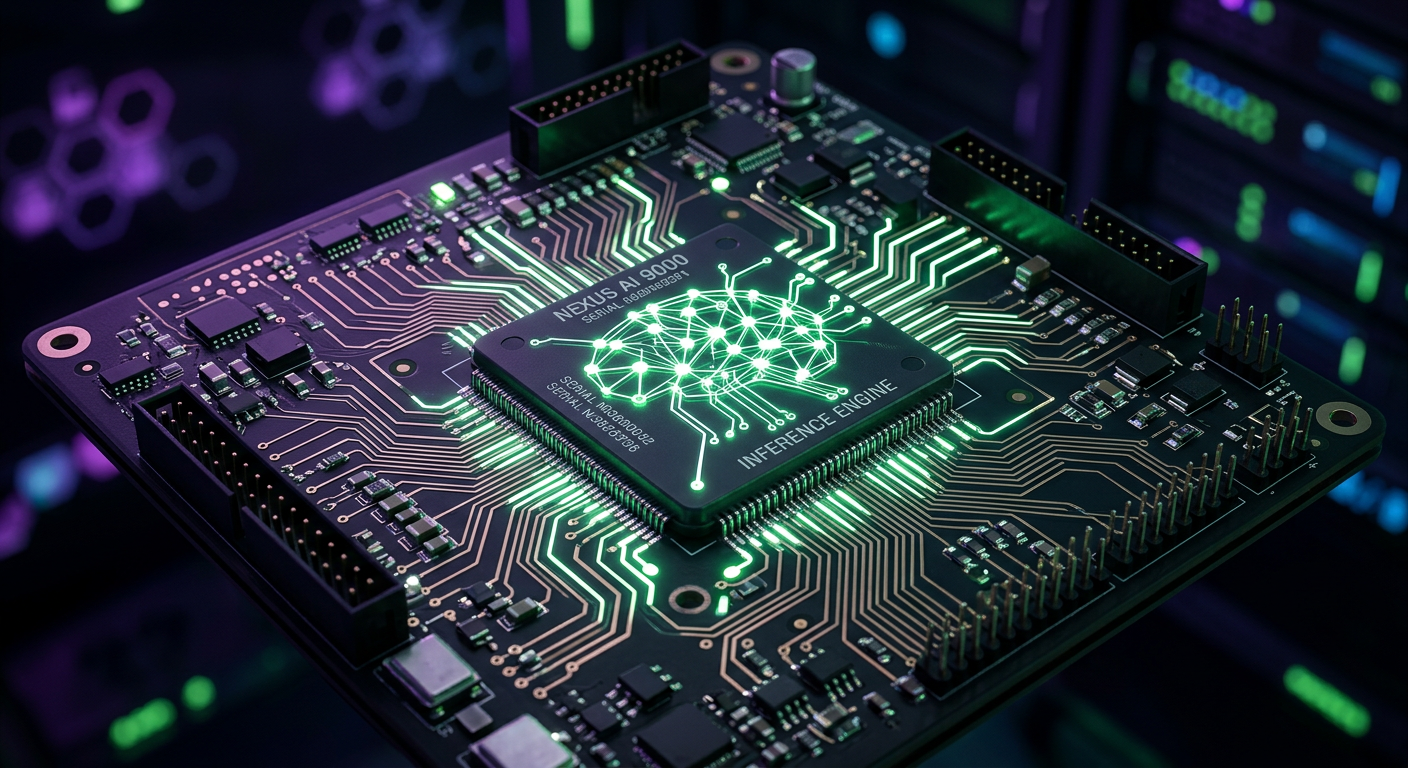
OpenAI and Broadcom on June 25, 2026 unveiled Jalapeño, OpenAI’s first custom AI chip, marking a landmark moment in the company’s strategy to control its own hardware destiny. The chip, an LLM-optimized intelligence processor co-developed in just nine months, is designed specifically for the inference workloads that power ChatGPT and other OpenAI products. The announcement signals a direct challenge to Nvidia’s dominance in AI accelerator hardware. For an industry where compute infrastructure has become as strategically important as the models themselves, Jalapeño could fundamentally shift how frontier AI is deployed at scale.
What Was Announced
OpenAI and Broadcom jointly announced the Jalapeño Intelligence Processor, described as the first AI accelerator in a planned multi-generation compute platform the two companies are building together. The chip was unveiled on June 25, 2026, with engineering samples already running ML workloads in the lab at production target frequency and power, including OpenAI’s GPT-5.3-Codex-Spark model.
The Jalapeño chip was designed from the ground up for large language model (LLM) inference, a distinct and demanding computational task that involves generating outputs from already-trained models. OpenAI researchers collaborated closely with Broadcom throughout the design process, optimizing the chip around the kernels, memory movement, networking, and serving patterns that matter most for frontier AI inference.
The announcement was made with notable ceremony: Broadcom President and CEO Hock Tan and President Charlie Kawwas personally delivered the first Jalapeño chips to OpenAI CEO Sam Altman and President Greg Brockman, signaling the depth of the partnership between the two companies.
Jalapeño is designed for initial deployment by the end of 2026, with plans to expand in the years ahead as part of a broader strategy to give OpenAI control over the compute infrastructure underlying its products and services. The co-development process, from initial design to manufacturing tape-out, was completed in just nine months.
Technical Details
Jalapeño was architected specifically around LLM inference workloads rather than the broader training and inference tasks that general-purpose GPU clusters must handle. This specialization allows the chip to optimize at every layer for the patterns that dominate production LLM serving: efficient memory bandwidth utilization, high-throughput token generation, and low-latency response times at scale.
Early testing results show that Jalapeño delivers performance per watt substantially better than current state-of-the-art accelerators. The chip is designed for deployment in gigawatt-scale data centers, reflecting the enormous power requirements of running frontier AI models at the scale OpenAI operates. Engineering samples have already demonstrated production-target performance while running real ML workloads in the lab.
Broadcom’s role in the partnership leverages its expertise in silicon implementation, networking, and connectivity technologies. OpenAI provided the architectural vision and detailed requirements for LLM inference, while Broadcom handled the silicon design, manufacturing, and hardware integration. The result is an accelerator purpose-built for the specific workloads OpenAI runs rather than a general-purpose chip adapted for AI tasks after the fact.
Industry Impact and Reactions
The announcement represents a direct strategic challenge to Nvidia, which has dominated AI accelerator sales throughout the LLM era. OpenAI has been one of Nvidia’s most significant customers, and the development of a custom inference chip signals a long-term intent to reduce that dependence. The move follows a broader industry trend: Google has operated its own Tensor Processing Units (TPUs) for years, Amazon Web Services builds Trainium and Inferentia chips, and Microsoft has been investing in its own AI accelerator programs.
By partnering with Broadcom rather than designing the chip entirely in-house, OpenAI gains access to established silicon manufacturing expertise and supply chain relationships without needing to build a full chip design organization from scratch. Broadcom, for its part, secures a high-profile customer relationship and positions itself as the preferred silicon partner for frontier AI companies looking to build custom accelerators.
The multi-generation roadmap announced alongside Jalapeño suggests this is not a one-off experiment but the beginning of a sustained hardware program. OpenAI is signaling a long-term investment in custom hardware infrastructure, with significant implications for the competitive landscape of AI chips and for the economics of running large-scale AI systems. Nvidia’s stock and the broader chip sector will be watching closely as Jalapeño moves toward production deployment.
What Comes Next
OpenAI has indicated that Jalapeño is designed for initial deployment by end of 2026, with a phased rollout into the company’s data center infrastructure. As engineering samples have already demonstrated production-target performance running real workloads, the path to deployment appears on track. Future generations of the chip are expected as part of the multi-generation platform agreement with Broadcom.
The broader implications will take time to unfold. Whether Jalapeño performs at scale in production deployments, how aggressively OpenAI shifts workloads from Nvidia to its own silicon, and whether the Broadcom partnership eventually extends to training accelerators as well as inference chips are all questions the industry will be watching closely in the coming months and into 2027.
Conclusion
The Jalapeño chip marks OpenAI’s entry into the custom silicon arena, a move that reflects just how central hardware infrastructure has become to competitive advantage in AI. By partnering with Broadcom to build an inference chip optimized for its own models, OpenAI is investing in the foundation that will determine how efficiently and economically it can serve hundreds of millions of users. As frontier AI models grow more capable and more computationally demanding, the companies that control their own hardware stack may hold a decisive edge in the years ahead.
Stay updated on the latest AI news at Evolve Digital.
Leave a Reply