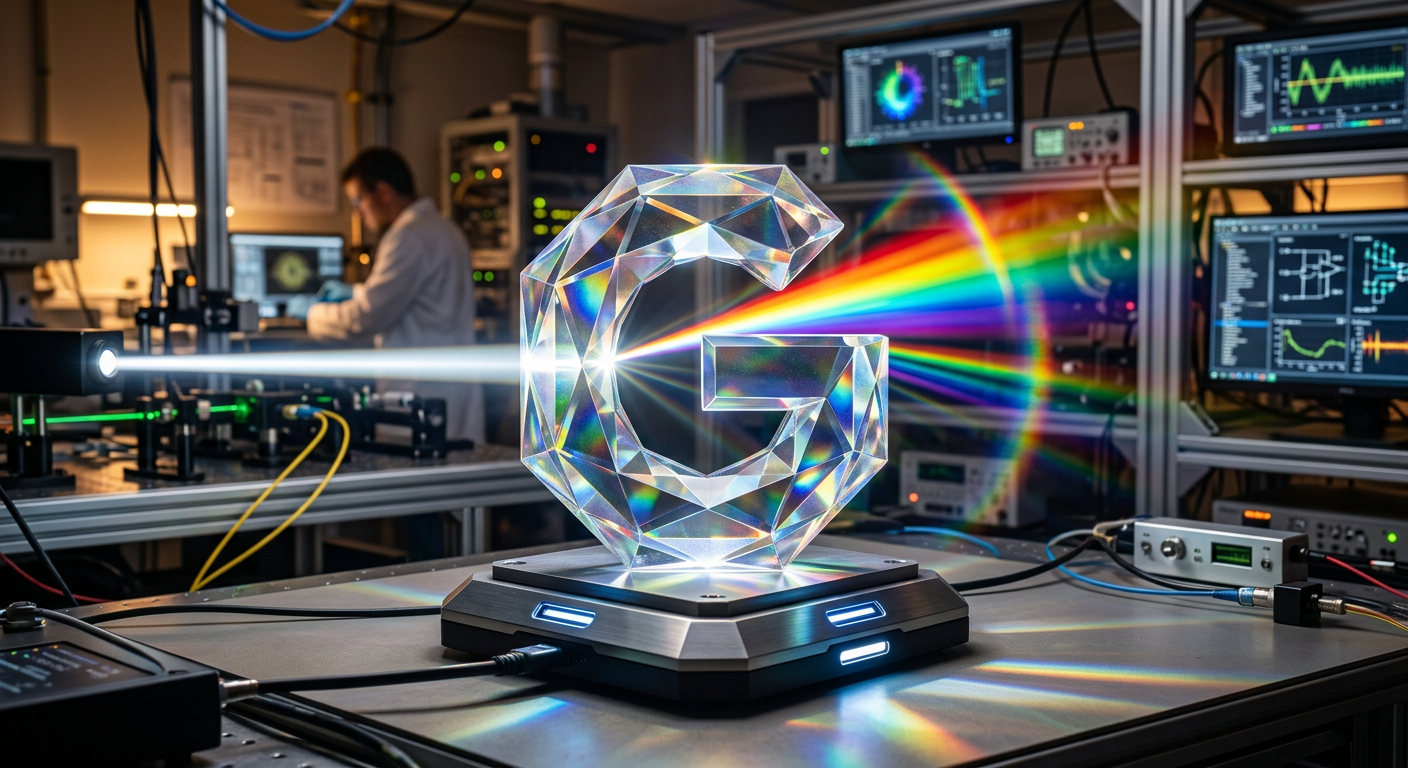
Google DeepMind released Gemini 3.7 Flash on August 13, 2026, introducing its most capable and affordable mid-tier AI model to date. The model arrives with a 1-million-token context window, substantial coding and reasoning improvements over its predecessor, and an introductory price of $0.75 per million input tokens through the end of 2026. The release positions Gemini 3.7 Flash as Google’s primary workhorse model for AI agent pipelines, software engineering tasks, and high-volume enterprise workflows as competition in the mid-tier AI market intensifies.
What Was Announced
Google DeepMind officially launched Gemini 3.7 Flash on August 13, 2026, making it available through the Google AI Studio and Vertex AI platforms. The model supports text, image, speech, and video input with text output, and can generate up to 64,000 output tokens per response within its 1-million-token context window.
Pricing is set at $0.75 per million input tokens and $3.75 per million output tokens as an introductory rate through December 31, 2026. Starting January 1, 2027, pricing will normalize to $1.50 per million input tokens and $7.50 per million output tokens. The introductory discount represents approximately half the cost of the outgoing Gemini 3.6 Flash model and is designed to accelerate developer adoption during the model’s launch window.
The release follows several months of anticipation after Google scrapped and rebuilt its planned Gemini 3.5 Pro flagship ahead of a July 2026 launch. Rather than a flagship update, Google has instead pushed its mid-tier Flash model forward with significant capability improvements, particularly in coding and agentic performance.
Technical Details
Gemini 3.7 Flash shows meaningful benchmark improvements across several domains compared to Gemini 3.6 Flash. On the DeepSWE v1.1 long-horizon software engineering benchmark, the model scored 65.3%, up from 49.0% on the previous generation, a jump of more than 16 percentage points. On FrontierCode 1.1, it scored 43.6%, reflecting strong improvement in code generation and completion tasks across a wide range of programming languages and problem types.
Enterprise workflow performance on AutomationBench increased by 30.4%, while document comprehension scores on the GDP.PDF benchmark improved by 34.0%. Legal domain performance reached 90.7% on Harvey’s LAB-AA benchmark. Long-context recall scored 97.0% on the MRCR v2 128k test, indicating the model reliably retrieves and reasons over information spread across very long documents. On the Artificial Analysis Intelligence Index, Gemini 3.7 Flash scores 56, placing it well above the median of 34 for reasoning models in a comparable price tier.
The 1-million-token context window is a notable feature for enterprise and agentic use cases. It allows the model to ingest entire codebases, legal contracts, research corpora, or lengthy conversation histories in a single call, without needing external retrieval systems for many common workloads. The model also achieves an Arena.ai WebDev Elo rating of 1588, indicating strong web development and front-end generation capabilities relative to competing models at similar price points.
Industry Impact and Reactions
The Gemini 3.7 Flash release arrives at a moment when mid-tier AI model competition is intensifying rapidly. The model enters a market that includes xAI Grok 4.6, Anthropic Claude Sonnet 5, and OpenAI GPT-5.6, all of which are competing for developer and enterprise deployments in coding, agent, and document processing pipelines. Google’s introductory pricing puts it among the more cost-effective options in this segment for the remainder of 2026.
The release is also significant because it signals Google’s strategy of leading with its Flash series rather than its higher-end Pro models at this phase of the competitive cycle. By focusing investment on the mid-tier workhorse, Google is targeting the highest-volume deployment category: AI agent pipelines and coding assistants where inference cost per token matters significantly at scale.
The broader AI pricing environment in August 2026 adds context to the launch. Both OpenAI and Anthropic have been lowering prices on several models in response to competitive pressure from lower-cost Chinese providers including DeepSeek, which has moved in the opposite direction by raising prices on its V4 Pro model. Gemini 3.7 Flash’s introductory rate is consistent with this pricing trend and positions Google to capture developer workloads that are cost-sensitive.
What Comes Next
Google has signaled that the Gemini 3.5 Pro flagship model, which was paused for a rebuild earlier in 2026, remains on its roadmap but has not confirmed a revised launch date. Gemini 3.7 Flash is expected to serve as the primary offering in its tier until a Pro-class successor arrives. The introductory pricing window through December 31, 2026, is likely intended to establish developer integrations and ecosystem adoption before the rate adjustment in January 2027.
Developers and enterprises evaluating Gemini 3.7 Flash for coding agents, document reasoning, or legal and enterprise automation workflows will have the remainder of 2026 to benchmark and integrate the model at reduced cost. Google has indicated access is available immediately through AI Studio and Vertex AI without a waitlist.
Conclusion
Gemini 3.7 Flash marks a significant step forward for Google DeepMind’s mid-tier AI lineup, offering materially better coding and reasoning benchmarks, a 1-million-token context window, and a pricing structure designed to compete aggressively for developer adoption through the end of 2026. As the AI industry shifts toward competing on price and inference efficiency alongside raw capability, this release demonstrates that the mid-tier model category is becoming as strategically important as the frontier. Organizations building AI agent workflows, coding pipelines, or document-intensive applications should evaluate Gemini 3.7 Flash as a strong candidate for production deployment.
Stay updated on the latest AI news at Evolve Digital.
Leave a Reply