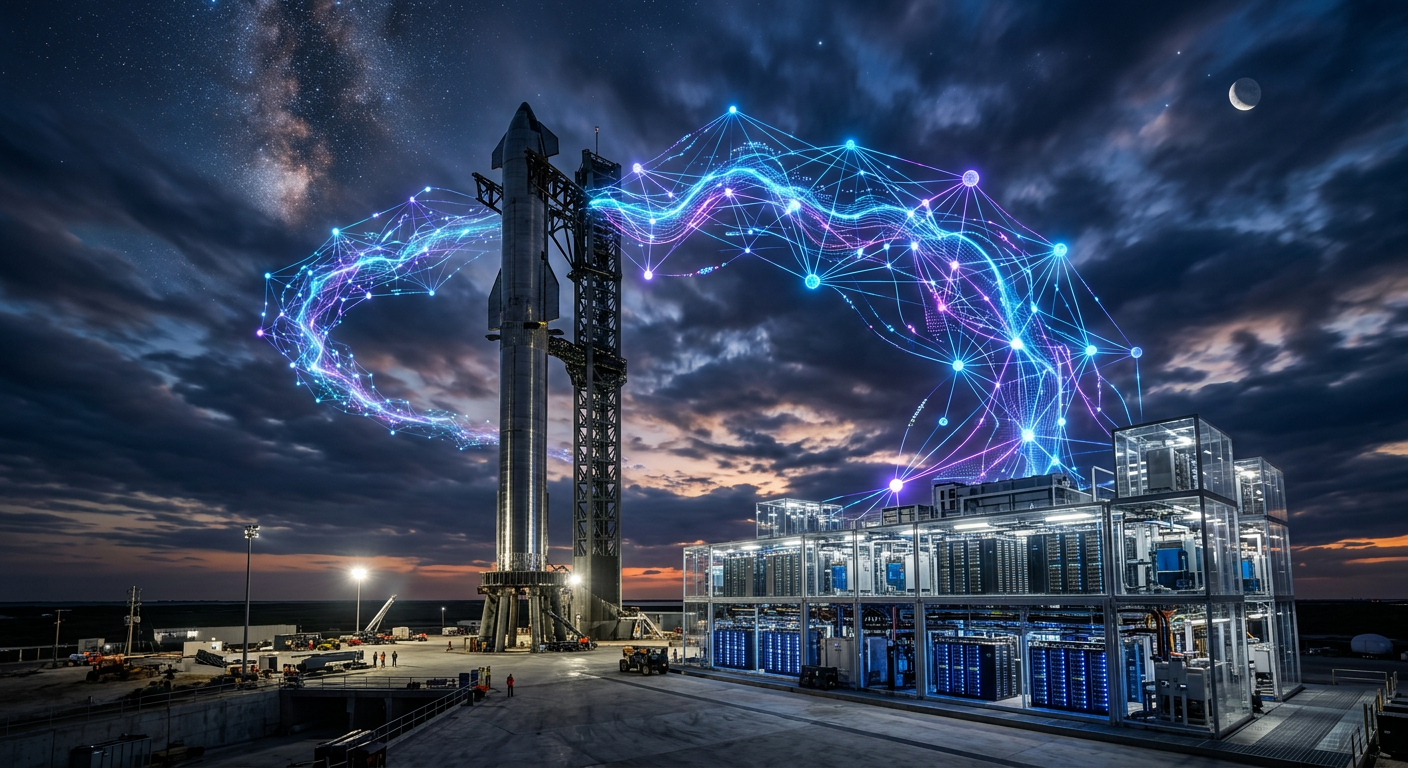
SpaceX has agreed to acquire Cursor, the AI-powered coding assistant built by startup Anysphere, in an all-stock transaction valued at $60 billion, the companies announced on June 16, 2026. The deal, which follows a partnership agreement struck in April, represents one of the largest AI acquisitions on record and dramatically reshapes the competitive landscape for developer tools. For SpaceX, which merged with Elon Musk’s AI lab xAI in February 2026, the acquisition marks an aggressive push into the enterprise software market as the race to own the AI coding workflow intensifies.
What Was Announced
SpaceX confirmed on June 16, 2026, that it has exercised the acquisition option embedded in its April 2026 partnership with Anysphere, Cursor’s parent company. Under that earlier agreement, SpaceX held the right to either invest $10 billion in Cursor or purchase it outright for $60 billion. SpaceX has chosen the full acquisition, structured as an all-stock deal using its SPCX shares.
The transaction is expected to close in the third quarter of 2026, pending standard regulatory review. Cursor will operate as part of SpaceX’s AI division, which is now unified with xAI following the February 2026 merger. The combined entity positions SpaceX as a direct competitor to both Anthropic, which offers Claude Code for AI-assisted software development, and OpenAI, whose Codex platform has gained significant enterprise traction.
Cursor had been in separate fundraising discussions in April 2026, reportedly seeking around $2 billion from investors including Andreessen Horowitz and NVIDIA. The company had previously raised $2.3 billion from venture investors. The $60 billion acquisition price represents a significant premium to those fundraising conversations and underscores how rapidly the AI coding market has escalated in strategic value.
As of the deal announcement, Cursor reported approximately $2.6 billion in annualized business-to-business revenue, with enterprise sales growing sharply. The product is widely used by professional software developers and engineering teams seeking AI assistance for code generation, multi-file refactoring, debugging, and agentic development workflows.
Technical Details
Cursor is an AI-native integrated development environment that wraps around VS Code, providing developers with context-aware code completion, inline chat, and autonomous agent modes capable of executing multi-step programming tasks across entire codebases. The product integrates with frontier language models and has built a reputation for handling complex, long-horizon engineering work that simpler code completion tools cannot manage reliably.
Cursor’s core technical differentiator is its codebase indexing system, which allows the AI to reason across large, multi-file repositories with high contextual accuracy. The tool supports autonomous agent workflows in which the model can plan, write, test, and iterate on code with minimal human intervention. This capability has made Cursor particularly attractive to enterprise engineering teams looking to accelerate delivery cycles and reduce repetitive development work.
As part of SpaceX and xAI, Cursor’s technology is expected to be integrated with xAI’s Grok model family, which Musk has stated is being rebuilt following the departure of xAI’s original co-founding team earlier in 2026. SpaceX has described its AI ambitions in terms of building autonomous engineering systems capable of accelerating both software and hardware development at the company’s aerospace and satellite operations.
Industry Impact and Reactions
The acquisition places SpaceX in direct competition with the two most prominent players in AI coding tools: Anthropic and OpenAI. Anthropic’s Claude Code has become a leading option for agentic software development, with the company reporting that the majority of its own production code is now generated by Claude. OpenAI’s Codex platform, which recently expanded to function as a desktop agent capable of operating autonomously on macOS, has also built significant enterprise momentum.
The deal also signals a broader consolidation trend in the AI developer tools market, where standalone coding assistants are increasingly being absorbed into larger platform strategies. GitHub Copilot, backed by Microsoft, and Google’s Gemini Code Assist represent similar platform bets, suggesting that independent AI coding startups face growing pressure to either achieve massive scale quickly or find a home within a larger ecosystem.
The $60 billion valuation for Cursor will draw comparisons across the AI industry. At the time of the deal, Cursor’s annualized revenue of $2.6 billion implies a revenue multiple of roughly 23x, consistent with the high multiples being applied to fast-growing AI infrastructure and tooling companies in the current market environment. The deal also arrives shortly after SpaceX completed the largest IPO in recorded history, giving the company a strong currency in SPCX stock with which to make significant acquisitions.
What Comes Next
The acquisition is expected to close in Q3 2026, after which Cursor’s team and product roadmap will be absorbed into SpaceX’s AI division. Musk has stated publicly that xAI is being rebuilt from a different architectural and cultural foundation than its original incarnation, and the Cursor team’s track record of rapid product iteration and enterprise execution is likely a significant part of the appeal. Developers and enterprise customers currently using Cursor should expect business continuity during the transition period, with integration into xAI’s model infrastructure likely becoming the primary long-term change.
Looking further ahead, the deal raises significant questions about how AI coding tools will evolve as they become embedded in larger platform strategies. Whether SpaceX can leverage Cursor’s developer base to build meaningful enterprise software relationships alongside its aerospace and satellite business will be one of the more unusual strategic experiments in technology industry history. The outcome will be watched closely by the AI developer tools market, which is moving rapidly toward consolidation and platform lock-in.
Conclusion
SpaceX’s $60 billion acquisition of Cursor on June 16, 2026, marks a watershed moment in the AI coding tools market and in SpaceX’s own evolution as a technology company. By bringing Cursor’s enterprise-grade AI development capabilities under the SpaceX/xAI umbrella, Elon Musk is positioning the combined entity as a serious challenger to Anthropic and OpenAI for the developer workflow. With the deal set to close in Q3 2026, the coming months will determine whether this unusual combination of aerospace ambition and AI coding expertise can translate into a durable competitive advantage in one of the fastest-moving markets in technology.
Stay updated on the latest AI news at Evolve Digital.