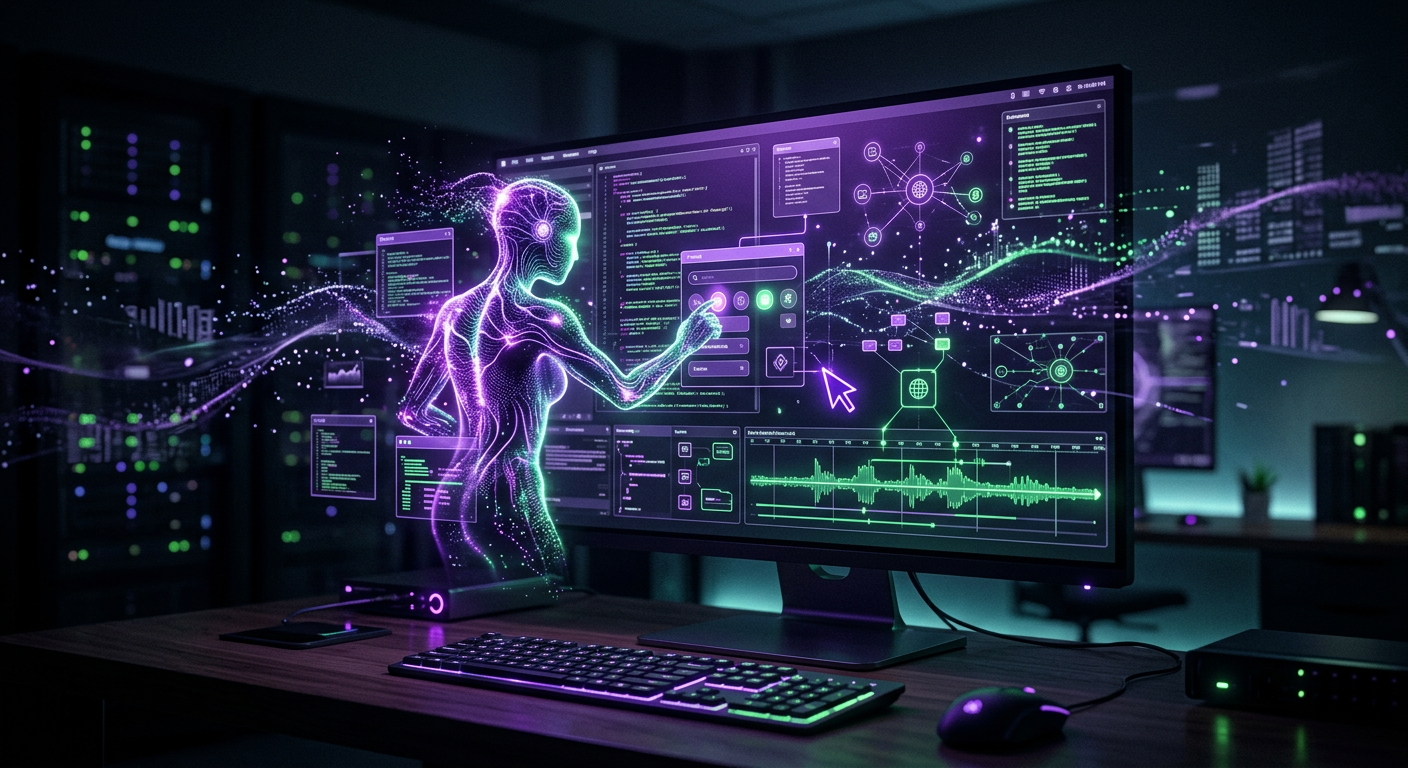
OpenAI has transformed Codex from a cloud-based code-running tool into a persistent desktop agent capable of operating a Mac computer autonomously — including while the screen is locked. The capability, confirmed in late May 2026 by multiple sources including MacRumors, Macworld, and TechTimes, represents one of the most significant shifts yet in how AI agents interact with personal computers. For the first time, users can assign tasks to an AI system and walk away confident it will continue working through the night, on a scheduled basis, or in response to real-world triggers.
What Was Announced
OpenAI confirmed that Codex, its autonomous coding and task agent, now supports a “locked computer use” mode on macOS. When enabled, Codex can continue operating Mac applications even after the display has been locked, using an Apple authorization plugin that temporarily grants it access to the screen and input systems. The feature is available to Codex subscribers in the United States and is activated through the Codex desktop app settings, requiring explicit user opt-in along with Screen Recording and Accessibility permissions.
Alongside the locked Mac capability, OpenAI announced that Codex has gained the ability to follow users across devices. A task started on a Mac can be monitored and managed from a connected mobile phone, allowing users to check progress, receive alerts, or redirect the agent while away from their desk. Codex can also now capture and analyze screen content over time to build what OpenAI describes as “ambient memory,” giving the agent contextual awareness of what has happened on the machine between sessions.
Scheduled task execution rounds out the update. Users can instruct Codex to perform recurring jobs at specific times, a capability that effectively transforms it into a persistent background worker rather than an on-demand tool. The combination of locked-screen operation, cross-device access, and scheduling marks a qualitative leap: Codex is no longer a tool you run, it is an agent that runs on your behalf.
Technical Details
The locked Mac feature depends on a new Apple authorization plugin that ships with the Codex desktop app. When a user enables “Locked computer use” in Codex settings, the plugin installs at the system level and negotiates short-lived credentials with macOS that allow Codex to temporarily access the display, mouse, and keyboard interfaces. Once local input is detected, such as a user moving the mouse or pressing a key, the authorization expires immediately and the screen relocks. OpenAI describes this as a “relock on local input” safeguard, designed to prevent the agent from continuing to act if a human is present at the machine.
Additional safeguards built into the system include covered display mode, which prevents visual output from the agent’s actions from being visible on the screen during locked use, and manual-unlock fallback, which reverts full control to the human user at any point. Certain system areas are explicitly off-limits: Codex cannot automate the Terminal application, cannot interact with its own interface, and cannot trigger system-level administrator prompts. These restrictions are enforced at the plugin level, not just through software policy.
The agent’s screen-capture capability for ambient memory uses a rolling context window that logs what applications were open, what content was visible, and what actions were taken across sessions. This gives Codex the ability to resume complex multi-step tasks without requiring the user to restate context. The cross-device continuity is handled through OpenAI’s cloud infrastructure, with the Mac acting as the local compute environment and the phone serving as a remote management interface.
Industry Impact and Reactions
The announcement arrives in the middle of a broader industry race to build practical, persistent AI agents. Google’s Gemini Spark, announced at Google I/O on May 19, 2026, similarly positions itself as a 24/7 agent running on dedicated cloud virtual machines. Anthropic’s Claude has gained agentic capabilities through its computer use API. What distinguishes the Codex locked-Mac feature is that it operates locally on the user’s own hardware rather than requiring the cloud to spin up a virtual environment, which has implications for latency, privacy, and cost.
The developer and power-user community has responded with a mix of genuine excitement and measured caution. The ability to have an AI continue working on a codebase, document, or research task overnight without requiring an open laptop or active session removes a meaningful friction point for professional workflows. At the same time, security researchers have begun examining what new attack surfaces are introduced by a system that can bypass the locked-screen boundary under any circumstances, even with safeguards in place. The feature’s absence in the European Economic Area, the United Kingdom, and Switzerland pending regulatory review signals that OpenAI anticipates scrutiny in jurisdictions with stricter data protection frameworks.
The broader competitive context matters here. AI labs are no longer competing only on benchmark scores or raw model capability. They are now competing on how deeply their agents can integrate into users’ daily computing environments. An agent that keeps working while you sleep is a different value proposition than one that answers questions. This shift from reactive assistant to proactive coworker is reshaping how enterprises and individual professionals think about AI adoption.
What Comes Next
OpenAI has not published a detailed roadmap for Codex’s agentic capabilities, but the pattern of recent releases suggests continued expansion. Cross-platform support beyond macOS is a likely next step, particularly for Windows, which represents the majority of enterprise desktop environments. The company has also signaled interest in deeper integration with development tools and cloud services, which would allow Codex to coordinate actions across local and remote environments as part of single workflows. Regulatory approvals in the EEA, UK, and Switzerland will be required before the locked-use feature reaches those markets.
For the AI industry overall, the locked-Mac feature from Codex and the 24/7 cloud agents from Google represent a convergence toward the same end goal: AI systems that are always available, always aware, and capable of sustained independent action. The next twelve months will likely determine whether this model becomes the dominant paradigm for professional AI tools or whether safety and privacy concerns prompt a course correction.
Conclusion
OpenAI’s Codex has crossed a threshold that seemed distant just a year ago: an AI agent that can operate a personal computer continuously, independently, and without requiring the user to be present. The technical safeguards built into the locked-screen feature reflect a genuine effort to make this capability responsibly deployable, while the geographic restrictions acknowledge that regulators will need time to assess the implications. What is clear is that the era of AI as a passive question-answering tool is ending. The question now is not whether AI agents will run persistently in the background of professional computing, but how quickly that becomes the default.
Stay updated on the latest AI news at Evolve Digital.