Tag: Google Gemini

  • Apple WWDC 2026: Siri Rebuilt on Google Gemini as Claude and ChatGPT Become Native iPhone Options

    Apple WWDC 2026: Siri Rebuilt on Google Gemini as Claude and ChatGPT Become Native iPhone Options

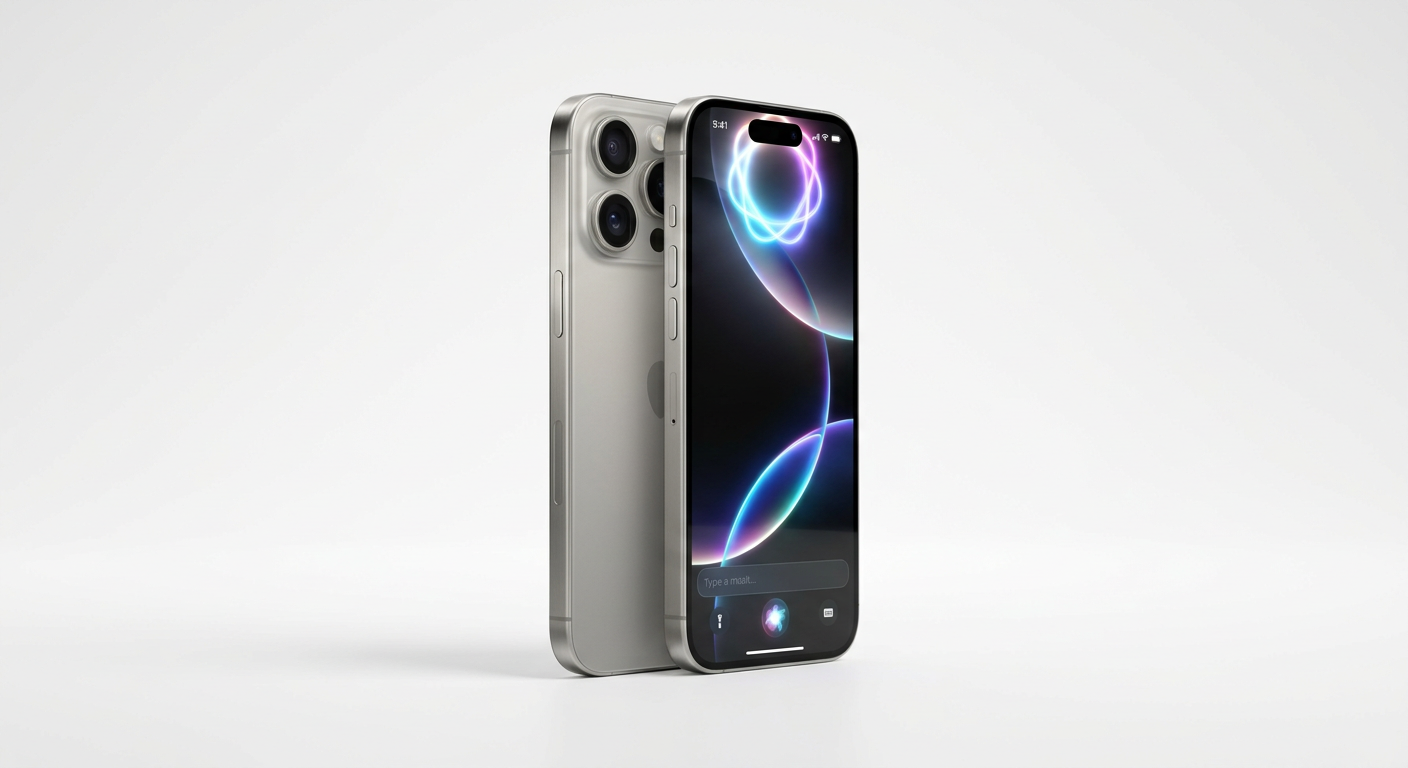
    Apple held its annual Worldwide Developers Conference (WWDC) keynote on June 8, 2026, at Apple Park in Cupertino, California, delivering what may be the most consequential set of AI announcements in the company’s history. In a keynote that was also Tim Cook’s final appearance as Chief Executive Officer before he hands leadership to John Ternus on September 1, Apple announced a complete rebuild of its Siri voice assistant powered by a custom 1.2-trillion-parameter Google Gemini model. The company simultaneously introduced an AI Extensions system allowing users to choose between ChatGPT, Gemini, and Anthropic’s Claude to handle Apple Intelligence tasks. With iOS 27 entering beta the same afternoon, WWDC 2026 marked a decisive shift in how Apple approaches artificial intelligence.

    What Was Announced

    The centerpiece of the keynote was a rebuilt Siri, now running on a custom version of Google’s Gemini model with 1.2 trillion parameters. Apple has licensed the model from Google for approximately $1 billion per year, making it one of the largest AI licensing deals in the industry to date. Critically, the computing infrastructure runs on Apple’s Private Cloud servers rather than Google’s own infrastructure, allowing Apple to maintain control over user data and the privacy guarantees that have defined its brand for years.

    Alongside the Gemini-powered Siri, Apple announced an AI Extensions framework that fundamentally changes how Apple Intelligence works. Users can now designate ChatGPT, Google Gemini, or Anthropic’s Claude as the underlying AI model for Apple Intelligence features, including writing tools, summarization, and natural language tasks across the operating system. This marks the first time Claude has achieved native integration into the Apple ecosystem, giving Anthropic potential access to the approximately 2.2 billion active Apple devices worldwide.

    iOS 27 entered beta the same afternoon, continuing Apple’s annual operating system cycle. The update dropped support for iPhone 11 and all earlier models, pushing the minimum hardware requirement to iPhone 12. The AI Extensions system ships as part of iOS 27, iPadOS 27, and macOS 17.

    Tim Cook’s keynote carried additional symbolic weight as his final appearance in the CEO role at WWDC. Cook is scheduled to transition the chief executive title to John Ternus, currently Apple’s Senior Vice President of Hardware Engineering, on September 1, 2026.

    Technical Details

    The decision to license Gemini rather than develop a fully proprietary frontier model represents a meaningful strategic choice. Apple has historically built its own chips, operating systems, and core software, but the scale and cost of training a 1.2-trillion-parameter frontier model presented a different kind of challenge. By licensing Gemini while running inference on Apple’s own Private Cloud infrastructure, the company preserves its privacy architecture while offloading the research and training costs associated with staying competitive at the frontier.

    The AI Extensions framework is technically distinct from simply embedding third-party chatbots. It allows Apple Intelligence features throughout the operating system to route specific tasks to the user’s chosen model provider. The commercial arrangements with OpenAI, Google, and Anthropic for this framework have not been publicly disclosed, though previous reporting has described the existing ChatGPT integration as likely involving a revenue-sharing arrangement rather than a flat licensing fee.

    Apple’s Private Cloud Compute infrastructure, first described at WWDC 2025, uses hardware security modules to ensure that prompts processed off-device cannot be accessed by Apple employees or retained beyond the immediate query. The company has invited external researchers to audit these claims, and the Gemini licensing agreement reportedly required Google to agree to the same architectural constraints applied to Apple’s cloud infrastructure.

    Industry Impact and Reactions

    The announcements carry significant competitive implications. As of June 2026, ChatGPT holds approximately 54.7% of the global AI chatbot market, down from 76.5% in February 2025. Gemini has grown to 27.4%, representing 104% growth over six months. Claude holds 8.2% of the global market and has grown 306% in a single quarter, a trajectory that native iPhone integration could accelerate substantially.

    For Anthropic, the Apple partnership represents a distribution breakthrough. Reaching 2.2 billion Apple devices through native operating system integration is a qualitatively different kind of exposure than adding users through the Claude app or API. The integration lands as Anthropic continues preparations for a public offering following its confidential S-1 filing and a Series H funding round that valued the company at $965 billion.

    For Google, the Gemini licensing deal with Apple is both a revenue win and a strategic statement. Google is being paid approximately $1 billion annually to power a competitor’s flagship product, while also offering Gemini as a user-selectable alternative through the Extensions system. The arrangement reinforces Gemini’s early commercial momentum and positions Google’s model family as infrastructure that the broader industry is willing to build upon.

    What Comes Next

    iOS 27 Beta 1 is available to registered developers beginning today, June 8, with a public beta expected in July and the general release scheduled for September 2026 alongside new iPhone hardware. The AI Extensions system will require users to opt in during initial device setup or through Settings, and individual app developers will be able to expose model-choice options within their own applications using a new API included with the beta release.

    Longer term, observers will be watching whether Apple’s multi-model approach compresses or accelerates differentiation among frontier AI providers. Placing ChatGPT, Gemini, and Claude side by side inside iOS 27 as interchangeable options for the same tasks creates a natural comparison environment for hundreds of millions of users, the results of which could meaningfully reshape the competitive AI landscape over the coming year.

    Conclusion

    WWDC 2026 confirmed that Apple’s AI strategy is built on partnerships and infrastructure control rather than frontier model development. A Gemini-powered Siri, a multi-AI Extensions system bringing ChatGPT and Claude natively into iOS 27, and Tim Cook’s ceremonial final keynote combined to make June 8 one of the more consequential days in the company’s recent history. The full implications for the competitive AI landscape will become clearer as iOS 27 rolls out to hundreds of millions of devices this autumn.

    Stay updated on the latest AI news at Evolve Digital.
  • Google Announces Gemini Intelligence for Android: AI That Works Across All Your Apps and Devices

    Google Announces Gemini Intelligence for Android: AI That Works Across All Your Apps and Devices

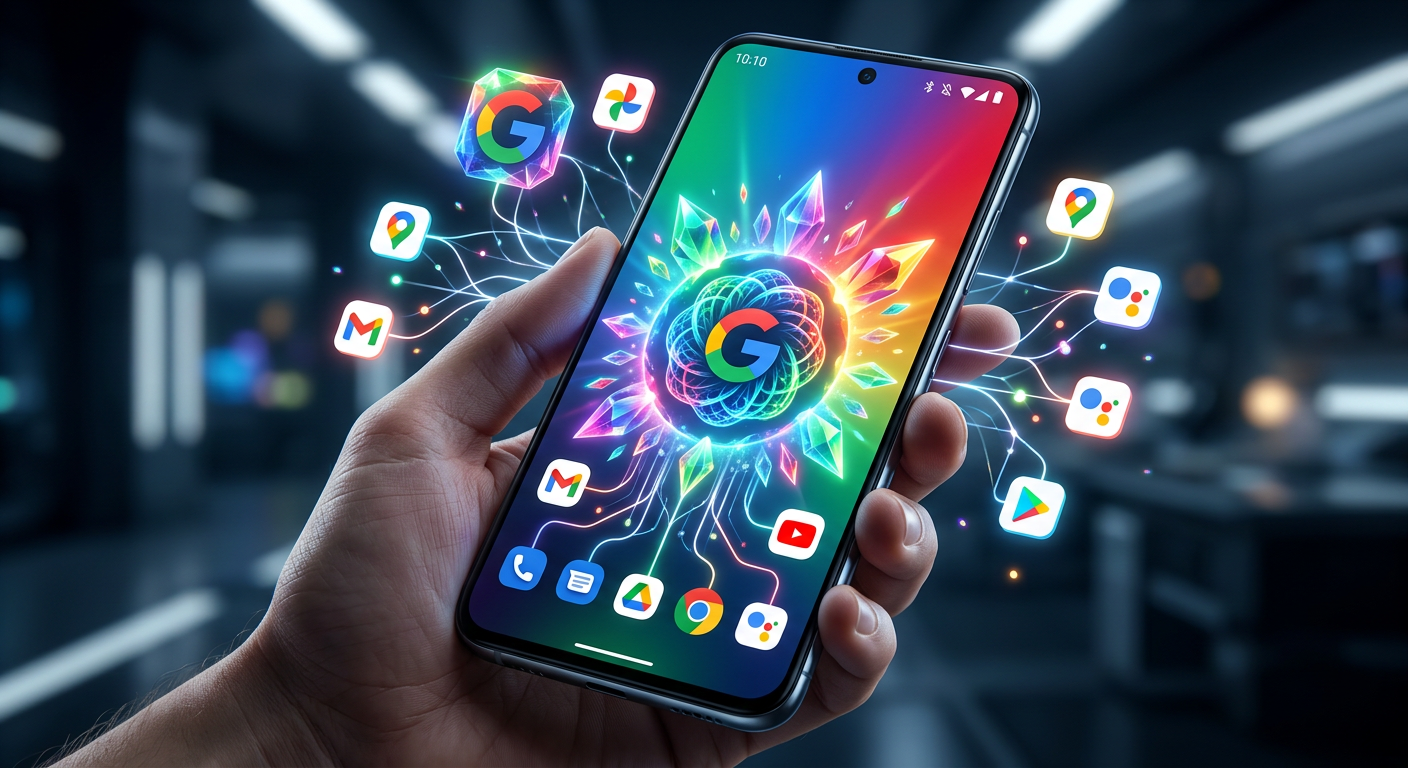
    Google unveiled Gemini Intelligence on May 12, 2026, its most comprehensive AI push for Android yet — a suite of deeply integrated, cross-app AI capabilities that goes far beyond a chatbot. Unlike earlier iterations of Google AI on Android, Gemini Intelligence is designed to understand what is happening on-screen across any application and take action on a user’s behalf. The announcement positions Google’s Gemini as the connective tissue of the entire Android ecosystem, capable of completing complex tasks that previously required jumping between multiple apps.

    What Was Announced

    Gemini Intelligence is Google’s new overarching brand for its AI feature set on Android. The defining characteristic of the new platform is ambient, cross-app awareness: rather than operating within a single context or chat window, Gemini Intelligence can follow a task from start to finish across multiple applications. A user could, for example, ask it to find a restaurant near a location mentioned in a message, check availability, and add the reservation to their calendar — all without manually switching between apps.

    Two standout features debuted with the announcement. The first is Rambler, a Gboard integration that uses Gemini to polish spoken messages into clean, readable text. Users can speak naturally, and Rambler handles the editing — converting rough voice input into polished prose before it is sent. The second is generative widget creation: users can describe the kind of widget they want in natural language, and Gemini Intelligence will build it for them dynamically, without requiring a developer or an app update.

    Google is rolling out Gemini Intelligence in waves. The first devices to receive the features are the latest Samsung Galaxy and Google Pixel phones. From there, the rollout is expected to expand to Android watches, Android Auto in cars, the forthcoming Android XR glasses, and Google-powered laptops from Acer, ASUS, and Lenovo. This device-spanning approach reflects Google’s ambition to make Gemini a consistent AI layer across every screen a person uses throughout their day.

    Technical Details

    The core technical enabler behind Gemini Intelligence is on-screen context understanding. Gemini Intelligence does not just respond to typed queries — it reads what is visible on the display and uses that information to inform its actions. This requires a model with strong vision and language capabilities running with low enough latency to feel responsive in real time, integrated tightly with Android’s accessibility and activity management systems.

    Generative widget creation represents a particularly interesting capability. Traditional Android widgets are static code artifacts created by app developers. Gemini Intelligence generates widget layouts dynamically based on user intent expressed in natural language, meaning users can request a custom at-a-glance view for tracking a sports team’s schedule, a reminder widget tuned to a specific workflow, or a summary card for a category of notifications. The infrastructure to support this is a combination of on-device inference and cloud API calls, routed to minimize latency and preserve privacy where possible.

    The cross-app task completion capability depends heavily on Android’s permission and intents model. Gemini Intelligence interacts with applications through system-level APIs rather than simulated user input, which means it can take reliable action inside apps rather than just mimicking taps. Google has indicated enterprise administrators will be able to configure exactly which actions the AI layer is permitted to take, addressing workplace security concerns about autonomous AI operating on corporate devices.

    Industry Impact and Reactions

    The timing of the Gemini Intelligence announcement is significant. Google is in direct competition with Apple for AI mindshare on mobile, and Apple is expected to unveil a sweeping overhaul of Siri at WWDC 2026 in June, alongside expanded Apple Intelligence features for iOS 27. The Google announcement effectively raises the bar one month before Apple’s own showcase, giving Gemini Intelligence a brief window of attention before the industry’s focus shifts to Cupertino.

    For Samsung, which ships the largest volume of premium Android devices globally, the deep integration of Gemini Intelligence represents a major bet on Google’s AI roadmap. Samsung has historically maintained its own AI product, Galaxy AI, and the deeper Gemini integration suggests a growing alignment — or at minimum a pragmatic recognition that Google’s AI investment exceeds what Samsung can replicate independently.

    On the developer side, the generative widget system raises questions about how traditional widget developers will adapt. If users can generate widgets on demand through natural language, there is less incentive to seek out and install purpose-built widget apps. This could represent a meaningful disruption to a segment of the Android app ecosystem that has historically been insulated from AI-driven change.

    What Comes Next

    Google I/O 2026 is expected to bring additional Gemini Intelligence announcements, including the launch of a new Gemini model that Google is positioning as competitive with the current frontier — described in reporting as landing roughly in the class of OpenAI’s recent flagship model rather than pushing beyond it. Additional Android XR integrations are also expected, as Google prepares to launch its wearable glasses hardware later this year.

    The broader rollout across watches, cars, and laptops is expected throughout summer and fall 2026. Google has not committed to a firm timeline for when Gemini Intelligence will reach mid-range Android devices, which represent the majority of global Android shipments. That expansion will be a key test of whether the features can scale beyond premium flagship hardware.

    Conclusion

    Gemini Intelligence represents Google’s most ambitious attempt yet to make AI a fundamental layer of the Android operating system rather than an add-on feature. By enabling cross-app task completion, dynamic widget generation, and voice input refinement, Google is betting that users want an AI that does things — not just one that answers questions. As mobile AI competition intensifies ahead of Apple’s WWDC, the Gemini Intelligence launch stakes out an aggressive position that will define the AI smartphone narrative through the rest of 2026.

    Stay updated on the latest AI news at Evolve Digital.
  • Google Gemini Adds Tool to Import ChatGPT and Claude Chat History, Making It Easier to Switch

    Google Gemini Adds Tool to Import ChatGPT and Claude Chat History, Making It Easier to Switch

    Google has released a feature that allows users to transfer their conversation history from ChatGPT and Claude directly into Google Gemini, removing one of the key friction points that has previously made switching between AI assistants cumbersome. The move, reported by Bloomberg in late March 2026, is a direct competitive play designed to capture users who have accumulated meaningful interaction history with rival platforms.

    What Happened

    Google’s new migration tool enables users to export conversation histories from OpenAI’s ChatGPT and Anthropic’s Claude and upload them into the Gemini platform. Once imported, users can reference past conversations within Gemini’s interface, reducing the disruption of starting fresh with a new AI assistant. The feature is available through the Gemini web app and is rolling out gradually to users across Google’s geographic markets.

    The announcement reflects a broader competitive dynamic in the AI assistant market, where user switching costs have historically been low in terms of technical barriers but meaningful in practice due to the effort required to re-establish context and preferences with a new platform. By absorbing chat history from competitors, Google is effectively lowering the activation energy required for a ChatGPT or Claude user to give Gemini a serious trial.

    Why It Matters

    This tool represents a maturing of the AI assistant market into a phase where distribution and user retention strategies become as important as raw model capability. It mirrors moves in other software-as-a-service markets — notably cloud storage and productivity suites — where import/export tools have historically played a meaningful role in driving platform migrations. For Google, which has Gemini deeply integrated into its workspace products and Android ecosystem, making it easier to join from a competitor’s platform could meaningfully expand the active user base available to cross-sell into Google One AI premium tiers.

    For OpenAI and Anthropic, the development signals that competitors are now actively targeting their user bases with friction-reduction strategies rather than waiting for model superiority to drive organic switching. Both companies will likely respond with enhanced data portability options and stronger reasons to remain on their own platforms.

    Stay updated on the latest AI news at Evolve Digital.