Google announced on July 14, 2026, a sweeping overhaul of its Search and Google Images products, bringing AI-powered image generation directly into search results and redesigning the Images platform to function more like a personalized visual discovery engine. The dual announcement marks one of the most significant changes to Google’s core search experience in years, positioning the company to meet the growing demand for generative AI tools embedded in everyday workflows.
What Was Announced
Google revealed two interconnected changes on July 14. First, the company is integrating AI image generation into AI Overviews in Google Search, allowing users to request custom visuals directly from a search prompt when existing web images do not match what they need. Second, Google Images — marking its 25th anniversary this year — is receiving a Pinterest-style visual redesign that adds a personalized discovery feed for signed-in users alongside the traditional query-based image search.
The AI image creation feature in AI Overviews uses Google’s Nano Banana 2 Lite model, the fastest and most cost-efficient image generator in Google’s Nano Banana family. According to Google, the model can generate a high-quality image from a text prompt in approximately four seconds. The feature initially launches in English for all regions currently supported by image creation in AI Mode, with rollout expanding over the coming weeks on desktop.
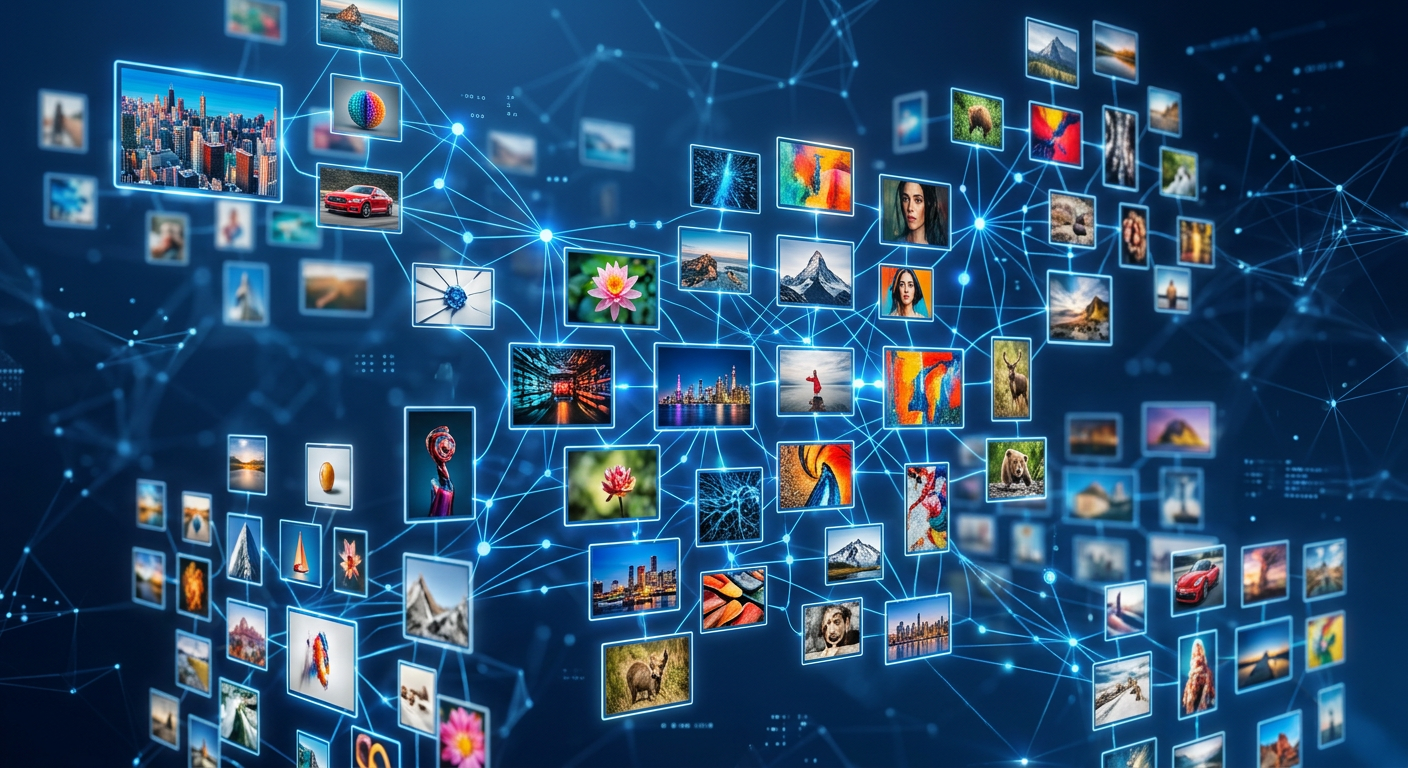
The Google Images redesign transforms the platform’s home page into a dynamic, scrollable gallery — similar to the visual feeds popularized by Pinterest — featuring a personalized stream of images tailored to signed-in users’ interests, alongside the traditional keyword-based image search. The redesign is rolling out on desktop in the United States in English over the coming weeks. Users must be signed into a Google Account to access the personalized feed.
Google framed the two announcements together as part of its broader push to make Search more useful for visual tasks — from home decorating to fashion to travel inspiration — by combining real-time web imagery with on-demand AI generation.
Technical Details
The Nano Banana 2 Lite model powering the new Search integration is the latest addition to Google’s Nano Banana image generation family, announced in late June 2026. The model is specifically designed for high-speed, high-volume creative workflows. At approximately four seconds per image and priced at $0.034 per 1,000-resolution image for API access, Nano Banana 2 Lite sits at the lower end of cost and latency compared to more capable models in the family, making it well suited for consumer-facing applications where speed and scale matter more than photorealistic precision.
The model is already deployed across Google’s product ecosystem: AI Mode in Search, the Gemini app, NotebookLM, Google Photos, Google Flow, Stitch, and Google Ads. The Search integration in AI Overviews extends this rollout to the world’s most-used search engine, where image queries reach billions per day. According to Google, the feature helps users visualize ideas they cannot easily photograph — for example, seeing what a living room would look like in a specific paint color, or imagining a themed dorm room before committing to a design.
On the Google Images side, the new personalized discovery feed relies on existing user account data and search history to surface relevant imagery. The redesign does not rely on AI generation for the feed itself — images in the personalized stream continue to be sourced from the open web — but pairs with the new AI creation feature to give users both discovered and generated options within the same interface.
Industry Impact and Reactions
The move puts Google in more direct competition with dedicated AI image generation platforms including Midjourney, Adobe Firefly, and OpenAI’s GPT Image 2, as well as with Pinterest, which has spent several years building AI-powered visual discovery tools into its own platform. By embedding AI image creation inside Search, Google can reach users who would not otherwise seek out a dedicated image generation tool, effectively lowering the barrier to entry for generative AI across its entire user base.
For publishers and content creators who rely on Google Images as a discovery channel, the shift raises questions about reduced traffic to original image sources as users increasingly generate rather than click through to find visuals. The same concern has accompanied Google’s AI Overviews rollout for text-based queries, where some publishers report declining referral traffic. A separate legal development underscores the tension: on the same day as the Google Images announcement, a group of major publishers and author Scott Turow filed a lawsuit against Google, alleging unauthorized use of copyrighted materials to train AI models — a case that may have implications for image generation tools broadly.
For Google, the changes reinforce a strategy of deepening AI capabilities within existing, high-traffic surfaces rather than creating standalone AI products. With Search remaining Google’s largest revenue driver, integrating AI tools directly into the search experience serves both user engagement goals and Google’s advertising business, where AI image generation in Google Ads is also available through the same Nano Banana 2 Lite integration.
What Comes Next
Google indicated that the rollout for both features is gradual, starting in English-language markets on desktop before expanding to additional languages, regions, and eventually mobile. The personalized discovery feed in Google Images requires a signed-in Google Account at launch, suggesting a phased approach that may broaden access over time. On the AI Overviews side, image generation capability is expected to follow the same expansion path as other AI Overviews features, with international expansion following the initial English-language rollout.
Google has also signaled that July 17, 2026 is set to be a significant date for additional AI announcements, with the expected launch of Gemini 3.5 Pro coinciding with the opening of the World Artificial Intelligence Conference in Shanghai. Whether the AI image generation updates fold into a larger suite of Gemini-powered Search upgrades remains to be confirmed.
Conclusion
Google’s twin announcements on July 14 — AI image generation in AI Overviews and a Pinterest-style redesign of Google Images — represent a meaningful expansion of what Search is capable of, blurring the line between finding content and creating it. As generative AI becomes a standard feature rather than a novelty, Google’s advantage lies in distributing these capabilities across a search engine used by billions, making AI image creation a default option rather than a specialized destination.
Stay updated on the latest AI news at Evolve Digital.