Tag: Apple

  • Apple WWDC 2026: Siri Rebuilt on Google Gemini as Claude and ChatGPT Become Native iPhone Options

    Apple WWDC 2026: Siri Rebuilt on Google Gemini as Claude and ChatGPT Become Native iPhone Options

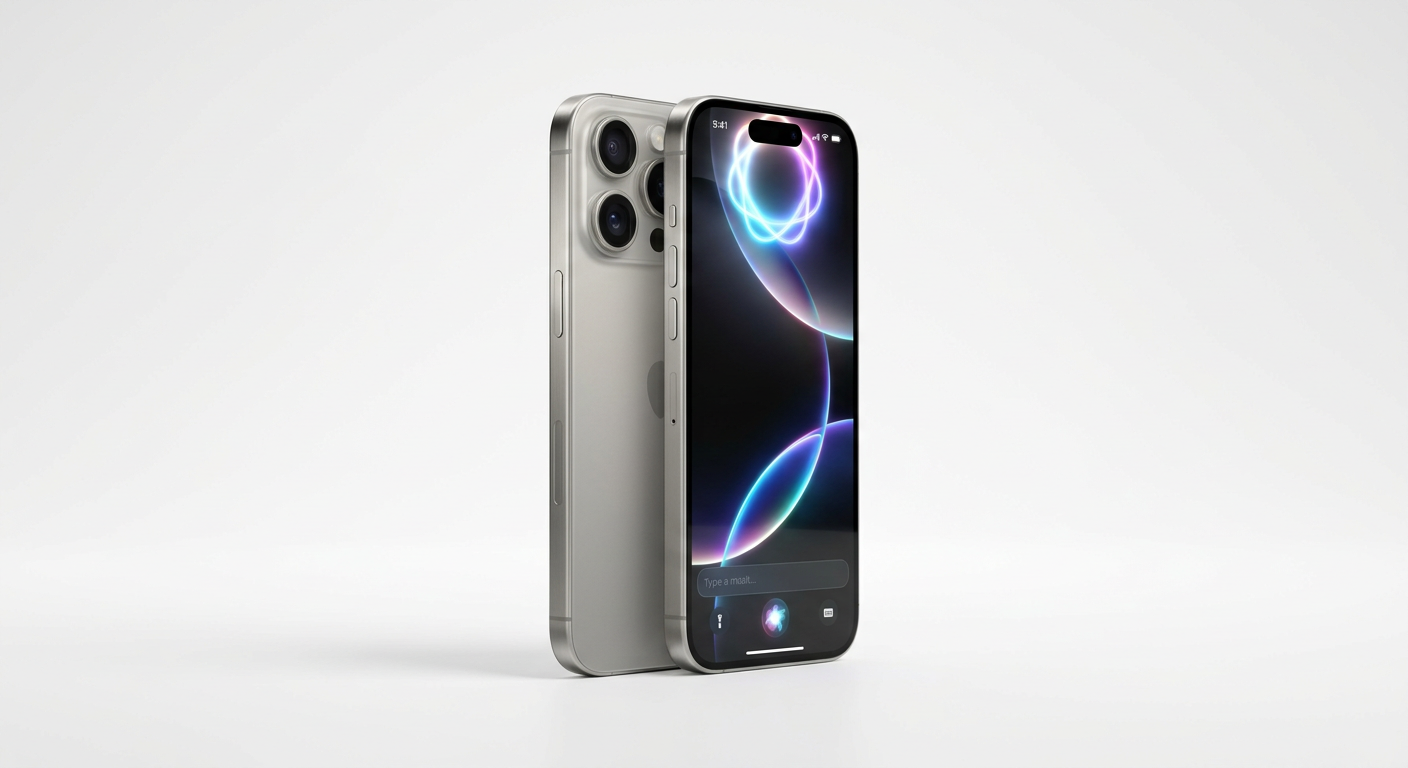
    Apple held its annual Worldwide Developers Conference (WWDC) keynote on June 8, 2026, at Apple Park in Cupertino, California, delivering what may be the most consequential set of AI announcements in the company’s history. In a keynote that was also Tim Cook’s final appearance as Chief Executive Officer before he hands leadership to John Ternus on September 1, Apple announced a complete rebuild of its Siri voice assistant powered by a custom 1.2-trillion-parameter Google Gemini model. The company simultaneously introduced an AI Extensions system allowing users to choose between ChatGPT, Gemini, and Anthropic’s Claude to handle Apple Intelligence tasks. With iOS 27 entering beta the same afternoon, WWDC 2026 marked a decisive shift in how Apple approaches artificial intelligence.

    What Was Announced

    The centerpiece of the keynote was a rebuilt Siri, now running on a custom version of Google’s Gemini model with 1.2 trillion parameters. Apple has licensed the model from Google for approximately $1 billion per year, making it one of the largest AI licensing deals in the industry to date. Critically, the computing infrastructure runs on Apple’s Private Cloud servers rather than Google’s own infrastructure, allowing Apple to maintain control over user data and the privacy guarantees that have defined its brand for years.

    Alongside the Gemini-powered Siri, Apple announced an AI Extensions framework that fundamentally changes how Apple Intelligence works. Users can now designate ChatGPT, Google Gemini, or Anthropic’s Claude as the underlying AI model for Apple Intelligence features, including writing tools, summarization, and natural language tasks across the operating system. This marks the first time Claude has achieved native integration into the Apple ecosystem, giving Anthropic potential access to the approximately 2.2 billion active Apple devices worldwide.

    iOS 27 entered beta the same afternoon, continuing Apple’s annual operating system cycle. The update dropped support for iPhone 11 and all earlier models, pushing the minimum hardware requirement to iPhone 12. The AI Extensions system ships as part of iOS 27, iPadOS 27, and macOS 17.

    Tim Cook’s keynote carried additional symbolic weight as his final appearance in the CEO role at WWDC. Cook is scheduled to transition the chief executive title to John Ternus, currently Apple’s Senior Vice President of Hardware Engineering, on September 1, 2026.

    Technical Details

    The decision to license Gemini rather than develop a fully proprietary frontier model represents a meaningful strategic choice. Apple has historically built its own chips, operating systems, and core software, but the scale and cost of training a 1.2-trillion-parameter frontier model presented a different kind of challenge. By licensing Gemini while running inference on Apple’s own Private Cloud infrastructure, the company preserves its privacy architecture while offloading the research and training costs associated with staying competitive at the frontier.

    The AI Extensions framework is technically distinct from simply embedding third-party chatbots. It allows Apple Intelligence features throughout the operating system to route specific tasks to the user’s chosen model provider. The commercial arrangements with OpenAI, Google, and Anthropic for this framework have not been publicly disclosed, though previous reporting has described the existing ChatGPT integration as likely involving a revenue-sharing arrangement rather than a flat licensing fee.

    Apple’s Private Cloud Compute infrastructure, first described at WWDC 2025, uses hardware security modules to ensure that prompts processed off-device cannot be accessed by Apple employees or retained beyond the immediate query. The company has invited external researchers to audit these claims, and the Gemini licensing agreement reportedly required Google to agree to the same architectural constraints applied to Apple’s cloud infrastructure.

    Industry Impact and Reactions

    The announcements carry significant competitive implications. As of June 2026, ChatGPT holds approximately 54.7% of the global AI chatbot market, down from 76.5% in February 2025. Gemini has grown to 27.4%, representing 104% growth over six months. Claude holds 8.2% of the global market and has grown 306% in a single quarter, a trajectory that native iPhone integration could accelerate substantially.

    For Anthropic, the Apple partnership represents a distribution breakthrough. Reaching 2.2 billion Apple devices through native operating system integration is a qualitatively different kind of exposure than adding users through the Claude app or API. The integration lands as Anthropic continues preparations for a public offering following its confidential S-1 filing and a Series H funding round that valued the company at $965 billion.

    For Google, the Gemini licensing deal with Apple is both a revenue win and a strategic statement. Google is being paid approximately $1 billion annually to power a competitor’s flagship product, while also offering Gemini as a user-selectable alternative through the Extensions system. The arrangement reinforces Gemini’s early commercial momentum and positions Google’s model family as infrastructure that the broader industry is willing to build upon.

    What Comes Next

    iOS 27 Beta 1 is available to registered developers beginning today, June 8, with a public beta expected in July and the general release scheduled for September 2026 alongside new iPhone hardware. The AI Extensions system will require users to opt in during initial device setup or through Settings, and individual app developers will be able to expose model-choice options within their own applications using a new API included with the beta release.

    Longer term, observers will be watching whether Apple’s multi-model approach compresses or accelerates differentiation among frontier AI providers. Placing ChatGPT, Gemini, and Claude side by side inside iOS 27 as interchangeable options for the same tasks creates a natural comparison environment for hundreds of millions of users, the results of which could meaningfully reshape the competitive AI landscape over the coming year.

    Conclusion

    WWDC 2026 confirmed that Apple’s AI strategy is built on partnerships and infrastructure control rather than frontier model development. A Gemini-powered Siri, a multi-AI Extensions system bringing ChatGPT and Claude natively into iOS 27, and Tim Cook’s ceremonial final keynote combined to make June 8 one of the more consequential days in the company’s recent history. The full implications for the competitive AI landscape will become clearer as iOS 27 rolls out to hundreds of millions of devices this autumn.

    Stay updated on the latest AI news at Evolve Digital.
  • Apple Is Working to Bring AI Agents to the App Store Ahead of WWDC 2026

    Apple Is Working to Bring AI Agents to the App Store Ahead of WWDC 2026

    Apple is developing a system to incorporate AI agents into the App Store, according to a report from 9to5Mac published on May 13, 2026. The move, which has not been officially confirmed by Apple, would represent a significant expansion of how third-party AI capabilities are surfaced to iPhone and iPad users, and is expected to be previewed at WWDC 2026 on June 8 alongside Apple broader iOS 27 and artificial intelligence announcements.

    What Happened

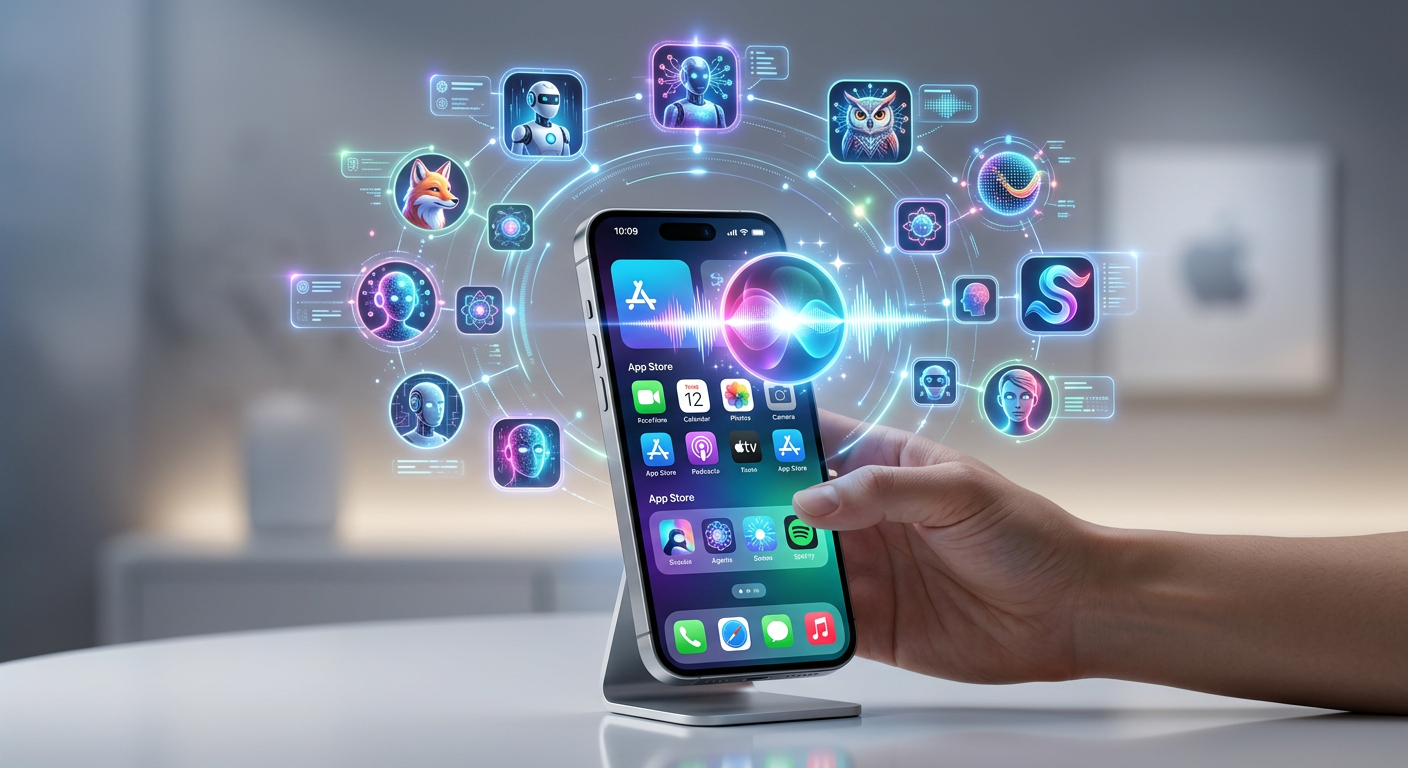
    According to the report, Apple is working on a new system internally described as Extensions, which would allow users to access generative AI capabilities from installed apps on demand, through existing Apple Intelligence features such as Siri, Writing Tools, Image Playground, and more. Under this system, third-party apps that include AI agents would be able to surface those agents through the App Store and integrate them into the Apple Intelligence layer, rather than operating only within the boundaries of their own apps.

    This would create a new category of App Store listing: not just apps, but AI agents that can be invoked across the operating system. A user might download an agent from a developer that specializes in contract summarization, for example, and invoke it through Siri or Writing Tools whenever they are working with legal documents, regardless of which app they are currently using. Models from Google and Anthropic are reportedly being tested in this context, consistent with earlier reporting that iOS 27 will allow users to choose from multiple AI models as the backend for Siri.

    Why It Matters

    If Apple implements an open AI agent marketplace on the App Store, it would mark one of the most significant changes to the App Store model since its launch. Currently the App Store distributes software. Adding AI agents as a distinct category would make it a marketplace for AI capabilities, and Apple curation and distribution infrastructure would apply to AI in the same way it currently applies to apps.

    For AI developers, an App Store channel would provide access to Apple installed base of over two billion active devices, with the trust and discoverability that Apple platform provides. For users, it would mean AI agents are as easy to find and install as apps, rather than requiring separate accounts, subscriptions, or technical setup. The competitive implications for standalone AI companies and for Apple own Siri are significant, as the system would simultaneously empower third-party AI and place Apple at the center of how users discover and manage it.

    What Comes Next

    WWDC 2026, beginning June 8, is the expected venue for Apple to formally announce its AI agent strategy for iOS 27. The event will also include the major Siri overhaul that has been in development, and the two announcements, a restructured Siri and an AI agent marketplace, are likely to be presented as complementary parts of a broader Apple Intelligence vision for the year ahead.

    Stay updated on the latest AI news at Evolve Digital.

  • Apple Plans to Let iPhone Users Choose Their Own AI in iOS 27, Including Claude and Gemini

    Apple Plans to Let iPhone Users Choose Their Own AI in iOS 27, Including Claude and Gemini

    Apple is planning one of the most significant shifts in the history of its iPhone software: giving users the ability to choose which AI model powers the features built into iOS 27. Reported on May 5, 2026, by both Bloomberg and TechCrunch, the plan would allow third-party large language models — including those from Anthropic and Google — to plug into Apple Intelligence features such as Siri, Writing Tools, and Image Playground through a new framework called Extensions. The move signals a pragmatic acknowledgment from Apple that AI capability has become too competitive and fast-moving for any single company to dominate, and that openness may be the path to relevance in the AI era.

    What Was Announced

    Apple plans to introduce a feature in iOS 27 that lets users select from a range of third-party AI models to power various functions across the operating system. The framework, referred to internally as Extensions, would allow models from installed apps to be invoked by Apple Intelligence features on demand. Bloomberg reported that models from both Google and Anthropic are already being tested in this capacity, representing the two strongest external AI options Apple has evaluated so far.

    The feature is expected to span Apple’s major platforms simultaneously, with corresponding availability in iPadOS 27 and macOS 27. Users on iPhones running iOS 27 would be able to visit a new settings panel, select their preferred AI provider, and have that model power capabilities such as the Siri conversational interface, Writing Tools for drafting and editing text, and Image Playground for AI-generated visuals.

    This represents a notable departure from Apple’s historically walled-garden approach to core OS features. While the App Store allows third-party apps, the foundational intelligence layer of Apple’s products has until now been controlled entirely by Apple, with the company’s own on-device models and its partnership with OpenAI powering ChatGPT integration in iOS 18. Expanding that integration to multiple competing providers — with user choice built in — is a structural change with significant implications for both the user experience and the competitive dynamics of the AI industry.

    Apple’s WWDC 2026, scheduled for later in May, is expected to be the venue at which the company makes a formal announcement, with iOS 27 previewed in detail.

    Technical Details

    The Extensions framework is designed as an API layer that allows installed third-party apps to expose AI model capabilities to the system. When a user triggers a Writing Tools request or asks Siri a complex question, iOS 27 would route that request to the user’s selected model rather than to Apple’s default on-device AI. The model would need to be installed as part of an app — meaning providers like Anthropic (Claude) and Google (Gemini) would need to have their models accessible through their respective iOS apps.

    Apple’s approach appears to draw on its existing Intents and Shortcuts frameworks, which have long allowed third-party apps to expose discrete actions to the system. Extensions would apply similar logic to AI inference, treating an external model as a pluggable capability rather than requiring Apple to fully vertically integrate every AI function it ships.

    Privacy considerations loom large over the design. Apple has built its recent AI strategy around on-device processing and its Private Cloud Compute architecture, which it describes as preventing Apple itself from accessing user data sent for cloud inference. Routing data to third-party models introduces a new privacy surface, and Apple will need to clearly communicate what data is shared with external providers and under what conditions — a question that will likely be front and center in the WWDC announcement.

    Industry Impact and Reactions

    The announcement has significant implications for AI providers competing for distribution. Apple’s iOS installed base is one of the largest and most affluent technology audiences in the world, and becoming the default AI provider inside iOS features represents an extraordinary distribution opportunity. Companies like Anthropic and Google stand to gain not just users but also the implicit endorsement that comes with being featured by Apple.

    The competitive dynamics are also notable because they put pressure on OpenAI, which currently has the most prominent iOS AI partnership through its ChatGPT integration in iOS 18. If iOS 27 opens the field to multiple providers, OpenAI’s privileged position becomes less exclusive, and the negotiating leverage shifts toward Apple.

    For users, the change promises a meaningfully more personalized AI experience. Someone who relies heavily on Claude for work might set it as their default model for Writing Tools; a developer might prefer Gemini’s coding capabilities for certain tasks. The ability to match AI models to use cases, rather than accepting whatever Apple ships by default, is a form of user agency that the current AI landscape rarely offers at the OS level.

    What Comes Next

    Apple is expected to formally unveil iOS 27 at WWDC 2026, anticipated in late May or early June. The Extensions framework and the full list of supported AI providers will likely be detailed at that event, along with the developer APIs that third-party model providers will need to implement. A public beta is expected shortly after WWDC, with the full release targeting fall 2026 alongside the iPhone 18.

    How Apple handles the privacy and security review of third-party AI models will be closely scrutinized. The App Store review process gives Apple control over what models qualify, and the company is likely to establish rigorous requirements around data handling, transparency, and alignment with Apple’s own usage policies before any model is certified for the Extensions framework.

    Conclusion

    Apple’s plan to open iOS 27 to third-party AI models is a significant strategic bet that user choice and openness can strengthen rather than weaken the iPhone’s AI position. By letting users pick Claude, Gemini, or other models to power core features, Apple is acknowledging that no single AI provider — including itself — can offer the best experience for every user and every task. It is a pragmatic, potentially transformative move that will reshape the competitive landscape for every major AI company with ambitions in the consumer market.

    Stay updated on the latest AI news at Evolve Digital.